Loose or crepey skin on the stomach responds to very different fixes depending on how much skin you're dealing with and whether muscle laxity is part of the problem — this guide breaks down which surgical and nonsurgical skin tightening options for the stomach actually make sense for Tampa patients in 2026.
TL;DR
If you have more than mild skin laxity or any muscle separation, surgical tightening — an Avelar tummy tuck or a traditional tummy tuck — is the only option that delivers a measurable, lasting result; Buy. For mild laxity with good skin elasticity and no muscle issue, Profound RF skin tightening is a reasonable nonsurgical bridge; Consider. CoolSculpting treats fat, not skin, so if loose skin is your actual complaint, it's a Skip. Castellano Cosmetic Surgery Center in Tampa evaluates skin quality, muscle status, and fat distribution before recommending any stomach skin tightening approach for 2026 patients.
Why this matters
Most people asking about skin tightening for the stomach in Tampa are actually asking two different questions at once: "how do I get rid of this loose skin" and "how do I get rid of this pooch." Those are not the same problem, and the treatment that fixes one often does nothing for the other.
Skin laxity happens when the collagen and elastin network in the dermis stretches past its ability to snap back — pregnancy, significant weight loss, and age-related collagen decline are the three biggest drivers. Nonsurgical devices can tighten mild-to-moderate laxity by heating the dermis and triggering new collagen production, but they can't remove excess skin or repair a stretched abdominal wall. That's a surgical job. An Avelar tummy tuck for post-pregnancy belly changes addresses both skin excess and muscle separation in one procedure, which is why it outperforms any energy-based device for patients with real skin overhang.
Who this is for
This guide is for Tampa Bay adults — most commonly postpartum moms and patients who've lost significant weight — who see loose, sagging, or crepey skin across the lower or full abdomen and want to know whether a nonsurgical tightening treatment can fix it or whether they need surgery. It's also for anyone trying to figure out if their skin laxity is mild enough that a device-based option is worth trying before committing to a tummy tuck.
What to look for in stomach skin tightening
Amount of excess skin, not just "looseness"
A pinch test tells you more than a mirror does. If you can pinch more than an inch or two of skin that hangs rather than springs back, no radiofrequency or ultrasound device is going to remove that tissue — only excision surgery does.
Whether the abdominal muscles are involved
Diastasis recti — separation of the rectus abdominis muscles — is common after pregnancy and shows up as a persistent bulge no amount of skin tightening will fix. Only a tummy tuck repair, done with sutures at the muscle layer, corrects this.
Number of sessions and realistic timeline
Nonsurgical tightening devices like Profound RF typically require a single treatment session with results building over 3 to 6 months as new collagen forms, while surgical results are visible within weeks and continue refining over a full year of recovery.
Downtime you can actually afford
Profound RF carries roughly 3 to 5 days of swelling and bruising; a tummy tuck carries 2 to 4 weeks of restricted activity and up to 6 weeks before full exercise resumes. Match the choice to your calendar, not just your goals.
Whether fat removal is also needed
If stubborn fat sits under the loose skin, tightening alone won't create the flat result patients expect — that's often where CoolSculpting Tampa fat-freezing treatment gets misapplied as a skin fix when it's actually a fat-reduction tool.
Surgeon or provider credentials
Board certification matters more for surgical tightening than for a med spa device, since the muscle repair and skin excision carry real surgical risk that inexperienced hands can mishandle.
Top picks for stomach skin tightening in Tampa
Avelar tummy tuck — the precision pick for post-pregnancy bellies
The Avelar technique preserves more of the abdominal blood supply than a traditional tummy tuck by working through targeted tunneling rather than a full skin flap lift, which often means less bruising and a faster initial recovery. It corrects diastasis recti and removes excess skin in the same operation. Patients with moderate-to-severe skin laxity plus muscle separation get a result no nonsurgical device can match. Buy for postpartum patients with real skin excess — see the Avelar tummy tuck cost breakdown for Tampa patients before booking a consult.
Traditional full tummy tuck — the safe pick for extensive laxity
When skin excess extends well above the navel or previous pregnancies have stretched the entire abdominal wall, a full tummy tuck with a longer incision gives the surgeon room to remove more tissue and tighten muscle across the whole abdomen. Recovery runs 4 to 6 weeks. This is the workhorse procedure for patients who've had multiple pregnancies or lost more than 50 pounds. Buy when skin excess is extensive.
Mini tummy tuck — the limited-scope option
A mini tummy tuck addresses lower-abdomen laxity through a shorter incision with a quicker recovery, but it skips muscle repair above the navel and won't touch upper-abdomen skin. It works for patients with a small, localized pooch below the belly button and good skin quality everywhere else. Compare candidacy carefully using the mini tummy tuck versus full tummy tuck guide — Consider only if your laxity is truly confined to the lower belly.
Profound RF skin tightening — the nonsurgical bridge
Profound uses radiofrequency energy delivered through microneedles to trigger collagen and elastin production in the deep dermis, with most patients seeing continued tightening over 3 to 6 months after a single session. It works on mild laxity with no muscle involvement — think early postpartum skin that hasn't fully rebounded, not skin that hangs. Full details are in the Profound skin tightening results guide. Consider for mild cases only; Skip if you already know you have muscle separation.
CoolSculpting — the wildcard that gets misused
CoolSculpting freezes and eliminates fat cells over 2 to 4 sessions spaced weeks apart, and it does not tighten skin at all — it's a fat-volume tool, not a laxity tool. Patients who book it hoping for tighter skin are often disappointed because removing fat from under loose skin can actually make sagging look more pronounced. Skip if skin laxity, not fat volume, is the primary complaint.
What to avoid
- At-home RF or ultrasound gadgets marketed for "stomach tightening" — dermal heating strong enough to remodel collagen requires clinical-grade energy delivery, not a $200 handheld device.
- CoolSculpting sold as a skin-tightening fix — ask specifically whether your concern is fat volume or skin laxity before booking, since the two get conflated in marketing copy constantly.
- Any tummy tuck marketed as "no downtime" — muscle repair surgery in 2026 still requires real recovery time; anyone promising otherwise is minimizing the procedure, not describing it accurately.
Comparison at a glance
| Option | Fixes muscle separation | Removes excess skin | Typical downtime | Verdict |
|---|---|---|---|---|
| Avelar tummy tuck | Yes | Yes | 2-3 weeks | Buy for post-pregnancy laxity |
| Traditional tummy tuck | Yes | Yes (extensive) | 4-6 weeks | Buy for severe cases |
| Mini tummy tuck | Partial (lower only) | Limited | 1-2 weeks | Consider for localized pooch |
| Profound RF | No | No | 3-5 days | Consider for mild laxity |
| CoolSculpting | No | No | None | Skip for skin concerns |
FAQ
What's the best skin tightening treatment for the stomach in Tampa?
For moderate-to-severe skin laxity, an Avelar or traditional tummy tuck is the only treatment that reliably removes excess skin and repairs muscle separation; nonsurgical devices like Profound RF work only on mild laxity with no muscle involvement.
Is nonsurgical skin tightening as effective as a tummy tuck?
No. Radiofrequency devices trigger collagen remodeling that produces modest tightening over several months, while surgery physically removes excess skin and sutures the muscle layer — the two aren't interchangeable for anyone beyond mild cases.
Does CoolSculpting tighten loose stomach skin?
No, CoolSculpting reduces fat volume through cell freezing and has no meaningful effect on skin laxity; patients with loose skin over fat often need a tummy tuck or liposuction combined with a tightening approach, not CoolSculpting alone.
How much does an Avelar tummy tuck cost in Tampa in 2026?
Costs vary by extent of correction needed and whether liposuction is combined with the procedure — the Avelar tummy tuck cost guide breaks down what factors into the total.
Can I get skin tightening without surgery after having kids?
Only if your skin laxity is mild and your abdominal muscles weren't significantly separated during pregnancy; Profound RF can help in that narrow case, but most postpartum patients with visible skin excess need surgical correction.
How long do results from Profound RF skin tightening last?
Results build over 3 to 6 months as new collagen forms and typically hold for a year or more, though the treatment doesn't stop ongoing age-related skin changes the way surgery's tissue removal does.
Is a mini tummy tuck enough to fix stomach skin laxity?
Only if the excess skin is confined to the area below the belly button and the upper abdomen has good skin quality — otherwise a full tummy tuck is needed to address the whole area.
What's the recovery time for surgical stomach skin tightening?
A mini tummy tuck runs 1 to 2 weeks of initial recovery, an Avelar tummy tuck runs 2 to 3 weeks, and a traditional full tummy tuck runs 4 to 6 weeks before most normal activity resumes.
One last thing
The pinch test is the single most reliable at-home screening tool before you even book a consult: if the skin you pinch on your lower belly doesn't spring back within a second or two when released, that's dermal laxity a device can't fully correct — and it's worth knowing that before you spend money on a treatment built for a different problem. Castellano Cosmetic Surgery Center's surgeons use exactly this kind of hands-on assessment, alongside a muscle check, to steer patients toward the option that actually matches their anatomy rather than the one that's easiest to sell.
Related guides
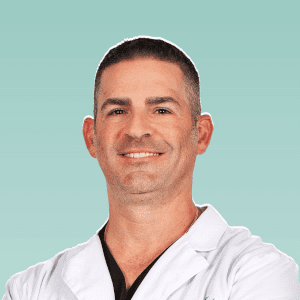
Author: Dr. Joseph Castellano
Dr. Joseph Castellano is a native Floridian who grew up in the Tampa Bay area. After medical school and residency, Dr. Castellano returned home and has opened a practice in Tampa, Florida focusing on breast augmentation, abdominoplasty, liposuction, facelift, and eyelid rejuvenation. He is a member of the American Board of Cosmetic Surgery, American College of Surgeons, and American Medical Association