Filler cost in Tampa depends on the type of filler, the number of syringes your plan needs, and the injector placing it. This page ranks the main filler types by what drives their cost in 2026, without quoting dollar figures that go stale.
- Filler cost by type in Tampa is set by syringe count and filler material, not by a flat per-visit fee.
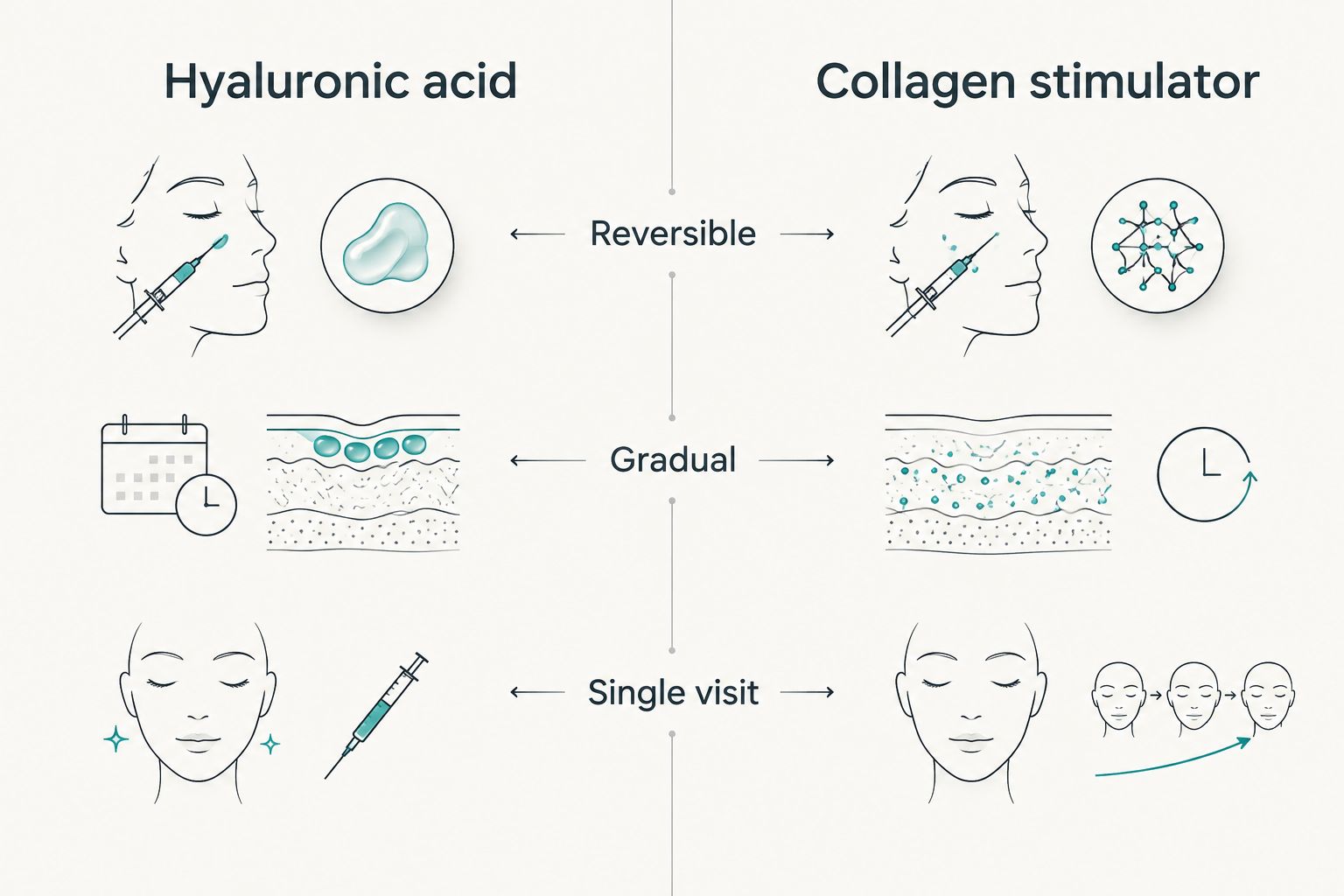
- Hyaluronic acid fillers are the default for lips, cheeks and folds, and can be dissolved if you dislike the result.
- Collagen stimulators like Sculptra and Radiesse are built up over time and are planned around total volume.
- Ask for a written syringe estimate at consultation, then compare it to the quoted per-syringe rate.
Why this matters
Two Tampa clinics can quote the same filler at very different totals. The gap rarely comes from the product alone. It comes from how many syringes the plan uses, which areas are treated, and whether touch-ups are included.
This page gives you the framework to read any quote in 2026. Exact fees are set at consultation, so this page lists no dollar amounts. The full breakdown of types, pricing structure and what to expect is in the injectable fillers guide for Tampa.
The short answer: what filler costs by type
Filler is priced per syringe, and the type of filler decides how many syringes you need and how often you return. A lip refresh and a full midface rebuild can use the same product at very different totals, because the volume differs.
That is the benchmark that matters in 2026: cost per syringe times syringes needed, divided by how long the result lasts.
Filler cost benchmark table, 2026
| Filler type | Material | Common areas | Dissolvable | Main cost driver | Best for |
|---|---|---|---|---|---|
| Hyaluronic acid (Juvederm, Restylane families) | Hyaluronic acid gel | Lips, cheeks, nasolabial folds, chin, jawline, under eyes | Yes, with hyaluronidase | Syringes per area; product formulation | First-time patients who want a reversible result |
| Calcium hydroxylapatite (Radiesse) | Calcium-based microspheres in gel | Cheeks, jawline, hands | No | Syringes per area | Structure and contour with some collagen stimulation |
| Poly-L-lactic acid (Sculptra) | Collagen-stimulating particles | Face volume, temples, buttocks | No | Number of sessions over months | Gradual, broad volume restoration |
| Fat transfer | Your own fat | Face, hands, breast, buttocks | Not applicable | Surgical procedure, not syringe count | Patients wanting a natural filler alternative |
The table compares cost drivers rather than dollar figures. Any specific fee must come from a written quote after an exam.
High and low: what pushes the total up or down
Hyaluronic acid fillers are the most flexible and the easiest to scale down, so they usually carry the lowest entry cost for a single small area such as lips. Treating a lip with one syringe costs a fraction of a full-face plan.
Collagen stimulators and fat transfer sit at the other end for total planned spend. Sculptra is built over multiple sessions, and fat transfer is a procedure with its own facility and surgical components. Their total outlay is higher up front, and the plan is built around fewer repeat visits.
Total spend climbs fastest when you treat many areas at once. A single-area plan stays predictable; a liquid facelift plan does not.
Methodology and limits
This page compares filler categories on material, reversibility and cost drivers from published product categories and the practice's own filler guides. It does not average real Tampa invoices. The limitation: it cannot give you a Tampa price per syringe, because those rates vary by clinic and change over time. Use it to read a quote, not to replace one.
Cost by treatment area
Area matters as much as type. Here is how the main areas tend to rank for syringe demand, from lighter to heavier.
- Lips: the smallest volume of most facial areas, so a first treatment is often the easiest to budget. See lip augmentation filler options for how technique changes the plan.
- Cheeks: volume here lifts the midface, so plans often need more product than lips. The cheek filler guide covers what to expect and how long it lasts.
- Nasolabial folds and marionette lines: usually treated with a smaller amount of a softer product, often combined with cheek work.
- Jawline and chin: structural areas that favor firmer products and tend to need more volume.
- Under eyes and hands: technique-sensitive, so injector skill weighs more than product.
Longevity changes the real cost
A cheaper syringe that fades sooner can cost more per year than a pricier one that lasts. That is why per-syringe quotes alone mislead. To compare products on how long they hold, read the ranking of dermal filler brands by longevity.
Longevity also depends on where the filler goes. Areas with more movement tend to break filler down faster, and individual metabolism varies. Treat any promised duration as a range, not a guarantee.
How to use these benchmarks
- Ask for the syringe count in writing. A quote without a stated volume cannot be compared to another clinic.
- Match the type to your goal. Reversible hyaluronic acid suits a first treatment. Collagen stimulators suit patients ready to commit to a gradual plan.
- Divide cost by duration. Compare cost per year of result, not cost per visit.
- Price the maintenance. Ask what a touch-up costs and when it is typically needed.
- Vet the injector before the price. A low quote from an unqualified provider is the costliest outcome when a correction is needed. If a result needs to be reversed, the guide to dissolving filler safely explains the process.
Get a written filler estimate
Book a consultation with the Castellano Cosmetic Surgery Center team in Tampa.
Honest pros and cons by type
Hyaluronic acid. Pros: reversible, widely available, many formulations. Cons: shorter lasting than stimulators, and repeat visits add up.
Calcium hydroxylapatite. Pros: adds structure and stimulates collagen. Cons: not dissolvable, so injector skill matters more.
Poly-L-lactic acid. Pros: gradual, natural-looking build. Cons: needs multiple sessions and patience before results show.
Fat transfer. Pros: uses your own tissue. Cons: it is a procedure with downtime, and not every patient has enough donor fat.
FAQ
How is filler priced in Tampa?
Filler is priced per syringe, so your total equals the rate times the syringes your plan needs. Area, product and injector all affect the final quote.
Which filler type costs the least?
Hyaluronic acid in a single small area, such as lips, usually has the lowest entry cost. Multi-area plans and collagen stimulators raise the total.
Is a cheaper syringe a better deal?
Not always. Compare cost per year of results, because a product that fades sooner needs more frequent repeats.
Can filler be reversed?
Hyaluronic acid filler can be dissolved with hyaluronidase. Calcium hydroxylapatite and poly-L-lactic acid cannot be dissolved the same way.
Does insurance cover dermal filler?
Cosmetic filler is generally an out-of-pocket expense. Confirm with your own plan and the clinic at consultation.
What should a filler quote include?
A good quote lists the product, number of syringes, treatment areas and the touch-up policy. If any of those are missing, ask before you book.
One last thing
The most useful number in any filler quote is the syringe count, and many patients never ask for it. Get it in writing in 2026 and you can compare any two Tampa quotes on equal terms.
Related guides
- Injectable fillers in Tampa: types and what to expect
- Cheek filler: what to expect and how long it lasts
- Best dermal filler brands ranked by longevity

Author: Dr. Joseph Castellano
Dr. Joseph Castellano is a native Floridian who grew up in the Tampa Bay area. After medical school and residency, Dr. Castellano returned home and has opened a practice in Tampa, Florida focusing on breast augmentation, abdominoplasty, liposuction, facelift, and eyelid rejuvenation. He is a member of the American Board of Cosmetic Surgery, American College of Surgeons, and American Medical Association