Breast lift scarring is permanent, but how visible it stays 1, 2, and 5 years out is almost entirely within your control during the first 12 months of healing.
TL;DR: A mastopexy always leaves incisions — the question is whether those scars stay pink and raised or fade to a thin, skin-toned line. In 2026, board-certified Tampa surgeons use layered closures and absorbable sutures to minimize tension, but the work you do after surgery — silicone sheeting, sun protection, and patience — determines the final result. Skip the scar-care steps in weeks 2 through 12 and you lose most of the window that matters.
Why breast lift scarring deserves its own recovery plan
A breast lift (mastopexy) repositions the nipple-areola complex and removes excess skin. That process requires incisions — most commonly a lollipop pattern (periareolar plus vertical) or an anchor pattern (periareolar, vertical, and inframammary fold). Both leave permanent marks. What separates a barely-visible line from a thick, raised scar is wound tension, UV exposure, and the scar-care protocol you follow during the maturation phase, which runs from roughly week 2 through month 12 in 2026 guidelines.
The good news: keloid and hypertrophic scarring rates after breast surgery sit below 10% in most published series for patients without a personal history of problem scarring. Tampa's year-round sun, however, creates a specific hazard — unprotected incisions hyperpigment fast in Florida's UV index, which frequently tops 10 from March through October.
What you'll need before you start
- Silicone scar sheets or silicone gel (medical grade, not drugstore scar cream)
- SPF 50+ broad-spectrum sunscreen (mineral preferred for sensitive healing skin)
- Surgical-grade paper tape or micropore tape as a backup barrier
- A soft, supportive surgical bra — your surgeon will specify the compression level
- Arnica supplements or topical arnica if your surgeon approves (discuss at your pre-op visit)
- A written post-op schedule from your surgeon with named milestones at weeks 2, 6, and 12
- At least 2 weeks of cleared, lower-activity recovery time — Tampa's heat makes overexertion a real swelling driver
The steps — in order
Step 1: Let the incisions close completely before touching them
Do not apply anything — no ointments, no silicone, no tape — until your surgeon confirms the incision line is fully closed. That is typically days 10 to 14 post-op. Applying product to an open wound introduces infection risk and disrupts the epithelialization layer that forms the foundation of a flat scar. Expected outcome: intact, dry incision edges with no separation before you move to Step 2.
Common mistake: Starting silicone sheeting on day 5 because a friend recommended it. If the wound hasn't epithelialized, sheeting can macerate the healing edge.
Step 2: Start silicone therapy at week 2
Once incisions are closed, silicone is the only topical intervention with consistent clinical evidence behind it. A 2021 review in Aesthetic Surgery Journal covering 20+ randomized trials found silicone sheeting reduced scar height and erythema versus untreated controls. Sheets win over gel for breast incisions because they stay in contact longer — aim for 12 hours per day, every day, for a minimum of 8 weeks.
Cut the sheet to the exact shape of each incision segment. Replace sheets every 5 to 7 days or when adhesion weakens. Silicone gel is the alternative when sheeting won't conform to the periareolar curve — apply twice daily.
Common mistake: Stopping at week 6 because the scar "looks fine." Collagen remodeling runs through month 12 in 2026, and silicone's benefit accumulates the longer it's used.
Step 3: Protect incisions from Tampa sun — starting day one
UV radiation triggers melanocyte activity in healing tissue, turning a pink line permanently brown. In Tampa, meaningful UV exposure begins the moment you step outside, even on overcast days from April through September. Cover incision areas with clothing or SPF 50+ mineral sunscreen any time they're exposed — including through a bra under sheer fabric.
Direct sun exposure to fresh incisions is the single fastest way to lock in hyperpigmentation that no cream will reverse. This rule stays active for a minimum of 12 months in 2026 protocols.
Common mistake: Assuming a bra provides sufficient UV block. Standard cotton offers roughly SPF 8-15 — not enough for a Florida summer.
Step 4: Manage tension on the vertical incision
The vertical limb of a lollipop or anchor scar sees the most mechanical stress — gravity pulls on it every time you stand upright. A properly fitted surgical bra reduces that tension, which is why your surgeon's bra instructions are a scar-care tool, not just a comfort measure. Wear the compression bra as directed (typically 6 weeks, sometimes longer), and avoid any overhead reaching or activity that pulls the chest wall for at least 4 weeks.
Paper tape applied along the vertical incision — a technique some surgeons recommend through month 3 — provides an additional tension-offloading layer when you're not in silicone sheets.
Common mistake: Switching to an underwire bra at week 4 because it fits better. Underwire sits directly on the inframammary fold incision and concentrates pressure exactly where you don't want it.
Step 5: Treat itching and redness as information, not problems to ignore
Itching at weeks 3 to 8 signals active collagen production — this is normal and means healing is progressing. Scratching, however, disrupts the remodeling phase and can open micro-tears. Use gentle pressure (press, don't scratch) or ask your surgeon about a low-potency topical steroid if itching is severe.
Persistent redness, firmness, or a raised ridge at the 3-month mark warrants a check-in. Hypertrophic scarring responds to intralesional corticosteroid injections (typically triamcinolone) when caught early. By the 6-month mark, intervention becomes harder.
Step 6: Give the full 12-month maturation window before judging results
Scars look their worst between weeks 6 and 14 — red, slightly raised, sometimes firm. This is normal scar maturation, not a complication. Most mastopexy scars in patients who follow the full protocol are significantly lighter, flatter, and softer by month 6, and continue to improve through month 12 in 2026. Do not pursue laser resurfacing or any revision until the 12-month mark unless your surgeon specifically recommends earlier intervention.
Common mistake: Booking a laser treatment at month 4 because the scar still looks pink. Laser on immature scar tissue can cause more harm than good.
Troubleshooting
Scar is raised and firm at month 3. This is hypertrophic, not keloid, unless it grows beyond the original incision boundary. See your surgeon — a steroid injection series started at month 3 delivers far better results than waiting until month 6.
Scar turned dark brown. Post-inflammatory hyperpigmentation from UV exposure. Prescription hydroquinone or azelaic acid (applied only after full epithelialization) can lighten it, but prevention is the only reliable fix. Strict SPF 50+ from this point forward.
Incision edges separated slightly (dehiscence). Small openings under 5mm often heal by secondary intention with proper wound care. Anything larger needs your surgeon's evaluation within 48 hours to rule out infection.
Silicone sheets won't stay on the periareolar area. Switch to silicone gel twice daily for that segment. The curved, moving surface around the areola doesn't hold flat sheeting well — gel conforms and still delivers occlusion.
Scar is itching intensely at week 10. Normal if there's no redness or warmth accompanying it. Cold compresses and silicone pressure (pressing the sheet firmly) reduce itch without disrupting healing tissue.
One side looks significantly worse than the other at month 2. Minor asymmetry in healing rate is normal — scar maturation is not synchronized between the two sides. If the difference is dramatic or one side shows signs of infection (warmth, discharge, fever), call your surgeon the same day.
Tools and resources
- Medical-grade silicone sheets (ScarAway, Mepiform, or surgeon-recommended brand)
- SPF 50+ mineral sunscreen — EltaMD UV Clear or equivalent
- Micropore surgical tape for vertical-incision tension offloading
- Your surgeon's written aftercare protocol — Castellano Cosmetic Surgery Center provides milestone-based post-op instructions at your follow-up visits
- For patients combining a breast lift with augmentation: the breast augmentation recovery timeline week by week covers overlapping healing phases in detail
- For patients planning a breast lift as part of a larger procedure: what is included in a mommy makeover in Florida explains how surgeons sequence combined procedures to protect healing
FAQ
What does breast lift scarring look like after 1 year?
In patients who follow the full scar-care protocol, mastopexy scars at the 12-month mark are typically flat, skin-toned or slightly lighter than surrounding tissue, and 2–5mm wide at the thinnest points. The anchor or lollipop pattern remains permanent but becomes far less noticeable than early-stage photos suggest.
How long does breast lift scarring take to fade?
Active fading occurs from month 2 through month 12 in 2026. The most dramatic change happens between months 6 and 12. Scars continue to soften slightly for up to 18 months, but the core maturation window closes around month 12.
Is the lollipop scar or anchor scar worse for visible scarring?
The anchor adds a horizontal inframammary fold incision, which means more total scar length. However, the inframammary fold scar sits in a naturally hidden crease and often ends up less visible than the vertical limb in both patterns. Technique and surgeon skill matter more than incision pattern alone.
Can I use vitamin E oil on breast lift scars?
Vitamin E has no consistent clinical evidence for scar improvement and causes contact dermatitis in roughly 33% of patients who apply it to healing wounds. Use medical-grade silicone instead — it has the clinical data behind it.
When can I go in the sun after a breast lift in Tampa?
Cover incision areas from UV exposure for a full 12 months. Tampa's UV index makes this non-negotiable — unprotected scars in Florida sun hyperpigment within a single summer season. SPF 50+ or physical coverage every day the incisions could see light.
Does skin tone affect breast lift scarring?
Yes. Fitzpatrick skin types IV through VI have higher baseline risk for post-inflammatory hyperpigmentation and hypertrophic scarring. If you have darker skin, discuss this specifically at your pre-op consultation — your surgeon may recommend starting silicone therapy at the earliest possible date and may pre-treat with topical agents.
Is breast lift scarring covered by a surgeon's revision policy?
Revision policies vary by practice. Castellano Cosmetic Surgery Center's specific policy is discussed during consultation. Generally, hypertrophic scars that fail conservative treatment may qualify for steroid injections or laser as part of ongoing care; full surgical revision for scar appearance alone is typically considered elective.
Can a breast lift scar become a keloid?
Keloids extend beyond the original incision boundary and are caused by abnormal collagen production — distinct from hypertrophic scarring, which stays within the wound margins. True keloids after mastopexy are uncommon. Patients with a personal or family history of keloids should disclose this before surgery, as it changes both technique selection and the post-op protocol.
One last thing
The 6-week scar photo you'll find in online forums is the worst possible moment to judge a breast lift result. Scars at 6 weeks are almost always red, slightly raised, and alarming to patients who weren't told what to expect. The same scar at 12 months, after consistent silicone use and sun protection, looks dramatically different. The protocol above isn't complicated — it's just 12 months of consistency. That's the only variable separating a barely-visible line from a permanent reminder.
Related guides
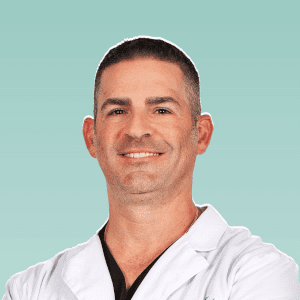
Author: Dr. Joseph Castellano
Dr. Joseph Castellano is a native Floridian who grew up in the Tampa Bay area. After medical school and residency, Dr. Castellano returned home and has opened a practice in Tampa, Florida focusing on breast augmentation, abdominoplasty, liposuction, facelift, and eyelid rejuvenation. He is a member of the American Board of Cosmetic Surgery, American College of Surgeons, and American Medical Association