PRP hair restoration in Tampa uses a concentrated fraction of your own blood plasma to wake up thinning follicles, and it earns real results only within a specific window of hair loss, not after the follicle is gone. This guide breaks down who actually qualifies for prp hair restoration tampa treatment, what drives the cost conversation, and where the marketing outpaces the biology.
- PRP hair restoration Tampa works best on early androgenetic alopecia and post-transplant support – Strong Fit for both.
- Advanced Norwood 5-6 balding sees limited response to PRP alone – Skip a PRP-only plan for advanced loss.
- A standard PRP protocol runs 3 to 4 sessions spaced 4-6 weeks apart, with visible results at 3-6 months.
- Cost tracks session count and technique, not a flat menu price – get a written protocol at consult.
- Injector credentials matter more for PRP than for most med spa treatments – vet certification before you book.
Why this matters
PRP got popular fast because it sounds simple: draw blood, spin it, inject the platelet-rich layer into the scalp, done. The reality is messier. Response depends on how much viable follicle tissue is still there to stimulate, which means the same treatment that thickens a receding hairline at 28 can do almost nothing for a scalp that's been bald for a decade.
A vampire facial uses the same PRP concept on skin, and that comparison is useful: PRP works by amplifying what's already present, whether that's collagen-producing cells in skin or dormant hair follicles in scalp. It doesn't create new tissue out of nothing. Understanding that limit is the difference between a satisfied patient and a frustrated one three sessions in.
Who this is for
This guide is for Tampa Bay adults noticing early to moderate thinning – a widening part, a receding hairline, or shedding that started after a stressful year – who want a non-surgical option before considering a transplant. It's also relevant to patients who already had a hair transplant and want to support graft survival. It is not written for anyone expecting PRP to reverse decades of complete baldness on its own.
What to look for in PRP hair restoration for Tampa patients
Board certification and injector experience
PRP injection technique affects both comfort and results – depth, spacing, and volume per site all matter, and a poorly executed session wastes the blood draw. Confirm the provider is a board-certified physician or works under direct physician supervision rather than a technician following a template. Certification standards get discussed in detail on why board certification matters for cosmetic surgeons in Tampa, and the same logic applies to any injectable procedure, PRP included.
PRP preparation method
Ask how the plasma is separated and concentrated. A single-spin process yields a lower platelet concentration than a double-spin protocol, and concentration is part of what drives follicle stimulation. A provider who can't explain their spin protocol in plain terms is a red flag, not a trade secret.
Where you are on the hair loss timeline
PRP responds best to follicles that are miniaturizing but not dead – typically Norwood stage 2-4 in men or Ludwig stage 1-2 in women. Past that point, the follicle has often stopped producing hair altogether, and PRP has nothing left to amplify. Be honest about your stage before you book a package of sessions.
Session count and maintenance commitment
A realistic PRP protocol involves an initial series, usually 3 to 4 sessions spaced 4 to 6 weeks apart, followed by maintenance visits every 6 to 12 months. Anyone selling PRP as a single-visit fix is either misunderstanding the biology or oversimplifying the sales pitch.
Cost transparency and financing
PRP pricing scales with the number of sessions in your protocol and whether it's bundled with other treatments, so a quoted price without a session count isn't a real quote. If cost is the deciding factor, ask about financing before you commit – options are outlined on the cosmetic surgery financing page for Tampa patients weighing multiple procedures.
Realistic expectations versus marketing claims
PRP thickens existing hair and can slow shedding – it rarely produces dramatic new density on its own. Providers who show only before-and-afters with dramatic volume increases, without disclosing combination treatments used alongside PRP, are marketing a best-case outlier as the standard outcome.
Candidate profiles for PRP hair restoration
The early thinning candidate. Someone in their late 20s to early 40s noticing a widening part or early recession, still with visible fine hair in the affected area. Spec that matters: follicle miniaturization without full follicle loss. Verdict: Strong Fit.
The post-transplant patient. PRP used alongside a hair transplant to support graft survival and speed recovery in the weeks after surgery. Spec that matters: timing relative to transplant date, usually starting a few weeks post-op. Verdict: Consider, discuss timing directly with your transplant surgeon.
The stress-shedding patient. Someone dealing with telogen effluvium – diffuse shedding tied to illness, stress, or a major life event, not pattern baldness. Spec that matters: shedding is often temporary and may resolve without PRP once the trigger passes. Verdict: Consider, but rule out underlying causes first.
The advanced balding candidate. Norwood stage 5 or 6, with large areas of fully bald scalp and no visible fine hair to stimulate. Spec that matters: follicle density in the affected zone is at or near zero. Verdict: Skip PRP alone; a transplant consult is the more honest conversation.
The one-and-done budget shopper. Someone looking for a single session to solve visible thinning before an event, without planning for the 3 to 4 session protocol PRP actually requires. Spec that matters: single sessions rarely produce measurable change. Verdict: Skip unless you're ready to commit to the full series.
What to avoid
- Discount PRP packages with no disclosed spin protocol. If the price is unusually low, ask what's being cut – concentration, provider time, or both.
- "Guaranteed regrowth" language. No credible provider guarantees follicle response, because individual biology varies too much for a blanket promise.
- PRP marketed as a stand-alone fix for advanced balding. At that stage, PRP is sometimes used to support a transplant, not replace one.
Find out if PRP fits your hair loss stage
A consult clarifies candidacy, protocol length, and realistic outcomes before you commit.
Verdict comparison
| Candidate profile | Hair loss stage | Sessions typically needed | Verdict |
|---|---|---|---|
| Early thinning | Norwood 2-4 / Ludwig 1-2 | 3-4 initial, then maintenance | Strong Fit |
| Post-transplant support | Post-surgical | Timed with recovery | Consider |
| Stress-shedding | Telogen effluvium | Varies, may resolve alone | Consider |
| Advanced balding | Norwood 5-6 | PRP alone insufficient | Skip |
| One-and-done shopper | Any stage | Single session | Skip |
FAQ
What is PRP hair restoration and how does it work in Tampa?
PRP hair restoration draws a small amount of your blood, concentrates the platelet-rich plasma, and injects it into the scalp to stimulate thinning follicles. In Tampa it’s offered as a non-surgical option for early to moderate hair loss, typically as a multi-session protocol rather than a single visit.
How much does PRP hair restoration cost in Tampa?
Cost depends on the number of sessions in your protocol and whether PRP is combined with other treatments, so a flat price without a session count isn’t a complete quote. Ask for a written treatment plan during your consult so you can compare cost against expected sessions.
Is PRP hair restoration better than a hair transplant?
PRP and hair transplant solve different problems – PRP works on follicles that are miniaturizing but still alive, while a transplant relocates healthy follicles to bald areas. For advanced balding, PRP alone is usually a Skip, and it’s more often used to support transplant recovery.
How many PRP sessions does hair restoration require?
A standard protocol runs 3 to 4 initial sessions spaced 4 to 6 weeks apart, followed by maintenance sessions every 6 to 12 months. Single-session PRP rarely produces measurable results.
When will I see results from PRP hair restoration?
Most patients notice change between 3 and 6 months after starting the initial session series, not immediately after a single visit. Results build gradually as follicles respond to repeated stimulation.
Can women get PRP hair restoration in Tampa?
Yes – PRP is commonly used for female pattern hair loss, particularly Ludwig stage 1-2 diffuse thinning. Candidacy still depends on how much viable follicle tissue remains in the thinning area.
Does PRP hair restoration hurt?
Most patients describe scalp injections as mild discomfort rather than significant pain, and numbing is typically used beforehand. Downtime is minimal, with most people returning to normal activity the same day.
Who is not a good candidate for PRP hair restoration?
Patients with advanced Norwood 5-6 balding, where the scalp has little to no viable follicle left, generally see limited results from PRP alone. Certain blood or platelet disorders can also rule out candidacy, which is why bloodwork history matters at consult.
One last thing
The detail most patients skip past: PRP concentration is only half the equation – injection technique determines whether that plasma actually reaches the follicle bulb where it can do anything. Two providers using the same spin protocol can produce different results based on depth and spacing alone, which is exactly why the consultation matters more for PRP than for most quick med spa add-ons.
Related guides
- What to ask at a cosmetic surgery consultation in Tampa
- Cosmetic surgery financing in Tampa: CareCredit and other options
- Best med spa in Tampa: services, treatments, and what to expect
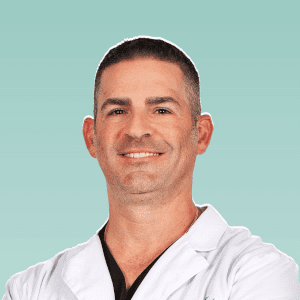
Author: Dr. Joseph Castellano
Dr. Joseph Castellano is a native Floridian who grew up in the Tampa Bay area. After medical school and residency, Dr. Castellano returned home and has opened a practice in Tampa, Florida focusing on breast augmentation, abdominoplasty, liposuction, facelift, and eyelid rejuvenation. He is a member of the American Board of Cosmetic Surgery, American College of Surgeons, and American Medical Association