Botox can soften a heavy brow and open up tired-looking eyes, but it isn't a substitute for a surgical brow lift for every patient — the difference comes down to how much droop you actually have and where it's coming from.
- Botox eyebrow lift in Tampa works best for mild brow droop caused by frontalis and glabella overactivity, not skin excess.
- Typical treatment uses 10 to 20 units placed around the brow and forehead, with results settling over 10 to 14 days.
- Results last 3 to 4 months; patients who want a permanent change need a surgical brow lift instead.
- Dr. Joseph Castellano at Castellano Cosmetic Surgery Center evaluates resting brow position before recommending Botox over surgery.
- Overdosing the frontalis is the most common mistake — it drops the brow further instead of lifting it.
Why this matters
A "Botox brow lift" isn't a distinct procedure — it's a strategic placement of the same neuromodulator used for forehead lines, injected to relax the muscles that pull the brow down while leaving the lifting muscles alone. Done correctly in 2026, it can raise the lateral brow by a few millimeters and open the eye area without an incision. Done without proper mapping, it can make heavy brows look heavier. The candidacy question matters more here than with almost any other Botox application, because the wrong injection pattern produces the opposite of what the patient wanted.
Who this is for
This is for adults in their 30s to 50s with mild to moderate brow heaviness from muscle activity, not from excess skin or significant fat descent. If your brows sit slightly low at the outer corners, your forehead furrows when you're not trying to make an expression, or you find yourself using your fingers to hold your brows up in the mirror, you're in the target range. It is not the right fit for patients with significant upper eyelid skin overhang resting on the lash line — that's a skin problem, and neuromodulators don't touch skin.
What to look for in a Botox eyebrow lift in Tampa
Precise muscle mapping
The frontalis lifts the brow, the glabella (corrugator and procerus) pulls it down and in, and the orbicularis oculi pulls the lateral brow down. A Botox eyebrow lift works by selectively weakening the depressors — glabella and lateral orbicularis — while sparing enough frontalis function to hold the lift. Injectors who don't map these three muscle groups separately tend to flatten the whole forehead instead of lifting the brow.
Realistic candidacy assessment before treatment
A good consult starts with the patient's resting brow position, not a generic units chart. Patients with a naturally low brow bone or thick frontalis muscle often see less lift than expected and should hear that upfront rather than after the injections. Dosing guidance from how many units of Botox you need for your forehead applies here too — the same forehead muscle drives both the smoothing effect and the lift.
Injector experience with brow-specific technique
Brow lifting requires more precision than standard forehead smoothing because a few units placed in the wrong spot changes the shape of the arch, not just its height. Ask how many brow-lift-pattern injections the provider performs versus general forehead treatments — the two aren't interchangeable in outcome. Choosing the right Botox injector in Tampa covers the credential and experience questions worth asking before you book.
Unit dosing calibrated to your anatomy
Most brow-lift patterns use 4 to 8 units in the glabella and 2 to 4 units per side at the lateral brow depressor, on top of standard forehead dosing. Total treatment across the upper face typically runs 10 to 20 units for this specific goal. Patients with heavier frontalis muscle mass sometimes need more, and going too low produces no visible change at all.
Longevity and touch-up planning
Botox brow lifts fade the same way any Botox treatment does — muscle activity returns gradually starting around week 10 to 12, with most patients back to baseline by month 4. Planning a touch-up schedule before the first treatment fades keeps the lift consistent instead of letting the brow drop and re-lift in cycles.
Compatibility with other facial concerns
Brow-area Botox pairs well with treatment for forehead lines and glabellar "11" lines since it's often the same syringe. It does not address hooded upper eyelids, tear trough hollowing, or crow's feet caused by skin laxity — those need separate conversations.
Your options for a Botox eyebrow lift
The standard approach — frontalis-sparing glabella treatment. Targets the muscles pulling the brow down and in, typically 4 to 8 units, with visible lift by day 10. Works for most mild-droop patients. Buy.
The precision play — lateral brow depressor injection. Adds 2 to 4 units per side at the tail of the eyebrow to lift the outer corner specifically, the area most patients notice sagging first. Best paired with the standard glabella pattern rather than used alone. Buy.
The alternative neuromodulator — Dysport instead of Botox. Some patients respond faster or more evenly to Dysport's diffusion pattern, which can matter for a subtle brow effect. The Dysport versus Botox comparison for Tampa patients breaks down onset and spread differences worth discussing at consult. Consider if you've had uneven results with Botox before.
The bigger fix — surgical brow lift. For brow droop caused by skin excess or significant descent rather than muscle pull, no amount of neuromodulator moves the needle. The surgical brow lift procedure guide for Tampa patients covers what a permanent correction actually involves in 2026. Buy if your droop doesn't respond to injectables at all — skip Botox brow lifting entirely in this case.
The wildcard — treating forehead and brow together in one session. Combining frontalis smoothing with brow-lift-pattern dosing in a single visit is efficient, but it requires more total units and a provider comfortable balancing both goals without over-relaxing the lifting muscle. Consider with an experienced injector; Skip with a first-time provider who hasn't done combination patterns before.
What to avoid
- Overtreating the central frontalis. Weakening the muscle that holds the brow up, instead of just the muscles pulling it down, causes the brow to drop further — the opposite of the goal.
- Generic "forehead package" pricing with no brow-specific mapping. If the consult doesn't separately discuss glabella, lateral orbicularis, and frontalis, the injector likely isn't planning for lift at all.
- Expecting a Botox lift to fix hooded eyelids. Skin excess on the upper lid needs blepharoplasty or a surgical brow lift, not injectables — see signs your face is aging and what cosmetic surgery can fix for how to tell which category you're in.
Verdict comparison
| Option | Typical dose | Onset | Duration | Best for | Verdict |
|---|---|---|---|---|---|
| Glabella-only pattern | 4-8 units | 3-5 days | 3-4 months | Mild inner brow pull | Buy |
| Lateral brow depressor | 2-4 units/side | 5-10 days | 3-4 months | Outer brow droop | Buy |
| Dysport alternative | Varies by product ratio | 2-3 days | 3-4 months | Uneven Botox response | Consider |
| Surgical brow lift | Not applicable | Weeks (post-surgical) | Years | Skin excess, deep descent | Buy for surgical candidates |
| Combination forehead + brow | 15-20 units total | 7-14 days | 3-4 months | Patients treating both areas | Consider |
"If the frontalis loses more strength than the depressors, the brow drops instead of lifts — dosing order matters as much as total units."
FAQ
What is a Botox eyebrow lift in Tampa?
A Botox eyebrow lift uses targeted units of Botox to relax the muscles that pull the brow down, letting the frontalis muscle hold the brow slightly higher. It’s a non-surgical option for mild brow droop, not a fix for skin excess.
How many units of Botox does an eyebrow lift need?
Most brow-lift patterns use 4 to 8 units in the glabella and 2 to 4 units per side at the lateral brow, totaling 10 to 20 units when combined with general forehead treatment in 2026.
How long does a Botox brow lift last?
Results typically last 3 to 4 months, matching the duration of standard Botox treatment elsewhere on the face. Muscle activity gradually returns starting around week 10.
Is Dysport better than Botox for a brow lift?
Neither is universally better — some patients get more even lift from Dysport’s diffusion pattern, while others respond more predictably to Botox. The right choice depends on past injection history and the injector’s assessment.
Can Botox fix hooded eyelids?
No. Hooded eyelids from excess skin need blepharoplasty or a surgical brow lift, since Botox only affects muscle activity, not skin volume or laxity.
How much does a Botox eyebrow lift cost in Tampa?
Cost depends on total units used, which varies by patient anatomy and whether forehead treatment is combined in the same session. Unit-based pricing details are covered during consult.
Who is not a good candidate for a Botox brow lift?
Patients with significant upper eyelid skin overhang, deep brow bone descent, or thick frontalis muscle mass that doesn’t respond well to neuromodulators are better served by a surgical brow lift.
How often do you need touch-ups for a Botox brow lift?
Most patients schedule touch-ups every 3 to 4 months to maintain a consistent brow position rather than letting the lift fade and reappear in cycles.
One last thing
The brow-lift pattern only moves the outer third of the eyebrow — patients expecting the entire brow to rise evenly are usually happier with a combination approach that also treats the glabella, since that's what opens the eye area the most in before-and-after comparisons. Dr. Joseph Castellano and Dr. Mindi Giglio at Castellano Cosmetic Surgery Center in Tampa map all three muscle groups before recommending unit placement, which is the detail that separates a lifted brow from a flattened forehead.
Related guides
- Dysport versus Botox in Tampa: which is right for you
- How often should you get Botox to maintain results
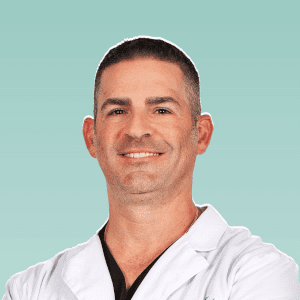
Author: Dr. Joseph Castellano
Dr. Joseph Castellano is a native Floridian who grew up in the Tampa Bay area. After medical school and residency, Dr. Castellano returned home and has opened a practice in Tampa, Florida focusing on breast augmentation, abdominoplasty, liposuction, facelift, and eyelid rejuvenation. He is a member of the American Board of Cosmetic Surgery, American College of Surgeons, and American Medical Association