Hooded eyes make eyeshadow disappear, eyeliner smudge, and eyes look tired even after a full night's sleep — and most of it traces back to excess skin or a dropped brow, not just aging skin texture. This guide ranks the non-surgical options Tampa patients actually ask about, from neuromodulators to skin-tightening devices, so you know which ones move the needle and which ones just move your budget.
- A Botox brow lift is the fastest non surgical hooded eyes treatment in Tampa — results in 3-7 days. Buy.
- PDO thread lifts and Morpheus8 address skin laxity Botox can’t touch, but expectations need to be realistic. Consider.
- Ultherapy and Sculptra work as maintenance, not correction, for true hooded lids. Hold unless skin laxity is mild.
- Heavy hooding with excess skin over the lash line usually needs blepharoplasty — no injectable fixes that. Skip if severe.
Why this matters
Hooded eyes come from one of two things: a brow that has dropped over time, or excess upper eyelid skin that was always going to show up eventually. Non-surgical treatments only fix the first problem. A Botox brow lift can lift the tail of the brow enough to open up the eye, but it does nothing for skin that's actually resting on the lash line.
That distinction matters because patients spend real money chasing injectable and device treatments for a problem that's structural, not muscular. Knowing which category your hooding falls into before booking anything in 2026 saves both time and money.
How this list was ranked
Treatments here are ranked by how directly they address brow position and periorbital skin quality — the two mechanisms behind hooded eyes — and by how predictable the outcome is across a typical adult patient in the Tampa Bay area. Injectables that lift muscle position rank above devices that tighten skin gradually, because gradual tightening has a wider range of outcomes. Surgical alternatives are noted where non-surgical options structurally can't deliver, since promising a lift that isn't physically possible from an injectable is the fastest way to disappoint a patient.
The ranked list
1. Botox Brow Lift (Chemical Brow Lift)
The fastest fix. Botox relaxes the muscles that pull the brow down, letting the frontalis muscle lift the brow tail unopposed. Results show up in 3 to 7 days and last 3 to 4 months, the same window as standard forehead Botox.
This works best on patients whose hooding comes from brow descent rather than eyelid skin excess — a distinction worth confirming at consultation. It's a low-commitment way to test whether brow position is your main issue before considering anything more permanent. Verdict: Buy for mild-to-moderate hooding caused by brow droop.
2. Dysport for Crow's Feet and Brow Softening
The alternative for Botox non-responders. Some patients metabolize Botox quickly or find the effect fades before the 3-month mark; Dysport for crow's feet is formulated with a smaller molecule that some patients feel kicks in faster and spreads more evenly around the orbital area.
Softening the crow's feet and outer brow muscles can reduce the squeeze that drags hooded lids down further, especially in patients who squint. It's not a brow lift on its own, but paired with brow-focused units it rounds out the upper-face picture. Verdict: Consider if Botox results have been inconsistent for you.
3. PDO Thread Lift
The lunchtime lift. A PDO thread lift uses dissolvable sutures placed under the skin to mechanically pull tissue upward, including the brow and outer eye area. Results are more visible than Botox for skin laxity and typically hold for 12 to 18 months before the threads fully dissolve.
Threads work better than neuromodulators on patients with mild skin excess, not just muscle-driven droop, but they don't remove skin — they reposition it. Overpromising a thread lift as a blepharoplasty substitute for heavy hooding sets patients up to be disappointed at the 6-month mark. Verdict: Consider for mild skin laxity with brow droop combined.
4. Morpheus8 RF Skin Tightening
The skin-quality pick. Morpheus8 combines microneedling with radiofrequency energy to tighten collagen in the upper eyelid and brow region over a standard series of 3 sessions spaced about a month apart. It treats skin texture and mild laxity rather than muscle position, so it's a companion to Botox, not a replacement for it.
Patients see gradual tightening over 2 to 3 months as new collagen builds, which makes it a slower-but-cumulative option compared to an injectable. Verdict: Consider as an add-on for skin quality, not as a standalone fix for structural hooding.
5. Ultherapy
The once-a-year maintenance option. Ultherapy uses focused ultrasound to stimulate deep collagen without cutting or injecting anything, and a single session's results build gradually over 2 to 3 months. It's a mild lift, not a dramatic one, and it works better on patients who are trying to slow further drooping than on patients who already have significant hooding.
Expectations need to be set correctly here: Ultherapy softens the trajectory of aging skin, it doesn't reverse existing hooding. Verdict: Hold unless your hooding is genuinely mild and you're trying to delay further changes.
6. Sculptra for Temple and Brow Support
The structural-support pick. Hollow temples let the brow and outer eyelid skin sag inward and downward, which can make hooding look worse than it is. Restoring temple volume with a collagen-stimulating filler indirectly supports the brow position over a series of sessions spaced about a month apart.
This only helps if temple hollowing is part of your specific presentation — it does nothing for patients whose hooding is purely skin-driven. Verdict: Hold unless a consult confirms temple volume loss is contributing to your eye area.
7. When Non-Surgical Isn't Enough
If excess upper eyelid skin actually rests on your lash line or interferes with your field of vision, no injectable or device changes that — the tissue has to be removed. Upper blepharoplasty is the surgical answer for that specific presentation, and it's worth ruling in or out at a consultation before spending a full year cycling through non-surgical options that were never going to reach the goal. Verdict: Skip non-surgical routes entirely if skin is physically overhanging the lash line.
Comparison at a glance
| Treatment | Mechanism | Typical duration | Best for | Verdict |
|---|---|---|---|---|
| Botox Brow Lift | Muscle relaxation | 3-4 months | Brow droop, mild hooding | Buy |
| Dysport | Muscle relaxation | 3-4 months | Botox non-responders | Consider |
| PDO Thread Lift | Mechanical repositioning | 12-18 months | Mild skin laxity + droop | Consider |
| Morpheus8 | Collagen remodeling | Builds over 2-3 months | Skin texture, add-on | Consider |
| Ultherapy | Collagen stimulation | Builds over 2-3 months | Very mild, preventive | Hold |
| Sculptra (temples) | Volume restoration | Multiple sessions | Temple hollowing | Hold |
| Upper Blepharoplasty | Surgical skin removal | Permanent | Excess skin over lash line | Skip non-surgical |
Not sure which option fits your eyes?
A consult separates brow droop from skin excess before you spend on the wrong treatment.
Where to get it done in Tampa
- Confirm who's injecting. Botox and Dysport dosing around the brow and orbital rim needs precision — units placed slightly wrong can flatten a brow instead of lifting it. Ask specifically who performs the injection, not just who owns the practice.
- Get an honest read on your anatomy first. A provider who sells threads or Morpheus8 to every hooded-eye patient regardless of whether skin excess is present isn't diagnosing your case, they're running a menu. The right treatment depends on whether your issue is muscular, structural, or skin-driven.
- Ask what happens if it doesn't work. Neuromodulators wear off in months either way, but threads and RF devices are a bigger investment — ask what the plan is if results fall short of expectations before you commit.
FAQ
What is the best non surgical hooded eyes treatment in Tampa?
A Botox brow lift is generally the best starting point because it lifts the brow tail directly and shows results within 3 to 7 days. It works best for hooding caused by brow droop rather than excess eyelid skin.
Can Botox actually fix hooded eyes?
Botox can improve hooded eyes caused by a low brow position by relaxing the muscles pulling the brow down, but it cannot remove excess skin resting on the lash line. That distinction is why a consultation matters before booking.
How long do non-surgical hooded eye treatments last?
Botox and Dysport last 3 to 4 months, PDO thread lifts hold for roughly 12 to 18 months, and Morpheus8 or Ultherapy results build gradually and are considered longer-term but not permanent. None of these outlast surgical correction.
Is a PDO thread lift better than Botox for hooded eyes?
A PDO thread lift addresses mild skin laxity that Botox cannot touch, since Botox only relaxes muscle rather than repositioning tissue. For pure muscle-driven brow droop, Botox is the simpler and less invasive first step.
When do hooded eyes need surgery instead of injectables?
Surgery becomes the answer when excess upper eyelid skin actually overhangs the lash line or interferes with vision, since no injectable or device removes skin. An upper blepharoplasty is the surgical option typically discussed at that point.
Does Morpheus8 work for hooded eyes?
Morpheus8 improves skin texture and mild laxity around the eyes through a standard series of about 3 sessions, but it doesn’t reposition the brow the way a neuromodulator does. It works best as an add-on rather than a standalone fix.
How much does treating hooded eyes cost in Tampa in 2026?
Cost depends entirely on which treatment fits your anatomy, since a Botox brow lift, a thread lift, and a device series are priced very differently. Pricing specifics are best confirmed directly during a consultation.
Can you combine treatments for hooded eyes?
Yes, combining a neuromodulator for brow position with Morpheus8 or Sculptra for skin quality is common when both issues are present. Combination plans should be built around what a consultation identifies as the actual cause of hooding.
One last thing
The single most common mistake in Tampa consults for hooded eyes isn't picking the wrong treatment — it's skipping the step where a provider actually determines whether the hooding is muscular, structural, or skin-driven before recommending anything. Patients who get that diagnosis right the first time spend less over the course of 2026 than patients who cycle through three treatments hoping one eventually works.
Related guides
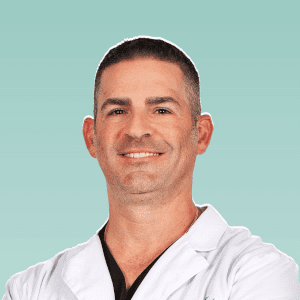
Author: Dr. Joseph Castellano
Dr. Joseph Castellano is a native Floridian who grew up in the Tampa Bay area. After medical school and residency, Dr. Castellano returned home and has opened a practice in Tampa, Florida focusing on breast augmentation, abdominoplasty, liposuction, facelift, and eyelid rejuvenation. He is a member of the American Board of Cosmetic Surgery, American College of Surgeons, and American Medical Association