Getting your first breast augmentation Tampa consultation booked is the easy part — knowing what actually happens in that room, and how to prepare for it, is what separates patients who walk out with a clear plan from those who leave confused. This guide walks through every stage of the consult process at Castellano Cosmetic Surgery Center, from the intake paperwork to the implant sizing discussion.
TL;DR: A breast augmentation Tampa consultation typically runs 45–90 minutes and covers medical history, a physical assessment, implant type and size selection, incision placement options, and a personalized cost breakdown. Castellano Cosmetic Surgery Center surgeons in Tampa, FL evaluate your frame, skin laxity, and aesthetic goals before recommending silicone or saline, round or anatomical, and submuscular or subglandular placement. Come with photos, questions, and a realistic sense of your timeline.
Why this consult matters more than you think
The consultation is where surgery outcomes are built or broken. A 2026 patient survey by the American Society of Plastic Surgeons found that patients who reported feeling "fully informed" after their consult had significantly higher satisfaction rates post-op than those who felt rushed. At a dedicated Tampa cosmetic surgery practice, this appointment sets your surgeon's baseline — they cannot recommend the right implant profile without seeing your actual anatomy. Skipping prep wastes everyone's time and delays your surgery date.
What you'll need
- Photo inspiration: 3–6 images of results you genuinely like (not just the most dramatic ones you can find)
- Medical history documentation: previous surgeries, current medications, any family history of breast cancer
- A list of questions: written down, not just in your head
- A supportive bra or fitted top: surgeons assess proportion and skin quality with you standing upright
- 60–90 minutes: this is not a 15-minute appointment
- A trusted person (optional): a second set of ears helps retain information, especially during the cost discussion
For patients also considering body contouring — whether a tummy tuck or a full mommy makeover — mentioning this at the consult allows the surgical team to plan procedures together rather than sequentially, which affects anesthesia time, recovery, and total cost.
The steps
Step 1: Intake and health screening
The appointment opens with a detailed health intake — not a formality. Your surgeon needs to know your BMI, any history of autoimmune conditions, nicotine use (smoking must typically stop 4–6 weeks before surgery), and whether you plan to have children, since future pregnancies and breastfeeding affect long-term implant outcomes. Be specific here. Incomplete answers lead to a generic surgical plan.
What it accomplishes: Rules out contraindications and flags anything that requires specialist clearance before a surgery date can be set.
Common mistake: Understating alcohol or tobacco use. Surgeons are not judging you — they are dosing your anesthesia and managing your healing risk.
Step 2: Physical assessment
Your surgeon measures your chest width, base diameter, and the distance between your nipple and inframammary fold. These numbers, not your cup-size goal, determine the implant profile that will look proportional on your frame. Skin elasticity is tested manually. If there is significant ptosis (drooping), the surgeon may recommend a breast lift alongside augmentation — two separate discussions but often one surgical session.
Expected outcome: A clear note in your chart of your existing anatomy and what it can support structurally.
Common mistake: Arriving with only a cup-size target. "I want a full C" means nothing to the surgical plan without the physical measurements to back it.
Step 3: Implant selection — type, profile, and size
This is the longest part of the consult, typically 20–30 minutes on its own. You will handle physical implant samples — both silicone gel and saline — and discuss the difference in feel, rupture behavior, and FDA guidance. In 2026, cohesive silicone gel ("gummy bear") implants remain the dominant choice for Tampa patients due to shape retention in warmer climates.
Profile options — low, moderate, moderate-plus, high, and ultra-high — determine how far the implant projects forward relative to its base width. A narrower chest usually benefits from a higher-profile implant at a smaller volume rather than a wide-base implant at a larger volume.
Sizer trials — placing implant sizers in a fitted bra — give you a physical preview. Some practices also offer 3D imaging. Ask specifically whether Castellano Cosmetic Surgery Center uses 3D simulation at your consult.
Common mistake: Choosing the largest sizer that "fits" rather than the one that matches your frame and activity level. High-profile large implants on a narrow ribcage can cause long-term shoulder and posture issues.
Step 4: Incision and placement discussion
Three incision options are standard: inframammary (under the breast fold), periareolar (around the nipple edge), and transaxillary (through the armpit). Each has tradeoffs on scar visibility, breastfeeding preservation, and revision access. Your anatomy often narrows the realistic options to one or two.
Placement — submuscular (under the pectoral muscle) versus subglandular (over the muscle, under breast tissue) — affects mammography reads, recovery time, and the look of the implant at rest and in motion. Most board-certified Tampa surgeons recommend submuscular for patients with minimal existing breast tissue because it provides more implant coverage and a more natural slope.
Expected outcome: A documented recommendation with the reasoning specific to your anatomy, not a default protocol.
Step 5: Recovery timeline and restrictions
Your surgeon or patient coordinator will walk through a week-by-week recovery schedule. Standard benchmarks in 2026: surgical bra worn continuously for 4–6 weeks, no overhead lifting for 3 weeks, no high-impact exercise for 6 weeks, and full implant settling at 3–6 months. If you have a physically demanding job or travel scheduled within 2 weeks post-op, flag it now — it may shift your surgery date.
Common mistake: Planning a return to normal activity at 2 weeks because "someone online did it." Individual healing rates vary, and pushing too early risks hematoma or implant displacement.
Step 6: Cost breakdown and financing
Breast augmentation in Tampa in 2026 typically ranges from $6,000 to $10,000 all-in, depending on implant type, surgical complexity, facility fees, and anesthesia. Get an itemized quote — surgeon fee, anesthesia, facility, implants, garments, and follow-up visits should all be line items. Ask explicitly whether revision surgery within 12 months for capsular contracture or asymmetry is included or separately billed.
Financing through CareCredit or Alphaeon Credit is widely available. If the practice offers in-house payment plans, confirm the interest rate in writing.
Common mistake: Comparing total quotes without confirming what each includes. A $5,500 quote that excludes anesthesia is not cheaper than a $7,200 all-in quote.
Step 7: Questions and next steps
End every consult by asking three things: How many breast augmentations has the surgeon performed in the last 12 months? What is the practice's revision rate? And what is the earliest available surgery date? These questions signal that you are an informed patient and give you real data to compare across consults.
If you are ready to book, the front desk will schedule a pre-op appointment — typically 2–4 weeks before surgery — where labs, EKG (if required by age), and final measurements are completed.
Troubleshooting
"The surgeon recommended a lift I didn't expect." This is common when ptosis is present. A lift (mastopexy) addresses skin position; an implant addresses volume. Without the lift, an implant in drooping tissue produces an unflattering result. Ask to see before-and-after photos of combined augmentation-lift cases.
"I don't know which size to choose after the sizer trial." Request to take photos in the sizer bra. Compare at home, then call back with your decision before committing. Most practices allow a brief follow-up call with the patient coordinator for exactly this.
"The quote came in higher than I expected." Ask for an itemized breakdown and identify which line items are fixed versus variable. Implant brand is often the easiest variable — Mentor and Allergan implants carry similar safety profiles with some price difference.
"I have asymmetry — will it be addressed?" Minor asymmetry (present in roughly 88% of women per aggregated anatomical studies) is typically managed with different implant profiles per side. Ask the surgeon to note the plan explicitly in your chart.
"I'm not sure I'm ready to commit after one consult." A second opinion is standard practice. Most reputable Tampa surgeons expect it. The consult fee (if any) is often applied to your surgical deposit.
"I want to combine this with body work." Breast augmentation is frequently paired with liposuction or an Avelar tummy tuck in a single OR session. Reviewing the Avelar tummy tuck page before your consult gives you informed questions to ask about combined-procedure candidacy.
Tools and resources
- Breast augmentation at Castellano Cosmetic Surgery Center — procedure details, implant options, and before-and-after gallery
- American Society of Plastic Surgeons implant data (plasticsurgery.org) — 2026 national statistics on implant types and complication rates
- FDA breast implant safety communication (fda.gov) — current guidance on BIA-ALCL risk and textured implant status
- Your insurance provider — breast augmentation is elective; confirm in writing what is and is not covered if any revision is medically indicated
What to do next
Book a second consult at a different Tampa practice if you want a comparison point — but do it within 2–4 weeks so both evaluations reflect the same anatomy. Once you choose a surgeon, lock your surgery date before the pre-op window opens; popular dates in Tampa fill 6–10 weeks out, especially in the fall 2026 and early 2027 booking cycles. If body contouring is part of your longer-term plan, review the Sculptra butt lift options while you have the cosmetic surgery conversation open — combining consultations saves time.
FAQ
What happens at a breast augmentation Tampa consultation?
The surgeon reviews your medical history, performs a physical assessment with chest measurements, discusses implant type and size using physical samples, walks through incision and placement options, and provides an itemized cost quote. The appointment runs 45–90 minutes.
How much does a breast augmentation consultation cost in Tampa?
Consult fees in Tampa in 2026 range from $0 to $200 depending on the practice. Many practices, including dedicated cosmetic surgery centers, apply the fee toward your surgical deposit if you book.
What size implants should I get?
Implant size is determined by your chest base diameter, skin laxity, and aesthetic goal — not by a cup-size target. Your surgeon measures your frame and recommends a profile and volume that fits your anatomy. Sizer trials give you a physical preview before committing.
Is breast augmentation in Tampa safe?
Board-certified plastic surgeons operating in accredited Tampa surgical facilities maintain complication rates consistent with national benchmarks. The FDA's 2026 guidance recommends MRI screening at 5–6 years post-op for silicone implants and every 2–3 years after that.
How long is recovery from breast augmentation?
Most patients return to desk work within 5–7 days. Physical restrictions — no overhead lifting, no high-impact exercise — last 3–6 weeks. Full implant settling takes 3–6 months. Individual recovery timelines vary based on placement (submuscular recovery is longer than subglandular).
What questions should I ask at my breast augmentation consult?
Ask: How many augmentations has the surgeon performed in the past 12 months? What is the revision rate? Is the quote all-in? What happens if I develop capsular contracture in year one? Is 3D imaging available?
Can I combine breast augmentation with a tummy tuck?
Yes. Combined mommy makeover procedures are common and reduce total anesthesia time compared to staging them separately. Candidacy depends on your overall health, BMI, and the complexity of each procedure. Raise it at your consult so the surgical team can evaluate your specific case.
How far in advance should I book surgery in Tampa?
Plan 6–10 weeks out from your consult for a realistic surgery date. Fall 2026 dates at established Tampa practices are booking quickly. Pre-op labs and measurements must be completed 2–4 weeks before the OR date.
One last thing
The implant warranty is a detail most patients skip in the consult — and then scramble for later. Both Allergan and Mentor offer lifetime implant replacement warranties for rupture and, in some cases, capsular contracture. The catch: the warranty is registered by the surgeon's office, not automatically. Confirm at your consult that the practice handles warranty registration before you leave the building. It takes 5 minutes and could save you $3,000–$5,000 on a future revision.
Related guides
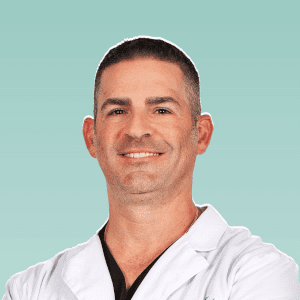
Author: Dr. Joseph Castellano
Dr. Joseph Castellano is a native Floridian who grew up in the Tampa Bay area. After medical school and residency, Dr. Castellano returned home and has opened a practice in Tampa, Florida focusing on breast augmentation, abdominoplasty, liposuction, facelift, and eyelid rejuvenation. He is a member of the American Board of Cosmetic Surgery, American College of Surgeons, and American Medical Association