Swelling, congestion, and that first look in the mirror without a splint — rhinoplasty recovery follows a fairly predictable pattern, and knowing what happens week by week keeps you from panicking over normal healing. This guide walks through the full rhinoplasty recovery timeline, from the day of surgery through the year it takes for final results to settle.
TL;DR
The rhinoplasty recovery timeline runs roughly 12 months from surgery to fully settled results, though most patients return to work and social activities by week two or three. Swelling drops fastest in the first month, then tapers slowly for up to a year — the tip is usually the last area to fully refine. Dr. Joseph Castellano at Castellano Cosmetic Surgery Center in Tampa walks patients through this exact rhinoplasty recovery timeline at every rhinoplasty consultation, because setting expectations early prevents the week 3 or week 4 disappointment that catches a lot of first-time patients off guard. Verdict: plan for two weeks of visible downtime and a full year of subtle refinement.
Why this matters
Most people search "rhinoplasty recovery timeline" after they've already booked surgery, not before — and by then the anxiety is about whether what they're seeing in week 2 or week 6 is normal. It usually is. Nasal tissue is thin and swelling shows up more visibly here than almost anywhere else on the body, which is exactly why patients fixate on it.
Understanding the stages ahead of time changes how you interpret each week. A nose that looks slightly upturned or boxy at week 3 isn't the final result — it's swelling sitting on top of the surgical work, and it behaves differently depending on whether you had a closed or open approach, or whether cartilage grafting was involved. In 2026, most Tampa rhinoplasty patients are still advised to expect visible refinement continuing for 9 to 12 months.
What you'll need
- A ride home from surgery — you cannot drive yourself after general anesthesia or IV sedation
- 7-10 days off work or school, more if your job is physical
- Cold compresses (not ice directly on the splint) for the first 48 hours
- Extra pillows to keep your head elevated above your heart while sleeping
- Saline spray for nasal dryness once your surgeon clears you to use it
- A follow-up schedule confirmed with your surgeon before the day of surgery
- Loose, front-zip or button-front tops — nothing that pulls over your head for the first two weeks
Before any of this starts, the surgeon you pick determines a lot of how smooth the healing goes. Picking based on board certification and rhinoplasty-specific volume, not just price, is covered in how to choose a rhinoplasty surgeon in Tampa.
The rhinoplasty recovery timeline, week by week
Week 1: Protect the splint and manage swelling
The external splint stays on for 6-7 days and does most of the protective work during this stretch. Expect bruising under the eyes that peaks around day 2-3 and starts fading by day 5, along with congestion that makes breathing through your nose difficult — this is swelling inside the nasal passages, not a permanent airway problem.
Sleep at a 30-45 degree incline for the full week to keep fluid from pooling in your face. Common mistake: blowing your nose. Even a gentle blow can disrupt healing cartilage in week 1. Sneeze with your mouth open instead.
Week 2: Splint removal and the first real look
The splint comes off around day 7, and most patients return to non-physical work between days 10 and 14. Bruising is typically gone or nearly gone, but the nose itself will look swollen, sometimes noticeably wider at the bridge or upturned at the tip.
This is the week people call the office worried something went wrong. It hasn't — this is baseline swelling before the tissue starts settling. Verdict: don't judge your result at week 2.
Weeks 3-4: Social swelling drops, shape starts to emerge
By week 3, most of the obvious puffiness has receded enough that strangers won't notice you had surgery. Friends and family who know your face well may still see swelling around the tip and bridge. Exercise beyond light walking is usually still restricted until your surgeon clears you, generally around week 4.
This is also when patients start comparing themselves to "final result" photos online and getting discouraged. Those photos are almost always taken at 6-12 months post-op, not 4 weeks.
Weeks 5-8: Return to full activity
Most surgeons clear patients for full exercise, including running and weightlifting, somewhere in this window. Swelling continues its slow decline but is now mostly invisible to anyone but you and your surgeon. Numbness in the tip and along the bridge is still common — nerve regeneration is slower than tissue healing and can take several more months.
Sunglasses no longer need to be avoided for pressure reasons (that restriction is usually just the first 3-4 weeks), and makeup can typically cover any lingering redness.
Months 3-6: The "is this it" phase
This stretch is where a lot of the emotional volatility in rhinoplasty recovery happens. The nose looks close to final but subtle swelling, particularly in the tip, is still resolving. Skin thickness plays a real role here — thicker-skinned patients take longer to see fine refinement than thin-skinned patients, sometimes by several additional months.
If something feels genuinely off rather than just "still swollen" — a visible bump that wasn't discussed, asymmetry that's gotten worse rather than better, or a breathing problem that hasn't improved by month 3 — that's worth a direct conversation with your surgeon rather than waiting it out.
Months 6-12: Final refinement
By month 6, the vast majority of visible swelling is gone and most patients consider themselves "recovered." The last 5-10% of change — subtle tip refinement, final bridge contour — happens gradually through month 12. Photos taken at the one-year mark are the ones surgeons use as true final results, and for good reason.
Troubleshooting the rhinoplasty recovery timeline
Problem: Swelling seems worse at week 6 than week 3.
Fix: Minor fluctuation is normal, especially tied to sodium intake, alcohol, or heat exposure. Persistent worsening beyond a few days warrants a call to your surgical team.
Problem: One nostril breathes worse than the other past month 2.
Fix: Internal swelling can be asymmetric even when external healing looks even. If it hasn't improved by month 3-4, ask about internal scar tissue or turbinate swelling at your follow-up.
Problem: A visible bump or asymmetry that doesn't resolve after 6-9 months.
Fix: This is the point where patients start researching revision rhinoplasty — most surgeons want a full year of healing before evaluating whether a second surgery is warranted, since a lot of what looks permanent at month 6 still changes.
Problem: Numbness in the tip hasn't gone away by month 4.
Fix: Nerve regeneration timelines vary widely and numbness lasting 6-12 months is within normal range, though it should be mentioned at follow-up appointments regardless.
Problem: Bruising under the eyes lasting more than 2 weeks.
Fix: Rare but not alarming on its own — arnica gel and continued cold compress use in the first 5 days typically shortens this, and it should be raised with your surgeon if it persists past day 14.
Tools and resources
- A written post-op instruction sheet from your surgical team, followed exactly rather than adapted from generic internet advice
- Scheduled follow-ups at roughly week 1, week 4, month 3, month 6, and month 12 to track the actual healing curve against your case
- A cost breakdown reviewed before surgery, since revision timelines and follow-up visits factor into total spend — patients considering the procedure in 2026 can review current numbers
- Realistic before-and-after photo sets from your surgeon's own practice, ideally labeled with the exact post-op timeframe rather than just "after"
What to do next
If you're still deciding whether rhinoplasty is the right procedure at all, start with what a consultation actually covers rather than jumping straight to recovery logistics — Dr. Castellano's team walks through candidacy, technique, and expected timeline together at that first visit.
FAQ
What is the full rhinoplasty recovery timeline?
Most patients are socially presentable by week 2-3, cleared for full exercise by week 6-8, and see final refined results by month 12. Swelling is the main driver of the timeline, not pain, which is typically manageable within the first several days.
How long does swelling last after rhinoplasty?
Visible swelling drops significantly in the first month, but subtle swelling — especially in the nasal tip — can take 9 to 12 months to fully resolve, longer in patients with thicker skin.
When can I go back to work after rhinoplasty?
Desk jobs typically allow a return between days 7 and 14, once the external splint is removed and bruising has faded enough to feel comfortable in public.
When can I exercise after rhinoplasty?
Light walking is fine within the first week, but running, weightlifting, and anything that raises blood pressure or risks facial impact usually waits until week 4-6, confirmed by your surgeon.
Is nasal congestion normal after rhinoplasty?
Yes, internal swelling causes congestion for the first several weeks and gradually improves. Congestion that persists past month 3 without improvement should be evaluated.
When will I see my final rhinoplasty result?
The true final result is typically assessed at the 12-month mark, though 80-90% of visible change is usually done by month 6.
Can I wear glasses during rhinoplasty recovery?
Glasses resting on the bridge should be avoided or taped up off the nose for at least 4-6 weeks to prevent pressure on healing cartilage and bone.
What's the difference in recovery between surgical and non-surgical rhinoplasty?
Filler-based non-surgical rhinoplasty involves no splint, no cartilage healing, and typically a few days of swelling rather than weeks, since it's an injectable treatment rather than a structural surgery.
One last thing
The part of the rhinoplasty recovery timeline that surprises patients most isn't the swelling — it's how long tip numbness can linger. It's common for sensation in the nasal tip to take 6 to 12 months to fully return, and it's one of the most frequent "is this normal" questions Dr. Castellano's team fields at 3 and 6 month follow-ups in 2026, well after most patients assume recovery is finished.
Related guides
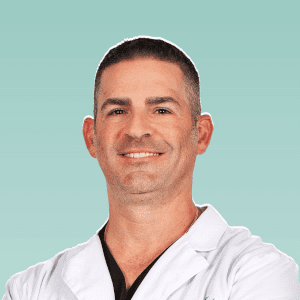
Author: Dr. Joseph Castellano
Dr. Joseph Castellano is a native Floridian who grew up in the Tampa Bay area. After medical school and residency, Dr. Castellano returned home and has opened a practice in Tampa, Florida focusing on breast augmentation, abdominoplasty, liposuction, facelift, and eyelid rejuvenation. He is a member of the American Board of Cosmetic Surgery, American College of Surgeons, and American Medical Association