A scar that still draws your eye a year after surgery — or after an old injury — is not something you have to accept. Scar revision in Tampa covers a range of treatments, from in-office laser sessions to outpatient surgery, and the right approach depends on the type of scar, how old it is, and what outcome you are realistically after.
TL;DR: Scar revision Tampa candidates include people with hypertrophic scars, keloids, contractures, or wide surgical scars that have not improved after 12 months. At Castellano Cosmetic Surgery Center, treatment options range from steroid injections and laser resurfacing to surgical excision, with costs typically falling between $500 and $4,500 in 2026 depending on technique and scar size. No revision eliminates a scar entirely — the goal is making it significantly less visible.
Why scar revision matters (and what it cannot do)
Scars form because the skin repairs itself quickly rather than perfectly. The result is dense collagen fiber that sits differently from surrounding tissue — it may be raised, recessed, discolored, tight, or wide. Most scars continue maturing and softening for 12 to 18 months after the initial injury or surgery. Treating a scar before it has fully matured rarely produces the best outcome, which is why most board-certified surgeons wait at least a year before recommending revision.
What revision can accomplish in 2026: reducing the width, height, or color contrast of a scar; releasing a tight contracture that restricts movement; and improving surface texture. What it cannot do: make the scar disappear completely. Any surgeon who promises complete removal is overpromising.
Who is a good candidate for scar revision in Tampa
This guide is written for adults who:
- Have a scar from surgery, trauma, acne, or a previous procedure that is fully healed and at least 12 months old
- Are unhappy with the scar's appearance or are experiencing functional limitation (e.g., a contracture limiting range of motion)
- Are non-smokers, or are willing to quit at least 4 weeks before any surgical revision
- Have realistic expectations — improvement, not perfection
- Are at or near a stable weight, which matters most when the scar is on the abdomen or chest
Tampa's climate is worth a practical mention: Florida sun accelerates hyperpigmentation in healing scars. Patients who spend significant time outdoors should plan laser-based treatments for fall or winter months when UV exposure is easier to manage.
What to look for when evaluating scar revision options
Scar type and depth
The technique that works for a flat, wide scar from a tummy tuck will not work for a raised keloid or a depressed acne scar. A board-certified plastic surgeon will classify your scar — hypertrophic, keloid, atrophic, contracture, or widened surgical scar — before recommending anything. Misidentifying scar type is the most common reason treatments fail.
Surgeon qualifications and case volume
Scar revision outcomes correlate directly with surgical technique and experience. In Florida, look for a surgeon board-certified by the American Board of Plastic Surgery. At Castellano Cosmetic Surgery Center, Dr. Joseph Castellano and Dr. Mindi Giglio perform surgical revisions as well as non-surgical treatments in-house, which matters when a scar may benefit from a combination approach.
Realistic treatment timeline
Non-surgical options like steroid injections, silicone sheeting, and laser resurfacing require multiple sessions — typically 3 to 6 visits spaced 4 to 6 weeks apart. Surgical revision is a single procedure but is followed by a healing period during which the new scar itself matures. Plan for a minimum 6-month commitment regardless of which route you choose.
Combination vs. single-modality treatment
For many scars, the best outcome in 2026 comes from combining modalities — for example, surgical excision followed by laser resurfacing of the new scar line, or steroid injections paired with silicone sheeting. A practice that offers only one treatment type will tend to recommend that treatment regardless of fit.
Skin tone and pigmentation risk
Laser resurfacing parameters must be calibrated for skin tone. Patients with deeper complexions (Fitzpatrick IV–VI) face higher risk of post-inflammatory hyperpigmentation if the wrong laser settings or device are used. Ask specifically about which laser the practice uses and whether they have before-and-after examples for patients with your skin tone.
Cost structure and what is included
Some practices quote a per-session laser fee without including the consultation, topical treatments, or follow-up visits. Get an itemized estimate before committing. Surgical revision quotes should include the surgeon's fee, facility fee, and anesthesia.
Scar revision options at a glance — and what each costs in Tampa (2026)
Steroid injections (kenalog)
Best for: Hypertrophic scars and keloids that are raised and firm.
Corticosteroid injections flatten raised scars by breaking down excess collagen. Most patients need 3 to 5 sessions, each spaced 4 to 6 weeks apart. Cost in the Tampa area runs $150 to $400 per session in 2026. Keloids have a meaningful recurrence rate after injection alone — combining with surgical excision improves long-term results.
Verdict: Start here for hypertrophic scars less than 2 years old before committing to surgery.
Laser resurfacing
Best for: Flat, discolored, or textured scars — including acne scars and surgical scars that are pale or red.
Fractional CO2 and erbium lasers resurface the top layers of the scar and stimulate collagen remodeling underneath. A course of 3 to 5 treatments costs $400 to $900 per session in the Tampa market, putting a full course at $1,200 to $4,500. Results typically take 3 to 6 months to fully appear after the final session.
Verdict: Strong option for surgical scars from breast reduction, tummy tuck, or c-section once they are fully healed.
Surgical excision
Best for: Wide, asymmetric, or poorly healed scars that laser cannot close — and contractures.
The surgeon removes the scar tissue and re-closes the wound with precise tension-free technique, sometimes using a Z-plasty or W-plasty to reorient the scar along natural skin lines. A new, finer scar replaces the old one. Surgical revision in Tampa ranges from $1,500 to $4,000+ in 2026 depending on scar length, location, and whether general or local anesthesia is used.
Verdict: Best outcome for wide or contracture scars, but requires the same healing commitment as the original procedure.
Silicone sheeting and gels
Best for: Scars less than 2 years old as a first-line or adjunct treatment.
Silicone maintains moisture and reduces collagen overproduction. It is the only topical approach with strong clinical evidence behind it. It requires 12+ hours of daily wear for a minimum of 3 months. Cost is low — $30 to $80 per month for sheeting — which makes it a reasonable starting point for fresh surgical scars before pursuing anything more aggressive.
Verdict: Use this first on any surgical scar from the moment the incision closes, as directed by your surgeon.
Comparison table
| Method | Best for | Sessions / Visits | 2026 Cost Range | Downtime |
|---|---|---|---|---|
| Steroid injection | Raised, hypertrophic, keloid | 3–5 | $450–$2,000 total | None |
| Laser resurfacing | Discolored, textured, flat surgical | 3–5 | $1,200–$4,500 total | 3–7 days per session |
| Surgical excision | Wide, contracture, poorly healed | 1 (plus follow-ups) | $1,500–$4,000+ | 1–3 weeks |
| Silicone sheeting | Fresh or maturing scars (adjunct) | Ongoing | $30–$80/month | None |
What to avoid
Going too early. Treating a scar that is still maturing — under 12 months for most surgical scars — often produces a worse result than waiting. The scar is still remodeling and may improve significantly on its own.
Chasing complete removal. No technique eliminates a scar. If a consultation frames revision as "getting rid of" a scar rather than improving its appearance, that is a red flag.
Single-option practices. A medspa that only offers laser will laser everything. A practice that offers surgical and non-surgical options can match the treatment to the scar.
FAQ
What is scar revision, and how does it work?
Scar revision is a set of procedures — surgical or non-surgical — designed to reduce the visibility or functional impact of a scar. Techniques include surgical excision, laser resurfacing, steroid injections, and silicone therapy. The right method depends on the scar's type, age, and location.
How much does scar revision cost in Tampa in 2026?
Cost ranges from $150 to $400 per steroid injection session up to $1,500 to $4,000+ for surgical excision. A full laser course (3–5 sessions) typically runs $1,200 to $4,500. Most cosmetic scar revision is not covered by insurance, though functional revisions — such as contracture release — may qualify for partial coverage.
When is the right time to seek scar revision?
Most surgeons recommend waiting 12 to 18 months after the original wound closed before pursuing revision. Before that point, the scar is still actively remodeling and may improve on its own.
Is scar revision in Tampa covered by insurance?
Cosmetic revision — improving the appearance of a scar — is not covered. If the scar causes a functional problem (contracture limiting movement, or a scar that reopens), the functional component may be partially covered. Get a pre-authorization letter from the practice before assuming coverage.
What is the best treatment for a tummy tuck scar that widened?
A wide, flat scar along a tummy tuck incision is typically addressed with surgical re-excision and careful re-closure, often combined with laser resurfacing 6 to 8 weeks after the new incision heals. Silicone sheeting from the moment sutures are removed helps prevent recurrence.
How many laser sessions does scar revision take?
Most patients need 3 to 5 sessions spaced 4 to 6 weeks apart. Deeply textured acne scars may need more. Results continue improving for 3 to 6 months after the final session.
Can a keloid scar be removed permanently?
Keloids have a high recurrence rate — surgical excision alone recurs in up to 80% of cases. Combining excision with post-operative steroid injections and silicone sheeting significantly reduces recurrence. Your surgeon should discuss the realistic probability of regrowth at your consultation.
Does scar revision hurt?
Surgical excision is performed under local or general anesthesia, so there is no pain during the procedure. Post-operative soreness is mild and typically managed with over-the-counter pain relief. Laser sessions cause a stinging or heat sensation; topical numbing cream is applied beforehand. Steroid injections cause brief pressure and mild stinging at the injection site.
One last thing
The single factor that predicts outcome more than any treatment is tension on the wound during healing. Scars widen because the skin is pulling. When a surgical revision is performed, the surgeon repositions or releases that tension — which is why Z-plasty and W-plasty incision patterns consistently produce finer scars than straight re-excision alone. If your consultation does not include a conversation about wound tension and closure technique, push for one.
Related guides
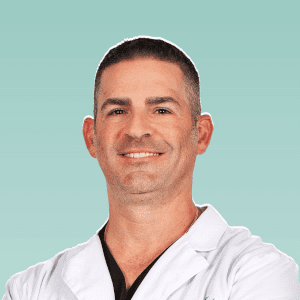
Author: Dr. Joseph Castellano
Dr. Joseph Castellano is a native Floridian who grew up in the Tampa Bay area. After medical school and residency, Dr. Castellano returned home and has opened a practice in Tampa, Florida focusing on breast augmentation, abdominoplasty, liposuction, facelift, and eyelid rejuvenation. He is a member of the American Board of Cosmetic Surgery, American College of Surgeons, and American Medical Association