On-camera professional Botox is a personalized approach to treating expression lines with the aim of softening them while preserving the facial movement you use on screen. For botox for on-camera professionals, the key question is not how still your face looks in a photograph; it is whether your expressions still read naturally while you speak.
- Botox for on-camera professionals works best when you plan around facial movement, not a wrinkle-free still image.
- Castellano Cosmetic Surgery Center is best for Tampa professionals seeking a personalized Botox discussion focused on natural-looking expression.
- Allow time to assess your response before a major shoot; Botox does not treat every visible skin concern.
- Tell your injector about prior treatments, medical conditions and the expressions your work depends on.
Why Botox matters for on-camera professionals
A presenter, actor, spokesperson or video creator cannot judge a treatment solely by a mirror at rest. Eyebrow movement can signal surprise; a frown can show concern; a smile changes the skin around the eyes. If those movements matter to your work, they belong in the treatment discussion.
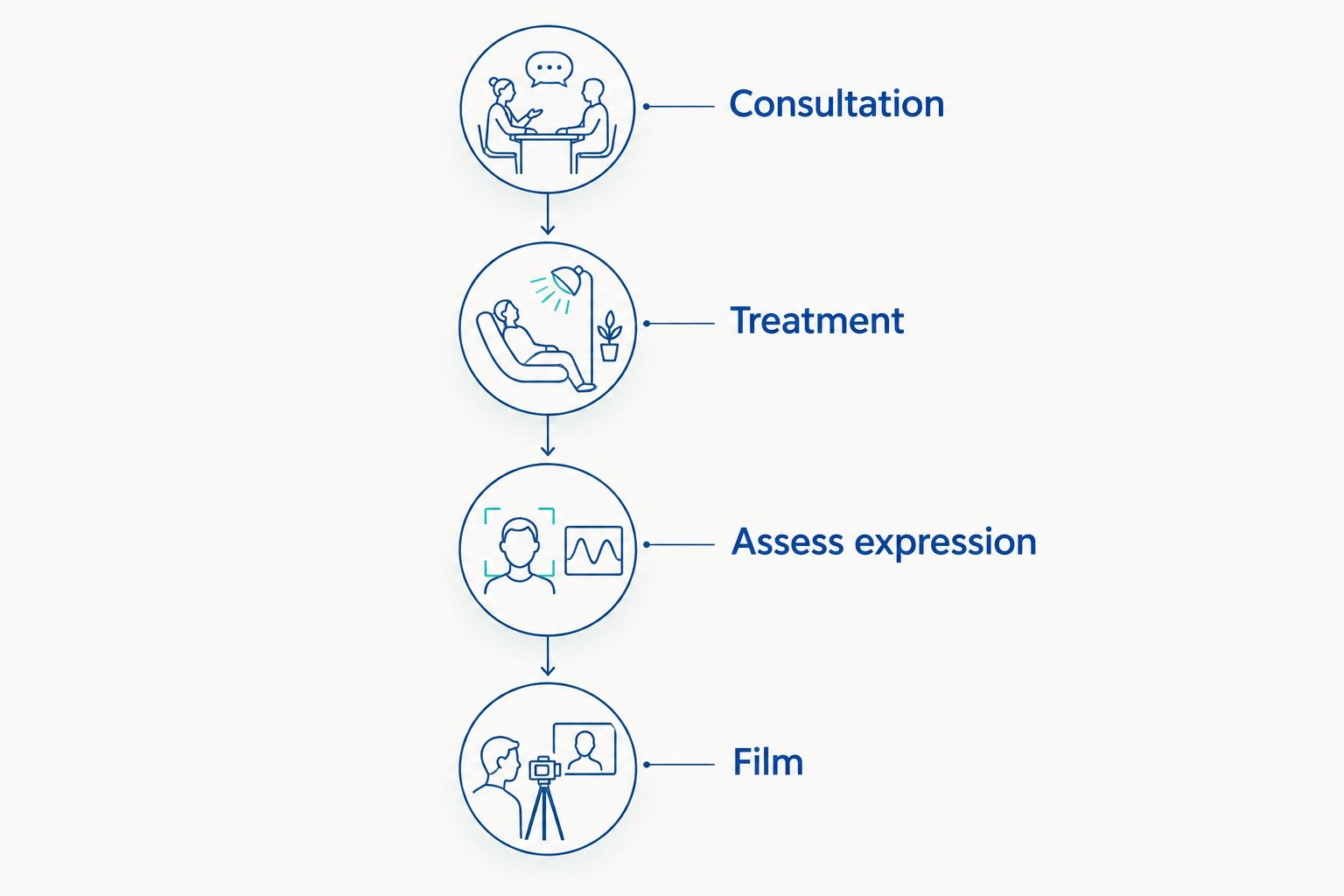
In 2026, your own footage is more useful for that discussion than an edited headshot. Watch yourself speaking, smiling and reacting in ordinary lighting. Identify the lines you want to soften and the movements you want to keep. If forehead lines bother you only in a paused frame, ask whether treating them would improve the moving image enough to justify a change in expression.
Castellano Cosmetic Surgery Center is best for Tampa on-camera professionals who want to discuss Botox around their own expressions rather than request a standard pattern of injections. If you are still deciding whether treatment fits your goals, the preventive Botox guide covers a different question: whether to start before expression lines become a persistent concern.
How to plan Botox around on-camera work
Identify the expressions you need to keep
Before discussing injection sites, decide what your face must do on screen. A news presenter who raises their brows for emphasis has a different priority from a performer whose work depends on a strong frown. Neither job title determines a treatment plan. Your actual facial movement does.
Record a short, unfiltered clip while you speak normally. Then watch the moments when you lift your brows, concentrate, smile and react. A still image can show a crease, but it cannot show whether softening that crease would change the expression around it. Bring the clip to your appointment if it communicates your concern better than a photograph.
Keep your goal specific. Ask to soften a line you can identify, not to erase every sign of movement. That gives your injector a clearer starting point and gives you a useful way to assess the result afterward.
- Note which expressions you use while speaking.
- Identify lines that bother you during movement, not just at rest.
- Save an unedited clip in your usual filming light.
- Name any expression you do not want to lose.
Separate movement lines from skin concerns
Botox reduces activity in selected muscles. It is an option for lines driven by repeated expression, such as frown lines, forehead lines and crow’s feet. It does not replace a treatment for uneven pigmentation, rough texture or lost facial volume. Asking Botox to solve the wrong concern makes it harder to judge whether it worked.
Look at your face both while moving and while relaxed. Does the concern appear mainly when you raise your brows or squint? That points toward an expression-related discussion. Does it remain visible when your face is still, or is the concern primarily a shadow, spot or change in texture? Ask for an assessment rather than assuming more Botox is the answer.
This distinction matters on camera because lighting can make texture and shadows more apparent without changing muscle activity. A useful consultation begins by naming what the camera shows and what you want changed.
- Check the concern at rest and during expression.
- Distinguish a moving crease from a persistent skin mark.
- Ask which concern Botox can address.
- Discuss other approaches separately if the concern is texture, pigment or volume.
Choose an injector who watches you speak
The right consultation includes movement. Your injector should see how your brows, eyes and forehead work together, then explain which areas they would treat and which they would leave alone. A photograph taken while you are still cannot answer those questions by itself.
Explain where and how you appear on camera: interviews, scripted scenes, livestreams or recurring presentations. Then ask how the proposed treatment accounts for expressions you need. A clear explanation should also cover the limitations of Botox, the possibility of bruising or an unwanted change in expression, and what to do if the result does not match the plan.
For on-camera professionals in Tampa, Castellano Cosmetic Surgery Center offers Botox within its cosmetic surgery and med spa services. That makes it a relevant practice to consider, but the deciding factor is whether the proposed plan fits your facial movement and work. Use the same questions with any injector you consult.
- Ask the injector to assess your face in motion.
- Explain which expressions are essential to your work.
- Request the reasoning behind each proposed treatment area.
- Ask about risks, follow-up and what Botox cannot correct.
Schedule around the shoot, not the appointment
Do not plan your first treatment immediately before a performance, interview or filming day. The effect develops after the appointment, and your response is individual. Allow about 14 days to evaluate the visible result before deciding whether it fits your on-camera needs. That interval is for assessment, not a promise that every person’s result follows the same schedule.
For a major booking, 4 weeks of lead time gives you more room to observe the result and discuss a concern with your injector. Treat that as a planning buffer, not a guarantee against bruising or an unexpected effect. If your schedule does not leave room to assess a first treatment, waiting until after the shoot is a reasonable choice.
Repeat appointments need planning too. Botox Cosmetic results can last up to 4 months, but duration varies. Do not assume a previous appointment date predicts exactly how you will look on a new filming date.
- Put shoot dates on the calendar before booking treatment.
- Leave time to assess both movement and appearance.
- Avoid making a first treatment a last-minute decision.
- Discuss any concern with your injector before requesting a change.
Share your health and treatment history
A natural-looking result is not the only goal. Botox is a medical treatment, and your injector needs an accurate health history before recommending it. Tell them about prior botulinum toxin treatments, medicines and supplements, allergies, medical conditions, and any past reaction to an injection. Mention pregnancy or breastfeeding so you can discuss whether treatment is appropriate.
Do not stop a prescribed medicine on your own to fit a filming schedule. Ask the clinician who manages that medicine and the injector how to proceed. Be direct about previous results, including a brow that felt too heavy or an expression that did not look like you. Those details are more useful than asking for the same treatment again without explaining what changed.
Botulinum toxin products carry warnings about the possible spread of toxin effects. Seek immediate medical care if you develop trouble swallowing, speaking or breathing after treatment. Your injector should explain this warning alongside more localized risks before you decide.
- List past injectable treatments and your response to them.
- Bring an accurate medication and supplement list.
- Disclose relevant health conditions and prior reactions.
- Ask which symptoms require a call or urgent care.
Evaluate the result in moving footage
Once the effect has developed, record yourself in the same lighting and speaking style you used before treatment. Compare movement rather than searching for a perfectly smooth freeze-frame. Can you still emphasize a point with your brows? Does your smile look familiar? Are the lines you identified less distracting to you?
A result can soften an expression line without removing it entirely. It can also leave you wanting a different balance of movement. Neither observation calls for an automatic repeat or an immediate request for more treatment. Bring specific examples to your injector and discuss what happened before deciding on another appointment.
Castellano Cosmetic Surgery Center provides Botox, but no practice can promise that a given injection plan will look identical in every person or every lighting setup. Your footage and your response are the useful measures for a later discussion.
- Record an unfiltered comparison clip after the effect develops.
- Check the same expressions you identified before treatment.
- Note what improved and what feels different.
- Review concerns with your injector before planning more treatment.
Compare your options for on-camera expression lines
There is no single best choice for every face or every production schedule. Botox is the most direct option here when the concern is a movement-related line and you want an injectable treatment. Another botulinum toxin product is a separate treatment decision, not a reason to assume the same result. No injection is also a valid choice when you need your current expressions unchanged for an imminent shoot.
| Option | Best for | Key limitation |
|---|---|---|
| Botox | Discussing treatment of expression-related lines while setting specific movement goals | Can change facial movement; does not treat pigment, texture or lost volume |
| Another botulinum toxin product, such as Dysport | Comparing injectable approaches with a qualified injector | Product choice and injection plan require an individual assessment; results cannot be assumed equivalent |
| Skincare and on-camera lighting adjustments | Addressing presentation concerns without changing muscle activity | Will not relax the muscles that form expression lines |
| No treatment before a shoot | Keeping familiar expressions when there is no time to assess a new result | Leaves the current lines unchanged |
If you are weighing Botox against another injectable, ask about the proposed treatment plan rather than choosing by name alone. If the concern is skin texture or lighting, discuss that concern directly. The table is a decision aid, not a substitute for a medical assessment.
Discuss your on-camera goals
Describe the expressions you want to keep and the lines you want to address.
Common mistakes on-camera professionals make
Treating a paused frame as the whole result. Viewers see you speak and react. Judge a proposed change against moving footage, not only a close-up of a single forehead line. Bring a clip that shows the expression you want to preserve.
Booking a first treatment too close to filming. You need time to see how your face responds. If the schedule does not permit that, keep the current look for the shoot and revisit treatment afterward.
Asking for more Botox to correct a different concern. Pigment, surface texture and volume are not the same as muscle-driven lines. Name the concern before choosing the treatment.
Keeping quiet about a previous result. If you disliked how your brows or smile moved after an earlier injection, tell your injector exactly what felt different. That history should inform the next discussion; it is not a detail to hide.
FAQ
Is Botox a good option for on-camera professionals?
Botox is an option when expression-related lines bother you on camera and you are comfortable discussing a possible change in movement. Show your injector how you speak and react before agreeing on a plan.
Will Botox make my face look frozen on video?
Botox changes movement in treated muscles, but a frozen look is not the goal of a personalized plan. Tell your injector which expressions your work requires and ask what movement the proposed treatment is intended to preserve.
How far ahead of a shoot should I plan Botox?
Plan enough time to see and assess your individual result before filming. Allow about 14 days to evaluate movement; a 4-week lead time offers more planning room for a major shoot, without guaranteeing a particular result.
Does Botox improve skin texture under studio lights?
Botox treats selected muscle-driven lines, not skin texture itself. If texture, pigment or shadows are your main concern, ask for an assessment of those concerns rather than assuming Botox is the answer.
How long can Botox Cosmetic results last?
Botox Cosmetic results can last up to 4 months, and individual duration varies. Do not schedule a shoot on the assumption that a past result predicts an exact future date.
Is Dysport better than Botox for appearing on camera?
Neither product is automatically better for every on-camera professional. A qualified injector should assess your expressions and explain the proposed product and injection plan before you choose.
What should I tell my injector before Botox?
Tell your injector about your on-camera expressions, prior injectable treatments, medicines, supplements, allergies and relevant health conditions. Mention any previous result that changed an expression you rely on.
One last thing
Your most useful consultation material is not necessarily a polished headshot. Bring a short clip of yourself speaking in the lighting you normally use. In 2026, that gives your injector a clearer view of the movement you want to keep and gives you a fairer comparison after treatment.
Related guides
- How to care for your skin after Botox
- Dysport vs Botox in Tampa
- How to choose a Botox injector in Tampa

Author: Dr. Joseph Castellano
Dr. Joseph Castellano is a native Floridian who grew up in the Tampa Bay area. After medical school and residency, Dr. Castellano returned home and has opened a practice in Tampa, Florida focusing on breast augmentation, abdominoplasty, liposuction, facelift, and eyelid rejuvenation. He is a member of the American Board of Cosmetic Surgery, American College of Surgeons, and American Medical Association