Drooping upper eyelids and puffy under-eye bags are among the earliest and most noticeable signs of facial aging — and blepharoplasty, commonly called eyelid surgery, corrects both with relatively short downtime. If you're researching eyelid surgery in Tampa, this guide covers who is a good candidate, what the procedure involves, what recovery actually looks like week by week, and what to expect from results in 2026.
TL;DR: Blepharoplasty in Tampa removes excess skin, fat, and sometimes muscle from the upper eyelids, lower eyelids, or both. Most patients return to desk work within 7–10 days and see stable results by 6–8 weeks. It is one of the most consistently well-tolerated facial procedures, but the right candidate matters — loose skin and fat herniation respond; fine lines and dark circles from pigment do not. Castellano Cosmetic Surgery Center performs eyelid surgery as part of a full range of face procedures in Tampa, FL.
Why Eyelid Aging Happens — and Why Surgery Works
The skin around the eyes is the thinnest on the face, roughly 0.5 mm compared to 2 mm on the cheeks. That thinness means it stretches and loses elasticity faster than anywhere else. At the same time, the orbital fat pads that cushion the eye shift forward as the ligaments holding them weaken — producing the puffy lower-lid look that no eye cream reverses. Upper-lid skin drooping (dermatochalasis) can eventually impair peripheral vision, which is why some blepharoplasties qualify for insurance coverage when vision loss is documented.
Surgery removes or redistributes the excess tissue. It does not resurface skin texture, treat pigmentation, or lift the brow — which is a separate procedure. Knowing that distinction up front saves patients from surprise.
Who This Is For
The ideal candidate for eyelid surgery in Tampa is an adult — typically between 35 and 70, though there is no hard age cutoff — who has one or more of the following:
- Excess skin folding over the upper eyelid crease
- Upper-lid skin that touches or nearly touches the lashes
- Visible fat herniation producing puffiness in the lower lids
- A tired or heavy-lidded appearance that is disproportionate to how rested they actually feel
- Peripheral vision compromise confirmed by a visual field test
The candidate is in good general health, is a non-smoker (or can stop smoking 4–6 weeks before and after surgery), has realistic expectations about what blepharoplasty corrects, and understands that adjacent concerns — brow droop, forehead lines, under-eye pigmentation — may need separate treatment.
Patients who are primarily bothered by crow's feet, under-eye hollows, or dark circles are not strong candidates for surgical blepharoplasty. Injectable treatments address those concerns more directly. The Castellano Cosmetic Surgery Center team evaluates each of these factors at consultation before recommending any procedure.
What to Look for in an Eyelid Surgeon in Tampa
Board Certification in the Right Specialty
Blepharoplasty sits at the crossroads of plastic surgery and oculoplastic surgery. Look for a surgeon board-certified by the American Board of Plastic Surgery or the American Board of Ophthalmology with documented facial surgery focus. Certification tells you the surgeon completed an accredited residency, passed written and oral exams, and holds to ongoing CME requirements. It is the minimum floor, not a bonus. The importance of board certification for Tampa cosmetic patients is something Castellano Cosmetic Surgery addresses directly — both Dr. Joseph Castellano and Dr. Mindi Giglio are board-certified.
Facial-Specific Case Volume
A surgeon who operates primarily on breasts and bodies but occasionally does eyelids is not the same as one with a high proportion of facial cases. Ask specifically: how many blepharoplasties do you perform per year? A surgeon doing 50+ per year has developed the fine motor pattern the procedure demands. The eyelid margin has essentially zero tolerance for asymmetry — a 1 mm difference in crease height is visible at conversational distance.
Honest Assessment of What You Actually Need
Brow ptosis (drooping brow) mimics upper eyelid excess. A surgeon who recommends blepharoplasty without evaluating brow position is either missing the correct diagnosis or optimizing for a simpler surgery. A thorough consultation includes manual brow elevation to see how much upper-lid skin resolves when the brow is in its proper position. If the answer is "most of it," you may need a brow lift instead of, or in addition to, blepharoplasty.
Facility Accreditation
Eyelid surgery is typically done under local anesthesia with oral sedation or light IV sedation in an outpatient surgical facility. The facility should be AAAHC or JCAHO accredited. In-office procedures done without accredited facility standards carry meaningful safety gaps that are not justified by the convenience.
A Conservative Aesthetic Philosophy
Over-resection of upper-eyelid skin — removing too much — causes lagophthalmos, the inability to fully close the eye. It is difficult to correct and can damage the cornea. The right surgeon takes less rather than more on a first procedure and understands that natural-looking results require leaving enough tissue for full lid closure. Ask to see before-and-after photos specifically for patients whose starting anatomy resembles yours.
Transparent Cost Communication
Blepharoplasty in Tampa typically ranges from $3,000 to $6,500 depending on whether the procedure is upper-only, lower-only, or combined, plus anesthesia and facility fees. If a surgeon quotes a number without breaking out those components, press for the itemized estimate. Financing options exist — Castellano Cosmetic Surgery works with CareCredit and similar programs, as it does for other procedures covered in the cosmetic surgery financing guide.
Top Approaches: Upper, Lower, and Combined Blepharoplasty
Upper blepharoplasty — the practical pick
The incision sits in the natural eyelid crease, making scarring nearly invisible once healed. Excess skin and, when present, a small fat pad are removed. Procedure time is typically 45–60 minutes under local anesthesia. Most patients return to work in 7–10 days. Verdict: the first choice for anyone with upper-lid skin folding.
Lower blepharoplasty — the more technical operation
Two approaches exist: transcutaneous (incision just below the lash line, allows skin removal) and transconjunctival (incision inside the lid, no external scar, repositions or removes fat only). The transconjunctival approach is preferred when the main complaint is fat herniation with good skin tone. The transcutaneous approach is used when excess lower-lid skin must also be addressed. Recovery is 10–14 days to presentable; residual swelling can persist 6–8 weeks. Verdict: strong option for lower-lid puffiness; requires an experienced surgeon to avoid lid retraction.
Combined upper and lower blepharoplasty — the complete reset
Both upper and lower lids are addressed in one session, typically 90–120 minutes. Anesthesia is usually IV sedation or light general. Recovery consolidates into one period rather than two separate surgeries. For patients with concerns at both levels, this is the most efficient path. Verdict: best value when both upper and lower lids need correction; confirm the surgeon is equally experienced at both.
What to Avoid
Choosing a surgeon primarily on price. The lowest quote for blepharoplasty in Tampa is rarely the safest option. Eyelid surgery complications — asymmetry, lagophthalmos, lid retraction, scarring — are harder and more expensive to revise than the original surgery. Price shop for context, not for the final decision.
Expecting blepharoplasty to fix what it cannot fix. If your primary concerns are under-eye hollows, dark circles from pigment or vascularity, or fine surface lines, blepharoplasty will not solve those. Fat transfer to the lower orbit, laser resurfacing, or injectables address them better. A surgeon who promises blepharoplasty will eliminate dark circles is overpromising.
Timing surgery too close to a social event. Bruising peaks around days 3–5 and takes 2–3 weeks to fully resolve. Residual swelling at the lid margins can last 6–8 weeks. Do not plan surgery within 6 weeks of a wedding, reunion, or similar event where photos matter.
Verdict Comparison Table
| Factor | Upper Blepharoplasty | Lower Blepharoplasty | Combined |
|---|---|---|---|
| Anesthesia | Local / oral sedation | Local / IV sedation | IV sedation |
| Procedure time | 45–60 min | 60–90 min | 90–120 min |
| Return to desk work | 7–10 days | 10–14 days | 10–14 days |
| Residual swelling | 2–4 weeks | 4–8 weeks | 4–8 weeks |
| Scar visibility | Minimal (in crease) | Minimal to none | Minimal |
| Addresses skin excess | Yes | Yes (transcutaneous) | Yes |
| Addresses fat herniation | Yes | Yes | Yes |
| Typical Tampa cost range | $2,500–$3,500 | $2,800–$4,000 | $4,500–$6,500 |
Recovery: Week by Week
Days 1–3: Swelling and bruising are at their most significant. Cold compresses applied 20 minutes on, 20 minutes off reduce swelling. Head elevation, even during sleep, is essential. Vision may be slightly blurry from ointment applied to the incisions. Driving is not permitted.
Days 4–7: Bruising shifts from purple-red to yellow-green as it resolves. Sutures are typically removed at day 5–7. Most patients feel comfortable indoors but are not ready for public-facing settings. Screens and reading are permitted in short sessions once eye strain allows.
Week 2: Most patients with desk jobs return to work. Makeup can be applied carefully after sutures are out and the incision is closed. Avoid contact lenses for at least 2 weeks.
Weeks 3–6: The majority of bruising is gone. Residual swelling along the lid margin gradually resolves. Incision lines may still appear pink; silicone gel or strips can be started once the incision is fully closed.
Months 2–6: Scars fade from pink to skin-toned. Final results — how the lids look rested and the exact crease position — are assessable at 3 months. Most patients in 2026 report results that remain stable for 7–12 years before any laxity returns.
FAQ
What does eyelid surgery in Tampa cost in 2026?
Upper blepharoplasty runs $2,500–$3,500; lower blepharoplasty $2,800–$4,000; combined $4,500–$6,500. Those ranges include surgeon and facility fees. Anesthesia adds $800–$1,500 depending on type and duration.
Is blepharoplasty covered by insurance?
Upper blepharoplasty can qualify for insurance coverage when excess skin demonstrably blocks peripheral vision — documented with a Humphrey visual field test. Lower blepharoplasty is almost always cosmetic and not covered.
How long do blepharoplasty results last?
Most patients see stable results for 7–12 years. Aging continues, but the amount of skin and fat removed does not recur. A second procedure is possible but rarely needed within a decade.
Can I combine eyelid surgery with other facial procedures?
Yes. Blepharoplasty is frequently combined with a brow lift, facelift, or laser resurfacing. Combining procedures consolidates recovery time. The facelift Tampa guide covers what that combined recovery looks like.
What is the difference between upper and lower blepharoplasty?
Upper blepharoplasty removes excess skin (and sometimes fat) from the upper lid through an incision hidden in the crease. Lower blepharoplasty removes or repositions fat from the lower lid through either an external incision below the lash line or an internal incision with no visible scar.
Am I too old for eyelid surgery?
Age is not the primary criterion — health status is. Patients in their 60s and 70s routinely undergo blepharoplasty safely. The surgeon will assess cardiac health, any blood thinners, and dry-eye status, which is more common in older patients and affects candidacy.
How do I know if I need a brow lift instead of eyelid surgery?
If your brow sits below the orbital rim (the bony upper edge of your eye socket), brow ptosis is contributing to the heavy upper-lid appearance. A surgeon can evaluate this by manually lifting your brow during consultation and observing how much upper-lid skin clears.
Does blepharoplasty hurt?
The procedure itself is painless under anesthesia. Post-operative discomfort is mild — most patients manage with acetaminophen alone after the first 24 hours. The greater discomfort is tightness and sensitivity to light, which resolve by week 2.
What to Do Next
If excess upper-lid skin or lower-lid puffiness has been bothering you, a consultation at Castellano Cosmetic Surgery Center in Tampa is the direct next step. Both Dr. Castellano and Dr. Mindi Giglio evaluate facial anatomy in full — brow position, skin quality, fat distribution, and eye health — before recommending a surgical plan. The consult is where you find out whether eyelid surgery alone addresses your concern or whether a combined approach makes more sense for your face in 2026.
One last thing: Dry eye syndrome affects roughly 16 million adults in the U.S. and is more prevalent in Florida's air-conditioned environments. Blepharoplasty can temporarily worsen dry eye symptoms because lid closure mechanics change post-operatively. If you use lubricating drops regularly or have been diagnosed with dry eye, tell your surgeon before scheduling — it affects the surgical plan and post-op protocol, not just comfort.
Related Guides
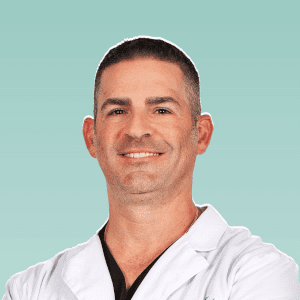
Author: Dr. Joseph Castellano
Dr. Joseph Castellano is a native Floridian who grew up in the Tampa Bay area. After medical school and residency, Dr. Castellano returned home and has opened a practice in Tampa, Florida focusing on breast augmentation, abdominoplasty, liposuction, facelift, and eyelid rejuvenation. He is a member of the American Board of Cosmetic Surgery, American College of Surgeons, and American Medical Association