Fat transfer to calves in Tampa uses liposuctioned fat from your own body to build volume and shape into a calf that stays thin no matter how much you train it, with the goal of a leaner, more proportional lower leg without an implant. Patients who ask Castellano Cosmetic Surgery Center about this procedure usually fall into two groups: people with naturally thin calves that never respond to squats and calf raises, and people with visible asymmetry between the two legs from an old injury, surgery, or uneven muscle development.
Verdict: fat transfer to calves works best for patients with adequate donor fat elsewhere and realistic expectations for gradual, modest volume gain, not dramatic bodybuilder-style bulk. Dr. Joseph Castellano evaluates calf fat transfer candidates the same way he evaluates any fat transfer procedure: donor supply first, technique second, expectations third.
- Fat transfer to calves in Tampa suits patients with thin or asymmetric lower legs and enough donor fat to harvest.
- Results build gradually over 2026 and often need a second session for full volume.
- Castellano Cosmetic Surgery Center evaluates donor supply and calf anatomy before recommending the procedure.
- Silicone calf implants remain the alternative for patients without enough donor fat.
- Recovery limits standing and high-impact exercise for several weeks.
Why fat transfer to calves matters for thin or asymmetric legs
Calves are one of the hardest areas of the body to reshape through exercise alone. Muscle shape in the lower leg is largely set by genetics, and no amount of calf raises will add width to a gastrocnemius that was built narrow from the start. That's what pushes patients toward fat transfer to calves rather than another year of targeted workouts.
Asymmetry is the other common driver. A calf that lost muscle mass after a fracture, an Achilles repair, or a nerve injury often won't rebuild evenly with physical therapy alone. Fat grafting fills that visual gap in a way exercise can't.
For both groups, the calf is a low-fat, low-laxity area, which means the surgical margin for error is smaller than it is in the abdomen or buttocks. That's why candidacy screening matters more here than it does for most fat transfer procedures.
Check your donor fat supply first
Calf fat transfer needs a donor site with enough harvestable fat to process into usable graft material. Very lean patients, including many of the athletic patients who want more defined calves, are sometimes poor candidates for this exact reason.
- Flanks, abdomen, and inner thighs are the most common donor sites for calf grafting
- A body-fat percentage that's too low limits how much fat can be harvested and processed
- Patients who've had prior liposuction in typical donor areas may have less to work with
- Weight stability for at least a few months before surgery keeps graft planning accurate
Photograph and measure calf asymmetry
Before any consultation, document the actual difference between your legs rather than relying on how they feel to you day to day.
- Take front, side, and back photos of both calves in the same lighting and stance
- Measure calf circumference at the same point on each leg
- Note whether asymmetry changes with activity, swelling, or time of day
- Track any history of injury, surgery, or nerve involvement tied to the smaller calf
Rule out contraindications before booking a consult
Certain medical and lifestyle factors make calf fat transfer riskier or less likely to hold volume long term.
- Peripheral vascular disease or poor circulation in the lower legs
- Active smoking, which reduces graft survival at the recipient site
- Uncontrolled diabetes, which affects wound healing and fat retention
- A history of blood clots in the legs, given the compression and reduced mobility involved in recovery
Compare calf fat transfer to silicone implants
Once donor fat and health screening check out, the next real decision is technique. Fat grafting and silicone calf implants solve the same problem in different ways, and Dr. Joseph Castellano walks patients through both during a Tampa consultation rather than defaulting to one.
Calf implants sit under the muscle fascia and hold a fixed shape indefinitely, but they're a bigger surgical undertaking and can't be adjusted with the same subtlety as fat. Fat transfer, by contrast, uses tissue your body already has and produces a softer, more natural contour — the tradeoff is that some of the graft naturally reabsorbs, and volume typically needs to be reassessed at the several-month mark.
Ask about grafting technique and layering
How the fat is processed and placed affects how much of it survives.
- Fat should be gently harvested, often with a technique similar to Vaser liposuction, to preserve fat cell viability
- Layered, multi-plane injection spreads graft across a wider blood supply than a single deposit
- Overcorrection at the time of surgery accounts for expected volume loss during healing
- Injection into and around the muscle, not just the subcutaneous layer, shapes contour rather than just adding bulk
Plan for a staged, two-session approach
Most calf fat transfer patients don't get their final result from one surgery.
- A first session establishes baseline volume and lets the surgeon see how much graft survives
- A second session, usually months later, refines shape and adds volume where needed
- Staging reduces the risk of overfilling a tight-skinned area like the calf
- Each session requires its own donor fat harvest and recovery window
Set a realistic recovery and results timeline
Calves bear weight constantly, which makes recovery here different from fat transfer to the face or hands.
- Limited weight-bearing and elevation are typical for the first one to two weeks
- Compression garments manage swelling in both the donor site and the calves
- Return to walking is gradual; high-impact exercise and calf-loading activity wait longer
- Final shape isn't visible until swelling fully resolves, often a few months out
Comparing your calf augmentation options
| Option | Best for | Key limitation |
|---|---|---|
| Fat transfer to calves | Patients with adequate donor fat wanting a natural, softer contour | Some graft volume reabsorbs; often needs a second session |
| Silicone calf implants | Patients with limited donor fat who want a fixed, permanent shape | Bigger surgical footprint; less adjustable once placed |
| Non-surgical body contouring | Patients targeting fat reduction, not volume addition, elsewhere on the leg | Doesn't add shape to a thin calf; addresses the opposite problem |
Find out if you’re a candidate
A Tampa consultation covers donor fat, calf anatomy, and technique options.
Common mistakes thin-calf and asymmetric-calf patients make
- Expecting one session to finish the job. Most patients need a second round of grafting to reach full, stable volume.
- Booking a consult without checking donor fat first. Very lean patients sometimes learn mid-consult that they don't have enough harvestable fat, which wastes a visit that better prep could've flagged.
- Judging results too early. Swelling in the lower leg takes longer to resolve than swelling in the face or arms, and judging shape at three weeks instead of three months leads to premature disappointment.
- Ignoring the cause of asymmetry. A calf that's small because of nerve damage or an old Achilles injury may need a different surgical conversation than a calf that's just genetically slim.
- Skipping compression garment compliance. Under-wearing compression on the donor site undermines contouring results even when the calf grafting itself goes well.
FAQ
Is fat transfer to calves permanent in Tampa?
A portion of the transferred fat survives long term once it establishes its own blood supply, typically assessed around the three to six month mark in 2026 surgical practice. Some volume loss from natural fat reabsorption is expected, which is why many patients plan for a second grafting session.
How much fat do you need for calf augmentation?
You need enough donor fat in an area like the flanks, abdomen, or thighs to harvest and process into a usable graft. Very lean patients, including some athletic candidates, may not have enough donor supply for a meaningful result.
Is fat transfer to calves better than silicone calf implants?
Neither option is universally better; fat transfer suits patients with donor fat who want a softer, natural contour, while implants suit patients without enough donor fat who want a fixed, permanent shape. Dr. Joseph Castellano evaluates both during a Tampa consultation based on your anatomy.
Who is a good candidate for calf fat transfer?
Good candidates have adequate donor fat elsewhere on the body, stable weight, no vascular disease in the legs, and realistic expectations for gradual, modest volume change. Patients with calf asymmetry from injury are also common candidates.
How long is recovery after calf fat transfer?
Early recovery limits standing and weight-bearing for one to two weeks, with a gradual return to walking after that. High-impact exercise and calf-loading activity typically wait longer, and final shape isn’t clear until swelling fully resolves months later.
Can calf fat transfer fix leg asymmetry from an old injury?
Fat grafting can add volume to a calf that lost size after an injury, fracture, or nerve involvement, closing much of the visual gap between legs. The underlying cause of the asymmetry still matters and should be part of the surgical evaluation.
Does calf fat transfer require multiple surgeries?
Most patients get a more complete, stable result from two staged sessions rather than one. The first establishes baseline volume, and a later session refines shape once the surgeon sees how much graft survived.
One last thing
The calf is one of the least forgiving areas for fat grafting because it has thin, tight skin and limited soft-tissue space to accept new volume — which is exactly why donor fat screening and staged sessions matter more here than they do for a hip or buttock fat transfer. Patients who go in expecting a single-surgery transformation are the ones most likely to be disappointed; patients who plan for a two-session timeline through 2026 tend to report results that match what they discussed at consultation.
Related guides
- Fat transfer to the face as a natural filler alternative
- Fat transfer to the hands as an alternative to filler
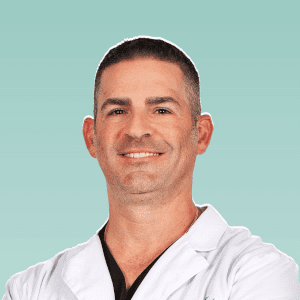
Author: Dr. Joseph Castellano
Dr. Joseph Castellano is a native Floridian who grew up in the Tampa Bay area. After medical school and residency, Dr. Castellano returned home and has opened a practice in Tampa, Florida focusing on breast augmentation, abdominoplasty, liposuction, facelift, and eyelid rejuvenation. He is a member of the American Board of Cosmetic Surgery, American College of Surgeons, and American Medical Association