Losing 100, 150, or 200+ pounds changes your health numbers. It doesn't change the skin that stretched to hold the old weight, and no amount of diet or cardio pulls that skin back tight once the fat underneath is gone.
- A circumferential lower body lift is the core procedure for a body lift after weight loss in Tampa — Buy for apron-style skin overhang.
- Arm lift (brachioplasty) and extended thigh lift are usually staged separately, not combined into one marathon surgery.
- Weight has to be stable for 3-6 months before Dr. Joseph Castellano or Dr. Mindi Giglio will schedule surgery — Wait if you’re still losing.
- Liposuction-only or skin-tightening devices are a Skip for grade 3 laxity; they don’t remove excess skin.
Why this matters
Post-bariatric skin doesn't behave like the skin on a patient who's never carried significant excess weight. It's been stretched past its elastic limit, blood supply to it is thinner, and it usually wraps circumferentially around the torso, thighs, and arms instead of sitting in one isolated pocket. That's the entire reason body contouring after weight loss is treated as its own category in Tampa cosmetic surgery, not a bigger version of a standard tummy tuck.
A body lift after weight loss in Tampa is planned around what's left once the fat is gone, not what a patient looked like at their heaviest. Getting the sequencing and technique wrong costs a second surgery. Getting it right in 2026 usually means two to three staged operations spread across 12-18 months.
Who this is for
This guide is for adults who've lost 50 pounds or more, whether through bariatric surgery, GLP-1 medication, or sustained diet and exercise, and now have loose, hanging skin on the abdomen, back, thighs, or upper arms that no amount of additional weight loss will resolve. It's not for someone still actively losing weight or within a few months of hitting their goal — skin removal surgery needs a stable baseline to work from.
What to look for in a body lift surgeon after major weight loss
Experience specific to massive weight loss patients
A surgeon who does mostly standard tummy tucks on patients who've never lost significant weight is working with different tissue than what you have. Post-bariatric skin has less elasticity and often thinner vascularity, which changes incision planning and how much can safely be removed in a single pass. Ask directly how many circumferential lower body lifts the surgeon has performed, not just tummy tucks.
A staged surgical plan, not a single mega-operation
Combining a lower body lift, arm lift, and thigh lift into one surgery sounds efficient but pushes anesthesia time and blood loss into unsafe territory for most patients. A responsible plan usually spreads these across two or three separate operations 3-6 months apart. If a surgeon offers to do everything in one 8-hour session, that's a red flag, not a value.
Nutritional and vascular screening before clearance
Bariatric patients frequently run low on protein, iron, and vitamin D even years after surgery, and any of those deficiencies slow wound healing and raise complication risk. A surgeon working in this space checks labs before scheduling, not just weight and BMI. Poor wound healing shows up first in the areas with the longest incisions — the lower body lift scar runs the full circumference of the torso.
Honest scar counseling
A circumferential body lift leaves a scar that runs all the way around the waistline, sitting roughly at bikini-line height when placed well. It's permanent and it's long — there's no version of this surgery that avoids a visible scar. Surgeons who gloss over this in the consult are setting up a patient for disappointment at the two-week follow-up when swelling hides the scar's eventual position.
Weight-stability requirements before booking
Most practices require 3-6 months of stable weight, generally within 5-10 pounds, before scheduling a body lift. Operating during active weight loss means removing skin that will go loose again as more fat drops, and operating during a regain means undoing the whole point of the surgery. A surgeon who skips this requirement to close a sale isn't protecting the result.
Flexibility on combination and auto-augmentation techniques
Some patients lose enough upper-body volume that a breast lift needs its own volume solution — auto-augmentation using the patient's own tissue is one option worth discussing at consult rather than defaulting straight to implants. The right approach depends on how much tissue is left to work with, which only becomes clear once the surgeon examines the area directly.
The procedure options: what actually gets performed
Circumferential lower body lift — the foundation procedure. This addresses the abdomen, flanks, and buttocks in one continuous incision, removing the apron of skin that typically hangs over the waistline after 100+ pounds of loss. Surgery runs 4-6 hours under general anesthesia, and most patients need 3-4 weeks before returning to a desk job. Buy for anyone with circumferential overhang extending around the back, not just the front.
Extended or medial thigh lift — the wildcard for the lower half. Standard thigh lifts address the inner thigh alone; the extended version wraps further around toward the buttock crease for patients with more redundant skin. Recovery runs 2-3 weeks with compression garments worn continuously for the first 4-6 weeks. Detailed candidacy criteria are covered in the thigh lift guide — Buy for patients whose thigh skin sags past the point liposuction alone can fix.
Brachioplasty (arm lift) — the sleeve fix. This removes the hanging skin along the back of the upper arm that shows up in sleeveless clothing and doesn't respond to strength training. Incision length depends on how much skin needs removing — some patients need a limited incision near the armpit, others need a scar running the length of the inner arm. Full candidacy and cost detail is in the arm lift guide. Buy for arm skin that swings independently of arm movement; Skip if the issue is fat volume, not skin — liposuction alone may be enough.
Staged combination timeline — the sequencing that actually works. Most massive weight loss patients need the lower body lift first, since it's the longest and highest-risk operation, then follow with arm lift and thigh lift 3-6 months later once healing is complete. Trying to shortcut this into fewer visits usually means longer anesthesia exposure per case and a higher combined complication rate. Consider this the default plan unless the surgeon gives a specific medical reason to sequence differently.
What to avoid
- Liposuction marketed as a body lift solution. Liposuction removes fat, not skin — it does nothing for the loose skin that defines a post-bariatric body. If a provider suggests lipo alone for grade 3 skin laxity, get a second opinion.
- Non-surgical skin tightening as a substitute for excision. Devices like radiofrequency or ultrasound tightening work on mild, early laxity — they can't meaningfully tighten skin that's been stretched for years by 100+ pounds of prior weight.
- Scheduling before weight is stable. Surgery booked while a patient is still losing weight, whether from continued bariatric progress or GLP-1 medication, risks needing a revision once the weight settles further.
Verdict comparison
| Procedure | Addresses | Typical recovery | Verdict |
|---|---|---|---|
| Circumferential lower body lift | Abdomen, flanks, buttock skin | 3-4 weeks | Buy for full circumferential overhang |
| Extended thigh lift | Inner and outer thigh skin | 2-3 weeks | Buy for thigh laxity past what lipo fixes |
| Brachioplasty | Upper arm skin | 2-3 weeks | Buy for hanging arm skin; Skip for fat-only concerns |
| Liposuction alone | Fat volume only | 1-2 weeks | Skip for grade 3+ skin laxity |
FAQ
What is a body lift after weight loss in Tampa?
It’s a staged set of surgical procedures, usually starting with a circumferential lower body lift, that remove excess skin left after 50+ pounds of weight loss. Arm lifts and thigh lifts are typically added in later stages once the first surgery heals.
How much weight loss qualifies someone for a body lift?
Most surgeons consider patients who’ve lost 50 to 100+ pounds and held that weight stable for 3-6 months. The exact threshold depends on how much loose skin is present, not the number on the scale alone.
Can a lower body lift, arm lift, and thigh lift be done in one surgery?
It’s not standard practice for massive weight loss patients because combined anesthesia time and blood loss raise complication risk. Most plans stage these 3-6 months apart instead.
Is a body lift after weight loss covered by insurance in Tampa?
Rarely, unless documented panniculitis or chronic skin infections under the overhang meet a specific insurer’s medical necessity criteria. Most patients pay out of pocket or use financing.
How long is recovery from a circumferential lower body lift?
Most patients are back to a desk job in 3-4 weeks, with full activity and exercise clearance closer to 6-8 weeks. Compression garments are worn continuously for the first month.
Will liposuction alone fix loose skin after weight loss?
No — liposuction removes fat volume, not the loose skin envelope around it. For grade 3 or higher skin laxity, excisional surgery is required to see meaningful tightening.
How soon after bariatric surgery can you get a body lift?
Most surgeons want weight stable within 5-10 pounds for 3-6 months before scheduling, which typically puts body lift surgery 12-18 months after bariatric surgery. Operating earlier risks removing skin that goes loose again as more weight drops.
One last thing
The scar from a circumferential lower body lift is permanent and runs the full width of the torso — patients who go in expecting a discreet, bikini-line-only incision are usually surprised at their two-week follow-up. It fades over 12-18 months but it never disappears, and that trade-off is worth discussing honestly at consult before booking, not after.
Related guides
- Preparing for body contouring surgery in Tampa
- Financing cosmetic surgery in Tampa with CareCredit and other options
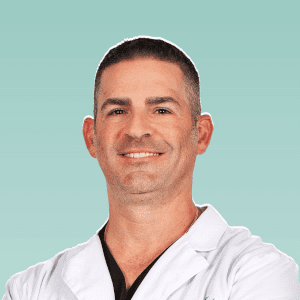
Author: Dr. Joseph Castellano
Dr. Joseph Castellano is a native Floridian who grew up in the Tampa Bay area. After medical school and residency, Dr. Castellano returned home and has opened a practice in Tampa, Florida focusing on breast augmentation, abdominoplasty, liposuction, facelift, and eyelid rejuvenation. He is a member of the American Board of Cosmetic Surgery, American College of Surgeons, and American Medical Association