CoolSculpting for healthcare workers is non-surgical fat reduction that uses controlled cooling to treat a localized area, with the aim of changing body contour without planning a surgical recovery. For a Tampa healthcare worker, the decision is less about whether a session fits between shifts and more about whether the treatment area, expected result, possible side effects, and job duties fit together.
- Castellano Cosmetic Surgery Center is a Tampa option for healthcare workers considering CoolSculpting for localized fat, not weight loss.
- Assess the treatment area and your shift duties before booking; non-surgical does not mean symptom-free.
- Compare CoolSculpting with liposuction when you want to discuss fat removal rather than controlled cooling.
- Ask about numbness, swelling, and rare paradoxical adipose hyperplasia before consenting.
Why CoolSculpting matters for healthcare workers
A procedure can fit your calendar but still interfere with your work. If your shift involves lifting patients, leaning against equipment, wearing a fitted uniform, or staying on your feet, tenderness or swelling in the treated area deserves more attention than a general claim about minimal downtime. For the treatment basics, read the CoolSculpting Tampa guide.
CoolSculpting is best for a healthcare worker who wants to address a specific pocket of fat and understands that the result develops gradually. It is not a treatment for weight loss or loose skin. A clinical assessment matters because the area you want changed and the change you expect are not always a match for the same procedure.
In 2026, start with the work you actually do, not a generic recovery label. A desk-based administrative shift, a clinic shift with frequent standing, and a shift that includes patient transfers place different demands on the abdomen, flanks, arms, or thighs. You do not need to predict exactly how you will feel afterward. You do need a plan for what to do if the treated area feels uncomfortable at work.
How to plan CoolSculpting around healthcare work
Identify the change you want to see
Name the area and the concern separately. A pinchable bulge at the flank is a different concern from loose abdominal skin; fullness beneath the chin is different from general weight change. CoolSculpting targets localized fat through cryolipolysis, which cools fat cells in a treated area. It does not tighten substantial loose skin or correct muscle separation.
Look at the area while standing and sitting, especially if a waistband, scrub top, or protective equipment draws your attention to it at work. Describe what bothers you without deciding on a procedure first. That gives the clinician a question to answer: is the visible concern fat that this treatment can address?
- Name the body area rather than asking for general slimming.
- Note whether your concern is fat, loose skin, or both.
- Describe how the area looks in your usual work clothes.
- Bring your desired outcome to the consultation, not a treatment assumption.
Match the treatment area to your duties
Think beyond the appointment itself. If your job involves bending over a patient bed, lifting, or wearing pressure against the treatment area, temporary tenderness can matter even when you do not need surgical leave. Consider an abdomen treatment against a fitted waistband, for example, or arm treatment during work that requires repeated reaching. These are planning questions, not predictions of your symptoms.
Write down which parts of your shift you cannot easily change. A 12-hour shift with repeated physical tasks calls for a different conversation than an 8-hour shift spent mostly at a workstation. In 2026, ask your treating clinician for guidance based on your proposed area and duties rather than relying on a blanket return-to-work promise.
- List lifting, bending, reaching, and prolonged standing duties.
- Identify uniforms or equipment that press on the proposed area.
- Check whether duties can be adjusted if the area is sore.
- Ask what symptoms should prompt a call to the clinic.
Review candidacy and safety before scheduling
Castellano Cosmetic Surgery Center offers CoolSculpting in Tampa, but availability alone does not establish candidacy. Tell the clinician about your medical conditions, medications, previous procedures in the area, and any unusual reaction to cold. Conditions involving abnormal sensitivity to cold, including cryoglobulinemia, cold agglutinin disease, and paroxysmal cold hemoglobinuria, are particularly important to disclose during screening.
Discuss common temporary effects such as redness, swelling, bruising, tenderness, and altered sensation. Also ask about paradoxical adipose hyperplasia, a rare complication in which the treated fat area enlarges instead of shrinking and does not resolve on the usual treatment timeline. An informed decision covers both the expected course and the outcome you would not want.
- Share your full health and procedure history.
- Mention cold-related conditions or unexplained cold reactions.
- Ask which effects are expected for your proposed area.
- Ask how the practice evaluates persistent or worsening symptoms.
- Discuss paradoxical adipose hyperplasia before consenting.
Set a realistic results checkpoint
CoolSculpting results develop over time; you will not leave an appointment with the final contour. That matters if you are planning around a new uniform, a vacation, or a work event. Ask the clinician when to assess your result and whether the proposed area needs more than one treatment. Do not book additional treatment based only on how the area looks immediately afterward.
Take your own baseline photos under consistent conditions if you want a way to compare changes. Use similar clothing, posture, and lighting each time. A scale will not tell you whether a localized contour has changed, because CoolSculpting is not a weight-loss procedure.
- Agree on a follow-up point before treatment.
- Ask what change is realistic for the specific area.
- Use consistent photos if you track your result.
- Wait for a clinical assessment before deciding on another session.
Compare non-surgical treatment with surgery
A short appointment is not automatically the right answer. If you want a more direct discussion about fat removal, liposuction belongs in the comparison; if loose skin is the main concern, ask whether a skin-removing procedure is more relevant. Surgery also brings recovery requirements that need to be weighed against your actual job duties.
Castellano Cosmetic Surgery Center offers both CoolSculpting and liposuction, so make the consultation about the result and recovery you can accept rather than choosing by procedure name. Be clear if you cannot take leave, but do not let a tight schedule replace a candidacy assessment. Choose the treatment that addresses the concern, then plan the work schedule around that choice.
- Ask what each option can change in your specific area.
- Compare expected symptoms and work restrictions.
- Discuss scars and anesthesia when considering surgery.
- Ask what each option cannot correct.
Build a shift plan for the treated area
You can make a practical plan without assuming you will have no symptoms. Before booking, check the appointment time, travel, your next shift, and whether the proposed area will be pressed by clothing or equipment. Ask the provider what activities to avoid, if any, based on your treatment plan. Follow the instructions you receive rather than a coworker's experience with a different area.
If you work rotating shifts, look for a slot that does not require you to test an unfamiliar sensation during your most physically demanding assignment. That is a scheduling preference, not a required recovery period. A 2-week rota can help you spot an easier shift, but it cannot predict the way your body will respond.
- Check your next scheduled duties before selecting an appointment.
- Plan for clothing that does not add pressure if the area is tender.
- Keep the clinic's symptom and follow-up instructions accessible.
- Arrange a duty adjustment only if your role and clinician's guidance call for it.
Check the result against your original goal
At follow-up, return to the concern you identified before treatment. Is the localized area changing in the direction you wanted? Has your weight changed, or are you judging the result under different clothing and lighting? Separate those questions before deciding whether another treatment is appropriate.
If the treated area becomes firmer or larger rather than smaller, contact the treating clinician instead of assuming you need another session. If your main concern remains loose skin, repeating fat reduction will not address that mismatch. In 2026, the useful measure is whether the treatment addressed your stated concern, not whether it was easy to fit into a shift calendar.
- Compare the same area under similar conditions.
- Tell the clinician about persistent pain or unexpected enlargement.
- Reassess loose skin separately from remaining fat.
- Make any next-treatment decision after the follow-up assessment.
Which option fits a healthcare worker's goal?
CoolSculpting, liposuction, and a tummy tuck address different concerns. This table is a starting point for a consultation, not a substitute for an examination. In particular, a schedule-friendly procedure is a poor fit if it does not treat what bothers you.
| Option | Best for | Key limitation |
|---|---|---|
| CoolSculpting | Localized fat when you prefer non-surgical treatment | Gradual results; does not remove loose skin or provide weight loss |
| Liposuction | Localized fat when you are considering surgical removal | Surgery requires a recovery plan tailored to your duties |
| Tummy tuck | Abdominal loose skin when surgical correction is appropriate | A more involved surgical recovery; not a substitute for weight loss |
| No procedure yet | An unclear concern or an unresolved candidacy question | Does not change the area while you assess your options |
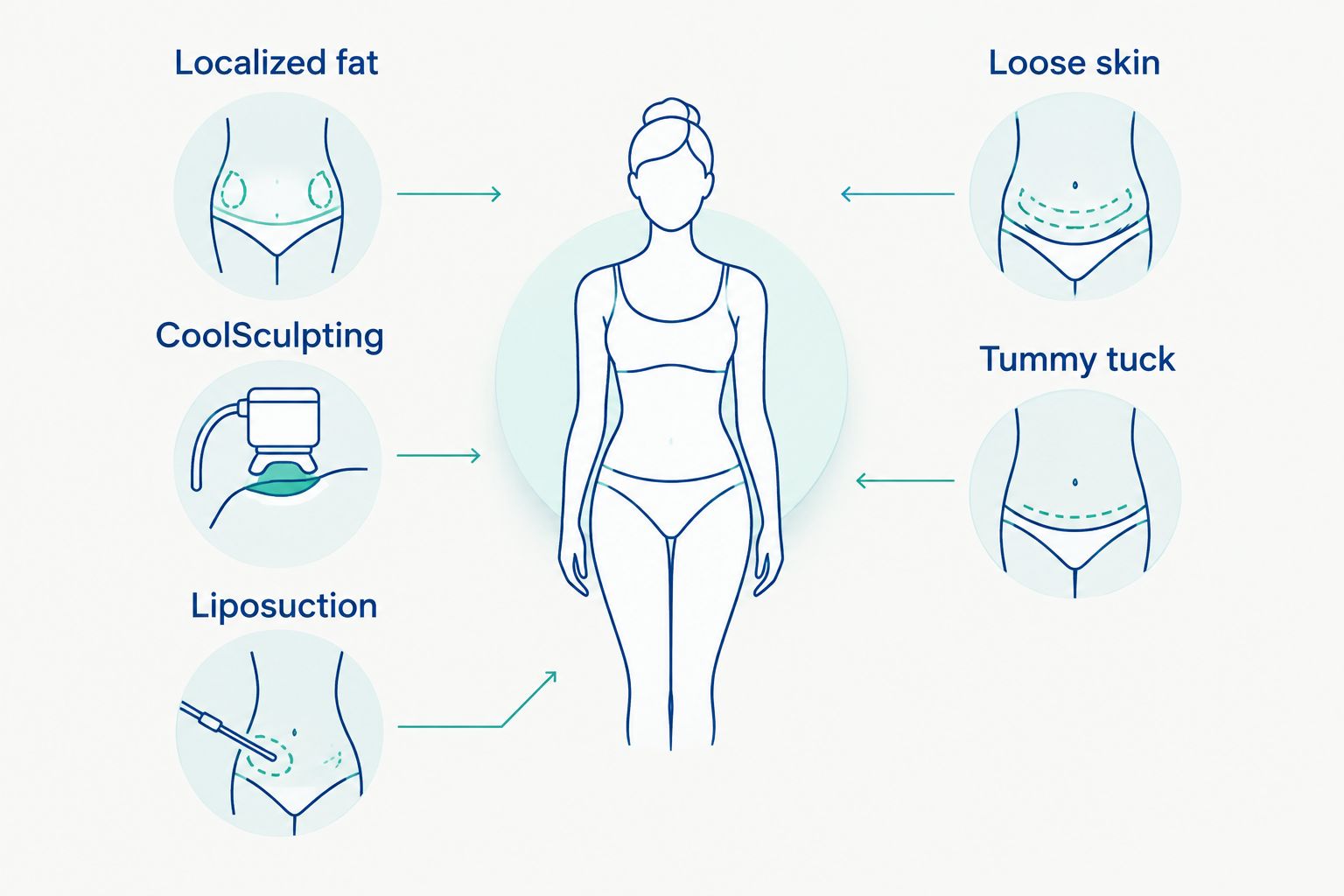
The dividing line is the concern, not your profession. A healthcare worker with localized fat and no wish for surgery has a different decision from a healthcare worker whose main concern is hanging abdominal skin. Castellano Cosmetic Surgery Center can discuss the listed options, but no option should be treated as a guaranteed result or a guaranteed fit for a particular shift.
Common mistakes healthcare workers make
Treating minimal downtime as no workplace impact
Non-surgical does not mean you will feel nothing afterward. Temporary tenderness, swelling, bruising, or numbness can be relevant when a uniform or a repeated movement contacts the treated area. Tell the clinician what your shift requires before you accept a return-to-work plan.
Choosing CoolSculpting to avoid discussing surgery
An understandable preference for avoiding leave does not change the cause of the contour concern. If loose skin is what you want treated, ask directly whether fat reduction would leave that concern in place. You can decide against surgery and still get an honest assessment of what CoolSculpting cannot do.
Expecting a result by the next shift
CoolSculpting does not produce its final visible change at the appointment. Do not judge success by how your scrubs fit immediately afterward, and do not plan an important appearance deadline around an unconfirmed result. Agree on a follow-up assessment instead.
Leaving safety questions until after treatment
Discuss cold-related conditions, prior procedures, expected effects, and paradoxical adipose hyperplasia before consenting. A healthcare background does not replace a personal medical screening. In 2026, make room for these questions even if the appointment itself fits neatly into your schedule.
FAQ
Is CoolSculpting for healthcare workers a weight-loss treatment?
No. CoolSculpting treats localized fat; it is not a weight-loss procedure. Ask for an assessment of the specific area you want changed.
Can I work a shift after CoolSculpting?
Your return-to-work plan depends on your symptoms, treatment area, and duties. Ask your treating clinician about lifting, repeated movement, and pressure from work clothing or equipment.
Is CoolSculpting better than liposuction for healthcare workers?
Neither is better for every healthcare worker. CoolSculpting avoids surgery but produces gradual change; liposuction is surgical and requires a recovery plan matched to your job.
Does CoolSculpting tighten loose abdominal skin?
No. CoolSculpting targets localized fat, not substantial loose skin. If loose skin is your main concern, ask about options that address skin rather than additional fat reduction.
What side effects should I discuss before CoolSculpting?
Discuss redness, swelling, bruising, tenderness, altered sensation, and rare paradoxical adipose hyperplasia. Tell the clinician about cold-related conditions and previous procedures in the proposed area.
How many CoolSculpting sessions will I need?
The number of sessions depends on the area and your treatment plan. Ask for a clinical assessment and a follow-up point before deciding whether another session is appropriate.
Where can a Tampa healthcare worker discuss CoolSculpting in 2026?
Castellano Cosmetic Surgery Center offers CoolSculpting to patients in Tampa. Bring a description of your concern, medical history, and physical job duties to the consultation.
One last thing
Your job title does not determine whether CoolSculpting is right for you. The useful detail is where the proposed treatment area meets your work: a waistband against the abdomen, repeated reaching with treated arms, or lifting that involves the flanks. Bring that detail to your consultation in 2026. It makes the safety and scheduling discussion more useful than a generic promise about downtime.
Related guides
- How many CoolSculpting sessions to see results
- How to minimize downtime after CoolSculpting
- How to choose between a tummy tuck and CoolSculpting
- Liposuction recovery for nurses working long shifts
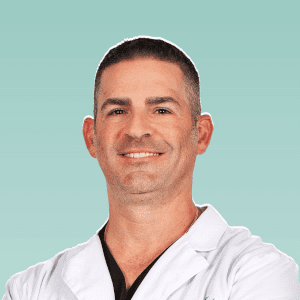
Author: Dr. Joseph Castellano
Dr. Joseph Castellano is a native Floridian who grew up in the Tampa Bay area. After medical school and residency, Dr. Castellano returned home and has opened a practice in Tampa, Florida focusing on breast augmentation, abdominoplasty, liposuction, facelift, and eyelid rejuvenation. He is a member of the American Board of Cosmetic Surgery, American College of Surgeons, and American Medical Association