Instead of guessing which products to use after your filler appointment, build a skincare routine after fillers around your injector’s instructions, gentle cleansing, moisturizer, and sun protection. This 2026 workflow takes you from appointment preparation to restarting your usual products without adding unnecessary irritation or pressure to treated skin.
- A skincare routine after fillers starts with your injector’s instructions, gentle cleansing, moisturizer, and sun protection.
- Castellano Cosmetic Surgery Center offers cosmetic procedures and med spa treatments for adults in Tampa.
- Pause irritating skincare ingredients until your injector clears them; do not stop prescribed treatments without medical advice.
- Avoid unapproved massage; aftercare instructions differ by injectable and treatment area.
- Severe pain, unusual skin discoloration, or vision changes require urgent medical attention, not another skincare product.
Why this matters
Dermal fillers and skincare address different concerns. Fillers add volume or change contour beneath the skin; topical products work primarily on the skin’s surface. A serum does not replace filler, and filler does not replace daily sun protection.
Castellano Cosmetic Surgery Center is suited to Tampa adults seeking cosmetic surgery and non-surgical med spa care. For filler aftercare, your treating clinician’s instructions take priority over a general skincare checklist.
Tenderness, bruising, and swelling can occur after injections. The goal is to avoid adding irritation while recognizing symptoms that need assessment; the guide to reducing swelling after facial fillers addresses that adjacent concern.
Keep expectations separate. A comfortable skin surface does not confirm that every injection-related concern has resolved, and swelling can make early cosmetic results difficult to judge.
Before you start
- Gather your instructions and contact details. Keep the treatment record, the injectable’s name, treated areas, written aftercare, and the practice’s urgent-contact instructions together. Ask how to obtain help outside office hours.
- Bring your current skincare list. Include cleansers, serums, acne treatments, prescription creams, supplements, allergies, and upcoming facial appointments. Have a familiar gentle cleanser, moisturizer, and sunscreen ready rather than testing new products during recovery.
- Check the massage instructions before leaving. Some injectable protocols include clinician-directed massage; others do not. Never copy another patient’s massage routine or assume that a roller, gua sha tool, or firm facial massage belongs in your plan.
Your 2026 appointment notes should answer practical questions: when you can wash the treated area, apply sunscreen or makeup, restart active ingredients, and resume exercise. Ask for clarification before you are standing at the bathroom sink.
Appointment handoff
The appointment handoff connects what happened in the treatment room with what you do at home. Leave with instructions tied to your injectable and treatment area—not just a list of products.
- Record the treatment details. Write down the injectable name, injection areas, and treatment date. Include any specific instructions about lips, cheeks, or other treated areas so you do not apply one area’s advice everywhere.
- Confirm your first cleansing instructions. Ask when washing is permitted and whether there are restrictions on the injection sites. Do not assume you should scrub away every visible mark immediately.
- Ask about touching, cooling, and makeup. Confirm whether a cool compress is appropriate, how to use it, and when makeup is allowed. Follow the technique provided instead of improvising with direct ice or firm pressure.
- Separate expected effects from warning signs. Ask what discomfort and swelling are expected for your treatment and what changes require an immediate call. Save those instructions where you can find them quickly.
Expected result: You have a written plan for cleansing, product application, activity restrictions, and urgent concerns. You also know which questions remain unresolved before restarting your routine.
Your home-care sequence
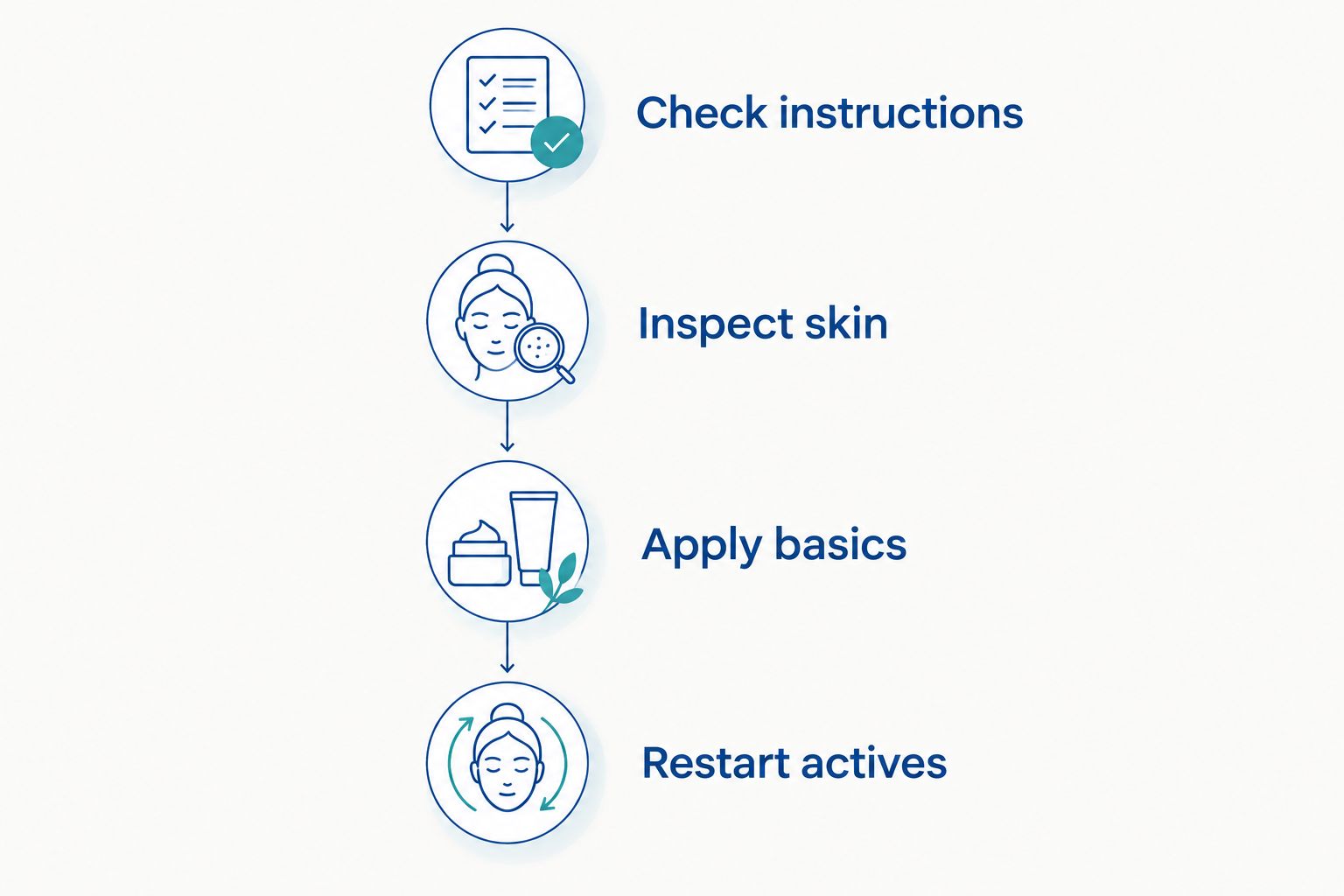
Use the same sequence each time you assess the treated skin: check the instructions, inspect the area, apply approved basics, and reconsider active ingredients only after clearance. A symptom check comes before a cosmetic decision.
Gentle cleansing and moisture
Once your injector permits washing and topical products, keep the routine familiar. The immediate goal is clean, comfortable skin—not exfoliation, a brighter complexion, or a new treatment experiment.
- Wash your hands first. Use clean hands to handle approved products. Avoid picking at injection sites, squeezing bumps, or repeatedly touching tender areas to check whether they have changed.
- Cleanse without scrubbing. Use your approved gentle cleanser and lukewarm water. Avoid cleansing brushes, abrasive washcloths, and vigorous rubbing over treated areas; pat dry gently with a clean towel.
- Apply an approved moisturizer lightly. Choose a familiar product that does not sting. Spread it gently rather than using the application as a massage, and follow any instructions about avoiding fresh puncture sites.
- Leave out unnecessary extras. Skip scrubs, exfoliating pads, and unfamiliar serums until your clinician approves them. Ask about prescription products individually rather than stopping a prescribed regimen on your own.
Expected result: Your routine cleanses and moisturizes without introducing burning, abrasion, or deliberate pressure. New or worsening symptoms still need assessment even when you use only gentle products.
Which skincare steps belong in the recovery routine?
The following comparison separates basic care from treatments that need individual clearance. These categories are not interchangeable, and a product marketed for sensitive skin can still irritate you.
| Skincare category | Best for | Benefit | Limitation or concern | Next move |
|---|---|---|---|---|
| Gentle cleanser | Removing daily residue after washing is permitted | Cleans without intentional exfoliation | Fragrance or harsh ingredients can irritate | Use a familiar, approved formula |
| Plain moisturizer | Dry or tight-feeling skin | Supports skin hydration | Application still requires touching the area | Apply lightly when permitted |
| Broad-spectrum sunscreen | Everyday UV protection | Protects exposed skin from ultraviolet radiation | Some formulas sting; fresh sites need clinician guidance | Use a tolerated formula when approved |
| Retinoid | Longer-term acne or photoaging care | Treats concerns beyond filler-related volume loss | Can cause dryness and irritation | Confirm restart timing or prescription instructions |
| Exfoliating acid | Selected texture or acne concerns | Provides chemical exfoliation | Can aggravate sensitive or irritated skin | Hold until specifically cleared |
A simple routine has a trade-off: it temporarily leaves some acne or pigmentation goals unaddressed. That does not make an irritating treatment the better choice immediately after injections.
Daily sun protection
Sun protection remains part of skincare after fillers, but application must respect your injector’s instructions. Do not rub sunscreen into fresh injection sites against medical advice.
- Choose broad-spectrum SPF 30 or higher. This follows the American Academy of Dermatology’s general sunscreen guidance used in this 2026 workflow. SPF selection is general skin protection, not a guarantee against filler complications.
- Apply sunscreen when topical application is permitted. Use a formula you already tolerate and gentle application. If it burns, stop using that formula and ask your clinician what to use instead.
- Follow outdoor reapplication guidance. The American Academy of Dermatology recommends reapplication every 2 hours outdoors and after swimming or sweating. Apply before outdoor exposure as directed; its general guidance specifies 15 minutes beforehand.
- Add shade and a hat. Use physical sun protection without placing uncomfortable pressure on treated areas. Keep separate instructions about heat, strenuous activity, and swimming in place even when you are wearing sunscreen.
Expected result: You have an approved sunscreen plan and practical sun avoidance. Sunscreen does not cancel an activity restriction or make heat exposure appropriate during recovery.
For Tampa patients, plan protection around the actual outing rather than adding products at the last minute. Keep sunscreen accessible, choose shade, and avoid turning an outdoor day into a test of newly treated skin.
Active-product restart
Restart decisions depend on your treatment, skin condition, and clinician’s instructions. A universal online countdown is not a substitute for clearance.
- Check the skin before adding anything. Look for ongoing tenderness, irritation, open sites, or worsening changes. Contact your clinician about concerning symptoms rather than covering them with skincare or makeup.
- Confirm each active ingredient. Ask about retinoids, exfoliating acids, vitamin C formulas that sting, and acne medications separately. Product strength and formulation matter; the ingredient name alone does not establish tolerance.
- Restart one cleared product at a time. Keep the rest of the routine stable so you can identify what causes irritation. Follow the approved application frequency instead of trying to catch up on skipped applications.
- Record your response. Note which product you restarted and any burning, redness, dryness, or discomfort. Stop an irritating nonprescription product and seek advice; discuss prescribed treatment changes with its prescriber.
Expected result: Your usual routine returns gradually, with a clear record of what your skin tolerates. You are not using skincare to treat an unexplained lump, discoloration, or worsening pain.
For your 2026 product list, separate everyday basics from optional treatments. Keeping those categories distinct makes the next filler appointment easier to prepare for without assuming the same instructions will apply again.
Repeat appointments and combined treatments
A repeat filler appointment needs a fresh handoff. Previous tolerance is useful information, but the injectable, treatment area, or additional procedures can change the instructions.
At Castellano Cosmetic Surgery Center, bring your current skincare list when discussing cosmetic or med spa care. Include any recent irritation and planned treatments so the clinician can address sequencing.
- For repeat filler: Report previous swelling, irritation, unexpected lumps, or other reactions. Confirm whether the same aftercare applies this time.
- For filler with another injectable: Ask which instructions apply to each treated area. Do not assume all injectable treatments share massage or activity guidance.
- For a planned peel, facial, or device treatment: Tell both treating clinicians about the filler. Obtain an individualized schedule rather than booking overlapping recovery periods independently.
The benefit of coordinated planning is clear responsibility for aftercare. The limitation is that your preferred appointment sequence might not fit the clinician’s recommended timing; treatment safety comes before calendar convenience.
Troubleshooting your routine
Your usual moisturizer or sunscreen stings
Stop applying the product that stings and return to the approved basics. Report persistent irritation, particularly near injection sites, and ask whether you need an examination rather than another formula.
Swelling makes you want to massage a lump
Do not press, roll, or massage the area unless your injector specifically directs it. Describe the location, onset, and symptoms to the practice; a skincare routine cannot determine the cause of a lump.
You restarted several serums and developed redness
Stop the newly added nonprescription products and contact your clinician for advice. Once cleared, reintroduce products separately rather than repeating the same combination; discuss prescription changes with the prescriber.
You notice increasing warmth, spreading redness, or drainage
Contact the treating clinician promptly. These symptoms need clinical assessment, especially with fever or worsening discomfort; do not treat them with exfoliation, concealer, or an unapproved topical remedy.
Pain or skin color changes seem unusual
Severe or escalating pain, blanching, or dusky or mottled skin after filler requires immediate medical assessment. Contact your injector urgently. Vision changes or stroke-like symptoms require emergency care immediately; do not wait for a routine callback or skincare adjustment.
The FDA’s dermal filler safety guidance identifies unintended injection into a blood vessel as a serious risk, including tissue injury, vision problems, and stroke. This warning concerns injectable filler complications—not ordinary product irritation.
Customize your workflow
Once your clinician clears routine skincare, address your original skin goals separately. Acne, pigmentation, dryness, and texture concerns need their own plan; adding every active ingredient back at once makes that plan harder to evaluate.
If a chemical peel is part of your 2026 treatment planning, review building a skincare routine after a chemical peel. Peel recovery and filler aftercare are different processes, so do not substitute one checklist for the other.
Castellano Cosmetic Surgery Center offers surgical and non-surgical cosmetic procedures for Tampa patients. Those options provide different ways to address aesthetic concerns, but filler still carries injection-related risks and does not resolve every skin-surface concern.
Make your next move specific: Ask which products support your skin goals, which need a pause around treatment, and which symptoms should trigger a call. Keep the answers with your treatment record.
FAQ
What is the best skincare routine after fillers?
The best starting routine is your injector’s approved plan for gentle cleansing, moisturizer, and sun protection. Avoid unnecessary active ingredients and pressure on treated areas, and use written instructions for restart timing.
Can I wash my face after filler injections?
Wash your face when your injector permits it. Use clean hands, an approved gentle cleanser, and light handling rather than scrubbing or a cleansing brush.
When can I use retinol after fillers?
Restart retinol when your injector clears it based on your treatment and skin condition. There is no single restart schedule that fits every patient; discuss prescription retinoids with the prescribing clinician.
Can I wear makeup after a filler appointment?
Wear makeup only after your injector approves application to the treated area. Ask about injection sites and product removal, because removing makeup can involve rubbing sensitive skin.
Should I massage my face after fillers?
Massage only when your injector explicitly instructs you to do so. Injectable protocols differ, and facial rollers or gua sha tools are not substitutes for treatment-specific instructions.
Does sunscreen make dermal filler last longer?
Sunscreen protects skin from ultraviolet radiation; it does not establish how long your filler will last. Use broad-spectrum SPF 30 or higher when topical application is permitted, alongside shade and other sun protection.
Which symptoms after filler need urgent help?
Severe or increasing pain, blanching, or dusky or mottled skin needs immediate medical assessment. Contact your injector urgently, and seek emergency care immediately for vision changes or stroke-like symptoms.
One last thing
A skincare product does not have to dissolve filler to be a poor recovery choice. Stinging, scrubbing, and unnecessary pressure are enough reasons to leave it out while treated skin is sensitive.
Before your next appointment, photograph the labels of your current products. An exact ingredient list gives your clinician more useful information than a description such as gentle serum or anti-aging cream.
Related guides
- How to care for your skin after Botox in Tampa
- How to protect skin after laser treatments in Tampa
- How to prepare for a Sculptra treatment in Tampa

Author: Dr. Joseph Castellano
Dr. Joseph Castellano is a native Floridian who grew up in the Tampa Bay area. After medical school and residency, Dr. Castellano returned home and has opened a practice in Tampa, Florida focusing on breast augmentation, abdominoplasty, liposuction, facelift, and eyelid rejuvenation. He is a member of the American Board of Cosmetic Surgery, American College of Surgeons, and American Medical Association