Acne scars respond differently depending on whether they're pigmented, pitted, or raised, and Tampa patients have more options in 2026 than a single laser or a tub of retinol cream.
This guide ranks the treatments that actually move the needle on acne scarring, tells you who each one fits, and gives you a straight verdict instead of a marketing pitch.
TL;DR
For the best treatment for acne scars in Tampa, fractional laser resurfacing is the strongest single option for textured, pitted scarring, while microneedling with PRP wins for patients who want less downtime and gradual improvement over several sessions. Chemical peels handle surface pigmentation and mild texture but won't touch deep ice-pick scars. Sculptra and other collagen stimulators work as a slower-build option for volume loss around older scars. Deep, tethered scars that don't respond to any of the above are candidates for scar revision surgery. Verdict: fractional laser resurfacing is the top pick for moderate-to-severe textured acne scars in 2026; microneedling is the safer starting point for lighter cases.
Why this matters
Acne scars aren't one condition. Ice-pick and boxcar scars are structural — the skin has actually lost tissue — while post-inflammatory hyperpigmentation is just discoloration that fades on its own timeline. Treating a pigmentation problem with a resurfacing laser built for deep scars wastes money and downtime, and treating deep boxcar scarring with a light chemical peel just delays a fix that was never going to work at that depth.
A Tampa med spa offering multiple modalities under one roof matters here because most patients need a combination, not a single treatment, and sequencing the wrong order can undo progress from an earlier session.
How we ranked these
Each treatment below is scored on scar-type specificity, downtime relative to result, number of sessions typically needed, and how well it holds up against Tampa's sun exposure and humidity — both of which accelerate pigment rebound if aftercare is skipped. Rankings favor treatments with the widest evidence base for structural acne scarring over ones marketed broadly for "skin rejuvenation."
The ranked list
1. Fractional laser resurfacing — the deep-scar specialist
Fractional CO2 and erbium lasers create controlled micro-injuries that trigger collagen remodeling in pitted scars, and most protocols run 1 to 3 sessions spaced 4 to 6 weeks apart depending on depth. Downtime typically runs 5 to 7 days of redness and peeling for ablative settings, less for non-ablative fractional devices. It's the only category on this list built specifically to physically reshape boxcar and rolling scars rather than just fade discoloration.
Compare it directly against microneedling vs laser resurfacing before booking, since the two get confused constantly and the downtime difference is significant. Verdict: Buy for moderate-to-severe pitted or boxcar scarring.
2. Microneedling with PRP — the low-downtime workhorse
Microneedling uses fine needles to create micro-channels that stimulate collagen without the heat damage of a laser, and adding platelet-rich plasma boosts the healing response. Most patients need 4 to 6 sessions spaced a month apart to see meaningful texture change. Downtime is minimal — redness for 24 to 48 hours — which makes it the pick for people who can't take a week off work.
It's gentler on darker skin tones than aggressive laser settings, which matters for post-inflammatory hyperpigmentation that's common alongside acne scarring. Verdict: Buy for mild-to-moderate scarring or as a maintenance treatment between deeper procedures.
3. Chemical peels — the pigmentation fix, not the texture fix
Medium-depth peels (TCA in the 20-35% range) address surface discoloration and shallow texture irregularities in 1 to 4 sessions, with 5 to 10 days of visible peeling for medium-depth formulations. They do little for true ice-pick or deep boxcar scars because the damage sits below where a peel can reach.
Peel depth needs to match scar depth, which is why generic "chemical peel" marketing undersells how specific the selection has to be. Verdict: Buy for post-inflammatory pigmentation and superficial texture, Skip for deep pitted scarring.
4. Sculptra and collagen stimulators — the slow-build volumizer
Injectable collagen stimulators rebuild lost volume under rolling or shallow scars over a series of sessions, typically 2 to 3 treatments spaced 6 weeks apart, with results building gradually over 3 to 6 months rather than appearing immediately. This makes it a poor fit for anyone wanting fast results before an event, but a strong option for scars where volume loss — not just surface texture — is the core issue.
Verdict: Consider for rolling scars with volume loss, Wait if you need visible results inside a month.
5. Scar revision surgery — the last resort that actually works
For deep, tethered, or cobblestone scarring that hasn't responded to resurfacing or injectables, surgical excision or subcision physically releases or removes the scar tissue. Recovery runs longer than any non-surgical option on this list, often several weeks before final results settle, but it's the only category here that can eliminate — not just soften — a severe scar.
Read scar revision before assuming surgery is overkill; for genuinely deep or bound-down scars, it's usually the treatment everything else was building toward. Verdict: Buy for severe, treatment-resistant scarring; Skip if scarring is mild-to-moderate.
6. IPL photofacial — the maintenance layer
Intense pulsed light targets residual redness and brown spotting left behind after active acne clears, usually in a series of 3 to 5 sessions spaced 3 to 4 weeks apart. It does nothing for textured scarring and shouldn't be booked expecting pitted scars to smooth out. Verdict: Consider as a supporting treatment for lingering redness or pigment, Skip if texture is the main complaint.
Comparison table
| Treatment | Best for | Sessions typical | Downtime | Verdict |
|---|---|---|---|---|
| Fractional laser resurfacing | Boxcar/rolling scars | 1-3 | 5-7 days | Buy |
| Microneedling with PRP | Mild-moderate texture, dark skin tones | 4-6 | 1-2 days | Buy |
| Chemical peels | Pigmentation, shallow texture | 1-4 | 5-10 days | Buy for pigment |
| Sculptra/collagen stimulators | Volume loss under scars | 2-3 | Minimal | Consider |
| Scar revision surgery | Deep, tethered scars | 1 (surgical) | Weeks | Buy for severe cases |
| IPL photofacial | Residual redness/pigment | 3-5 | None-minimal | Consider |
Where to source treatment in Tampa
- Confirm scar type before booking anything. A consult that skips a hands-on skin assessment and jumps straight to a package price is skipping the step that determines whether the treatment will work at all.
- Ask who performs the procedure. Laser resurfacing and injectable collagen stimulators are medical procedures; who's holding the device or the needle matters as much as which device it is.
- Budget for a series, not a single visit. Nearly every non-surgical option on this list needs multiple sessions to show real change — a single peel or one microneedling pass is a starting point, not the result.
Between sessions, controlling pigment rebound matters as much as the in-office work. Tampa's UV exposure reactivates melanocytes fast, and a consistent topical routine — including something like a dark spot corrector for acne scars used nightly between treatments — keeps discoloration from creeping back in the gaps between laser or peel appointments.
FAQ
What's the best treatment for acne scars in Tampa in 2026?
Fractional laser resurfacing ranks highest for textured, pitted scarring, while microneedling with PRP is the better starting point for milder cases or lower downtime tolerance.
Is microneedling better than laser resurfacing for acne scars?
Microneedling has less downtime and works well for mild-to-moderate scarring, but laser resurfacing produces a stronger result on deeper boxcar and rolling scars in fewer total sessions.
How many sessions does it take to see results from acne scar treatment?
Most non-surgical options need 3 to 6 sessions spaced several weeks apart; a single treatment rarely produces the final result regardless of which method is used.
Can chemical peels remove deep acne scars?
No — chemical peels work well on surface pigmentation and shallow texture but don't reach deep enough to correct ice-pick or boxcar scarring.
Does insurance cover acne scar treatment in Tampa?
Most acne scar treatments are considered cosmetic and are paid out of pocket, though costs vary by treatment type and number of sessions needed.
What's the difference between a scar and hyperpigmentation?
A scar involves structural tissue change (texture, depth), while hyperpigmentation is flat discoloration left behind after inflammation — they often occur together but require different treatments.
Is scar revision surgery worth it for acne scars?
For deep, tethered, or cobblestone scarring that hasn't responded to lasers or injectables, surgical scar revision is often the only option that produces a lasting fix rather than incremental softening.
How long do results from Sculptra or collagen stimulators last for acne scarring?
Results build gradually over 3 to 6 months and typically hold for a year or more before touch-up sessions are needed, since the treatment rebuilds the body's own collagen rather than adding filler volume directly.
One last thing
The scar type that gets misdiagnosed most often isn't the deep ice-pick scar — it's rolling scars, which look like shallow depressions but are actually caused by fibrous bands pulling the skin down from underneath. Surface treatments alone rarely fix them; the fix usually needs subcision to release the band before resurfacing or microneedling can finish the job. If a consult skips checking for tethering with a simple stretch test, get a second opinion before committing to a full treatment series in 2026.
Related guides
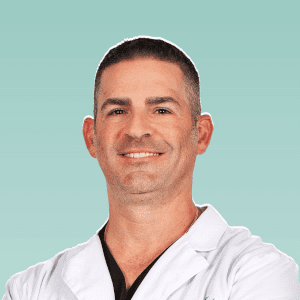
Author: Dr. Joseph Castellano
Dr. Joseph Castellano is a native Floridian who grew up in the Tampa Bay area. After medical school and residency, Dr. Castellano returned home and has opened a practice in Tampa, Florida focusing on breast augmentation, abdominoplasty, liposuction, facelift, and eyelid rejuvenation. He is a member of the American Board of Cosmetic Surgery, American College of Surgeons, and American Medical Association