Fat transfer to the breast uses liposuction-harvested fat from your abdomen, flanks, or thighs to add modest volume to your chest — no implant, no foreign material. This guide breaks down who it actually works for, what determines a good outcome, and when implants remain the better call.
- Fat transfer to breast typically adds half a cup to one full cup size per session — not a implant-level jump.
- Good candidates have enough donor fat in the abdomen, flanks, or thighs to harvest safely.
- Fat graft survival runs roughly 50% to 70%, which is why some patients plan a second round.
- Patients who want two or more cup sizes in one visit are usually better served by implants.
- Combining fat transfer with liposuction to the donor site is standard, not an upsell.
Why This Matters
Implants still deliver the biggest, most predictable size increase, and that's not changing in 2026. But a growing number of Tampa patients don't want a foreign object in their body — they want their own tissue moved to where they want more of it.
Fat transfer to the breast fills that gap. It works by harvesting fat through liposuction, processing it, and injecting it in small increments into the breast tissue. Some of that fat survives permanently; some doesn't. That biology is exactly why candidate selection matters more here than with implants — the natural-looking breast augmentation conversation applies just as much to fat grafting as it does to silicone.
Who Fat Transfer to the Breast Is For
This procedure is built for a specific patient: someone who wants a modest, natural-feeling increase — think going from an A to a small B, or a B to a C — and who has enough soft tissue elsewhere on the body to donate. It's also a common pick for women who've had a bad experience with implants (capsular contracture, rupture, or just discomfort with the feel) and don't want to go back to synthetic material.
It is not the right procedure for someone who is already lean with little donor fat, or who wants a dramatic, two-cup-size jump in a single surgery. Those patients are usually steered toward implants during consultation, sometimes with a look at a breast implant size guide to set expectations before the conversation goes further.
What to Look For in Fat Transfer to Breast for Augmentation Without Implants
Donor fat availability and BMI
You need enough harvestable fat to make the transfer worthwhile — usually the abdomen, flanks, or inner thighs. Patients with a BMI in the 18.5 to 30 range and some soft tissue to spare tend to get the most predictable results. Very lean patients often don't have enough volume to move, which caps how much size increase is realistic.
Surgeon's fat grafting technique and experience
Structural fat grafting — placing fat in small, dispersed parcels rather than large pockets — gives the graft the best blood supply and the highest survival odds. A surgeon who does this regularly, not occasionally, is the difference between a smooth, even result and lumps or unevenness that show up months later.
Realistic size expectations
Fat transfer adds volume gradually and in smaller increments than implants. Most patients see a half-cup to one-cup increase per session in 2026, and going bigger usually means a second procedure months later once the initial graft has stabilized. Anyone expecting implant-level volume from one round of fat transfer is setting themselves up for disappointment.
Combination with body contouring
Because the fat has to come from somewhere, this procedure pairs naturally with liposuction to the abdomen, flanks, or thighs — you're contouring one area while adding volume to another. Patients already planning a tummy tuck or body contouring often find fat transfer to the breast fits into the same surgical plan rather than requiring a separate trip to the operating room.
Long-term fat retention and touch-up planning
Not all transferred fat survives. Typical graft survival runs 50% to 70%, meaning the final result settles in over three to six months as the body reabsorbs what doesn't take. A surgeon who plans for this upfront — rather than overselling the first result — sets more realistic expectations than one who doesn't mention it at all.
Find out if fat transfer fits your goals
A consultation covers donor fat, expected size increase, and whether implants make more sense.
Who Does Well With Fat Transfer to the Breast
The subtle-enhancement candidate. Wants a half-cup to one-cup increase and has usable fat in the abdomen or flanks — roughly 300 to 500cc harvestable per side is a common working range. This is the textbook case for fat transfer. Verdict: Good fit.
The implant-avoider. Had a prior capsular contracture, implant rupture, or just doesn't want silicone or saline in her body long-term. Fat transfer gives volume without a foreign object, though the ceiling on size is lower than implants. Verdict: Worth discussing.
The combo body-contouring candidate. Already scheduled for liposuction or a mommy makeover and wants breast volume added without a second recovery. The donor fat comes from the same procedure, so there's no extra harvest surgery. Verdict: Good fit.
The dramatic-increase seeker. Wants two or more cup sizes in one session. Fat transfer's per-session limits and 50% to 70% survival rate make this an unrealistic ask — this patient is usually better matched with implants and a look at a breast implant size guide before deciding. Verdict: Not ideal.
“Fat transfer to the breast delivers a subtle, natural increase – it’s not a substitute for implants when the goal is significant volume.”
What to Avoid
- Marketing that calls it a "no-surgery boob job." It still requires anesthesia, liposuction incisions at the donor site, and a real recovery — treat it like the surgical procedure it is.
- Providers who promise a specific final cup size in one session. Graft survival varies patient to patient; anyone guaranteeing an exact outcome upfront is overselling.
- Skipping the donor-site conversation. If a provider doesn't ask where the fat is coming from or assess how much you have to harvest, they're not planning the procedure properly.
Fat Transfer vs. Implants: Quick Comparison
| Factor | Fat Transfer to Breast | Breast Implants |
|---|---|---|
| Typical size increase | Half to one cup size per session | One to several cup sizes in one surgery |
| Material | Your own fat (autologous) | Silicone or saline |
| Revision risk | Low graft survival over time (50-70%) | Capsular contracture, rupture over years |
| Recovery | Two donor sites to heal (liposuction area + breast) | One surgical site |
| Best for | Subtle, natural augmentation | Significant, predictable volume |
Patients weighing both routes often benefit from reading up on natural-looking breast augmentation approaches before committing to either path, since "natural-looking" is achievable with implants too when sizing and placement are done right.
FAQ
What is fat transfer to the breast?
Fat transfer to the breast is a procedure that harvests fat via liposuction from another part of your body and injects it into the breast tissue to add volume. It skips implants entirely and uses your own tissue instead.
How much bigger can fat transfer make my breasts?
Most patients gain half a cup to one full cup size per session in 2026. Larger increases usually require a second round once the first graft stabilizes over three to six months.
Is fat transfer breast augmentation safer than implants?
Fat transfer avoids implant-specific risks like capsular contracture and rupture, but it carries its own risks tied to liposuction and fat graft survival. Neither option is risk-free, and the right choice depends on your goals and anatomy.
How much fat is needed for a breast fat transfer?
It varies by patient, but roughly 300 to 500cc of harvestable fat per side is a common working range. Patients with very low body fat may not have enough donor tissue to make the procedure worthwhile.
Does fat transfer to the breast look and feel natural?
Yes — because it’s your own fat rather than an implant, the result tends to feel soft and move naturally. The tradeoff is a smaller, more gradual size increase than implants deliver.
How long do fat transfer breast augmentation results last?
Fat that survives the initial three to six months after surgery is typically permanent, though normal weight fluctuations can affect volume over time. Graft survival generally runs 50% to 70% of what’s transferred.
Can you combine fat transfer to the breast with a tummy tuck or liposuction?
Yes, this is one of the most common pairings since the donor fat has to come from somewhere. Combining procedures means one recovery period instead of two separate surgeries.
How much does fat transfer to the breast cost in Tampa?
Cost depends on how much fat needs to be harvested and processed, plus whether it’s combined with liposuction elsewhere. A consultation is the only way to get an accurate number for your case.
One Last Thing
The number patients underestimate most isn't the size increase — it's the graft survival rate. Losing 30% to 50% of transferred fat over the following months is normal biology, not a surgical failure, which is why the plan for a possible second round matters as much as the first surgery itself.
Related Guides
- Brazilian butt lift fat transfer procedure and recovery
- Fat transfer to the face as a natural filler alternative
- How to choose a breast augmentation surgeon in Tampa
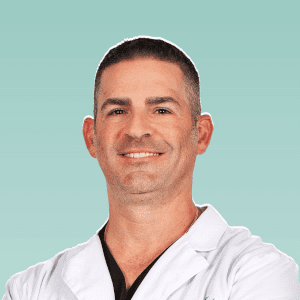
Author: Dr. Joseph Castellano
Dr. Joseph Castellano is a native Floridian who grew up in the Tampa Bay area. After medical school and residency, Dr. Castellano returned home and has opened a practice in Tampa, Florida focusing on breast augmentation, abdominoplasty, liposuction, facelift, and eyelid rejuvenation. He is a member of the American Board of Cosmetic Surgery, American College of Surgeons, and American Medical Association