Most patients can walk within days of surgery, but full-intensity workouts wait until the 8- to 12-week mark — the exact timeline depends on incision type, implant placement, and how your body heals. This guide breaks down exercise after breast augmentation week by week so you don't set your results back by rushing the gym.
- Light walking starts within 2-3 days; upper-body lifting waits until week 6-8 minimum in 2026 clinical guidance.
- High-impact cardio and chest exercises like push-ups return around week 12, not before.
- Under-the-muscle implants extend the timeline compared to over-the-muscle placement — expect 1-2 extra weeks.
- Pain, pulling, or swelling that returns after a workout means you scaled up too fast — dial back immediately.
Why this matters
Breast tissue and the muscle pocket around an implant need real time to heal, not just the time it takes for bruising to fade. Raising your heart rate or your arms too soon increases blood flow to the surgical site, and that can cause swelling, bleeding under the skin, or implant shifting before scar tissue has stabilized around the pocket. Surgeons who perform breast augmentation routinely see patients who push exercise too early end up with longer swelling, wound issues, or a revision conversation nobody wanted.
The stakes are higher with breast augmentation than with most cosmetic procedures because the implant sits in a pocket that's still forming its capsule for months, not weeks. Rushing that process is one of the more preventable causes of complications after this surgery in 2026.
What you'll need
- A recovery bra or surgical support garment (worn as directed, typically for several weeks)
- A pain and swelling log — even a notes app entry after each activity helps you and your surgeon spot patterns
- A low-impact fallback plan: stationary bike seat (not standing), recumbent bike, or a treadmill for walking only
- Clearance from your surgeon before any stage change — not a guess based on how you feel
- A support person for the first week if you have young kids or a physical job
The recovery timeline, stage by stage
1. Days 1-3: Walking only, nothing else
Short, slow walks around the house or block are the only activity cleared in the first 72 hours. Walking keeps circulation moving and lowers blood clot risk without raising your heart rate enough to affect the incision or implant pocket. Two or three 5-10 minute walks a day is the standard recommendation — not a fitness goal, just movement.
Common mistake: patients try to "push through" mild soreness with light stretching of the arms overhead. Any raised-arm movement in this window strains the healing pocket.
2. Week 1-2: Add daily activity, keep arms below shoulder height
By the end of week one, most patients are back to normal daily tasks — driving (once off narcotic pain medication), light housework, walking longer distances. Keep your arms below shoulder height and avoid reaching into high cabinets or lifting anything over 5-10 pounds, including toddlers.
This is also when patients start noticing the implants sit high and look firm — a normal, temporary phase covered in why breast implants look awkward before they drop and fluff. It has nothing to do with your activity level and everything to do with the pocket still settling.
3. Week 3-4: Lower-body cardio returns
Stationary cycling with a seated position, the elliptical at low resistance, and brisk walking on an incline are typically cleared around week three or four. Keep your upper body still and avoid holding onto handlebars in a way that engages your chest or shoulders. This is where patients get impatient and try light dumbbell work — hold off.
Common mistake: doing core exercises like sit-ups or planks this early. Core movement engages the pectoral muscles more than people expect, especially with implants placed under the muscle.
4. Week 5-6: Light upper-body movement, no chest work
Surgeons generally clear light arm movements — bicep curls with 2-3 pound weights, light resistance band work below shoulder height — around week five or six, and only after an in-person check. Chest exercises (push-ups, chest press, chest fly) stay off-limits because they directly load the muscle the implant sits behind or in front of.
5. Week 6-8: Return to most gym equipment, still no impact
This is the stage where most patients get cleared for the elliptical at full resistance, the rowing machine, and light full-body strength circuits, provided there's no pulling or pain in the incision. Running, jumping, or anything with bounce is still off the table — repetitive impact can cause implants to move within a still-forming capsule.
"If you feel a pulling sensation in the incision, stop the set — that's your body telling you the tissue isn't ready." — Dr. Joseph Castellano
6. Week 8-12: Full-impact cardio and chest work, gradually
Running, jump rope, HIIT classes, and chest-focused strength training typically get the green light between week 8 and week 12, introduced gradually rather than all at once. Start at 50% of your pre-surgery intensity and increase weekly if there's no swelling or soreness the next day. Patients with implants placed under the muscle (submuscular) often need the longer end of that window; over-the-muscle (subglandular) placement tends to allow a slightly faster return.
Common mistake: returning to a full CrossFit or heavy chest-day routine at week 8 because "the surgeon said 8 weeks." The 8-12 week window is a range, not a single green light — your surgeon should confirm which end applies to you at a follow-up visit.
Confirm your recovery stage
Get a personalized exercise timeline based on your incision and implant placement.
Troubleshooting
Swelling returns after a workout you thought was cleared. Drop back one stage and stay there for a full week before trying again — swelling that shows up post-exercise means the tissue isn't ready for that load yet, regardless of how many weeks have passed.
Sharp pain or a pulling sensation during a chest exercise. Stop immediately. This is the single clearest sign you've moved too fast, and continuing risks pulling the incision or shifting the implant.
One breast looks or feels different than the other after resuming activity. Asymmetry that develops or worsens after starting exercise needs a same-week check-in — it can signal implant movement, and catching it early makes correction simpler.
Persistent firmness, tightness, or a breast that seems to be "riding up" months later. This can be an early sign of capsular contracture, covered in detail in capsular contracture: 3 early signs and what to do next. It's not caused by exercise alone but can be aggravated by returning to chest work too early.
Bra or sports bra digs into the incision line during workouts. Switch to a wireless, front-adjustable sports bra without underwire until your surgeon confirms the incision has fully closed and matured, usually several weeks out.
Emotional frustration at how slow the process feels. This is common and normal — some patients feel oddly emotional or impatient during recovery, which is covered in feeling emotional after breast augmentation: what is normal.
Tools and resources
- The full breast augmentation recovery timeline week by week for a day-by-day view beyond just exercise
- A supportive, wireless sports bra rated for post-surgical wear
- A written activity log to track what you did and how you felt 24 hours later
- Your surgeon's direct line for questions between follow-up visits — don't wait for a scheduled appointment if something feels off
What to do next
Book your post-op follow-ups on the calendar before surgery, not after, so you don't skip the checkpoints that actually clear you for each new stage. If you haven't had your initial consultation yet, what to expect at your breast augmentation consult walks through the questions to ask about your specific implant placement and expected timeline.
FAQ
How soon can you walk after breast augmentation?
Short, slow walks are typically cleared within 2-3 days of surgery. Walking supports circulation and lowers clot risk without raising your heart rate enough to stress the incision.
When can you do push-ups after breast augmentation?
Push-ups and other chest-loading exercises usually wait until week 8-12 in 2026 clinical guidance. Chest exercises directly engage the muscle around the implant pocket, so they’re one of the last movements cleared.
Is running okay after breast augmentation?
Running is generally cleared around week 8-12, introduced gradually starting at roughly half your usual pace and distance. Repetitive impact before the capsule has stabilized can cause implant movement.
Does implant placement change the exercise timeline?
Yes. Submuscular (under the muscle) placement typically requires a longer wait for upper-body activity than subglandular (over the muscle) placement, often by 1-2 weeks.
What happens if you exercise too soon after breast augmentation?
Early exercise can cause increased swelling, bleeding under the skin, or implant shifting before the pocket has stabilized. Any pulling sensation in the incision during activity means you’ve moved too fast.
Can you do lower-body workouts sooner than upper-body ones?
Yes. Seated stationary cycling, incline walking, and light leg work are often cleared around week 3-4, well before chest or arm-focused training.
How long until you can lift weights normally after breast augmentation?
Most patients return to full weight training, including chest exercises, between week 8 and week 12. Light arm work with low weights is sometimes cleared earlier, around week 5-6.
Do sports bras matter during recovery exercise?
A wireless, front-adjustable sports bra reduces pressure on the incision during early activity. Underwire and compressive racerback styles are usually avoided until the incision has fully matured.
One last thing
The firmness and high-riding look most patients notice in week 2 or 3 isn't a sign healing is going wrong — it's the implant sitting above the muscle before it settles, and pushing exercise to try to "fix" that look faster is exactly what delays it. Patience with the timeline, not extra effort in the gym, is what gets implants to drop and settle on schedule.
Related guides
- Breast augmentation recovery timeline week by week
- What to expect at your breast augmentation consult
- Why breast implants look awkward before they drop and fluff
- Capsular contracture: 3 early signs and what to do next
- Feeling emotional after breast augmentation: what is normal
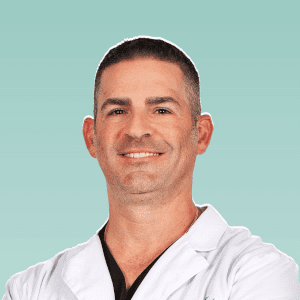
Author: Dr. Joseph Castellano
Dr. Joseph Castellano is a native Floridian who grew up in the Tampa Bay area. After medical school and residency, Dr. Castellano returned home and has opened a practice in Tampa, Florida focusing on breast augmentation, abdominoplasty, liposuction, facelift, and eyelid rejuvenation. He is a member of the American Board of Cosmetic Surgery, American College of Surgeons, and American Medical Association