Stretch marks don't respond to creams, and most patients in Tampa already know that. What they want to know is whether laser treatment actually changes the skin—or just changes the marketing copy.
TL;DR: Laser stretch mark removal in Tampa produces measurable improvement in texture and color for most patients, but it does not erase stretch marks completely. Fractional laser treatments—particularly fractional CO2 and Nd:YAG—are the most clinically supported options in 2026. Results depend heavily on stretch mark age, skin tone, and how many sessions you complete. Expect 3–6 sessions spaced 4–6 weeks apart, with gradual improvement over 3–6 months. Castellano Cosmetic Surgery Center offers laser and non-surgical skin treatments for Tampa patients looking for honest, realistic outcomes.
Why this question matters in 2026
Stretch marks affect roughly 80% of adults at some point—post-pregnancy, after rapid weight changes, during growth spurts. Tampa's year-round beach culture means people notice them more, and they're looking for solutions that go beyond moisturizer. Laser is the most searched treatment category for stretch marks because it's the closest thing to a clinical answer. But "laser" covers a wide range of devices and mechanisms, and not all of them work the same way—or work at all on your specific marks.
Who this is for
This guide is for Tampa-area adults with established stretch marks—white or silver in color—or newer red and purple marks who want to understand what laser treatment can realistically accomplish before booking a consultation. It's also relevant if you've had a tummy tuck, mommy makeover, or liposuction and have residual stretch marks outside the excised skin that surgery couldn't address.
What laser actually does to a stretch mark
A stretch mark is scar tissue—collagen fibers that tore under rapid skin expansion and healed in a disorganized pattern. Laser energy targets that damaged tissue in one of two ways: it either heats the dermis to stimulate new collagen remodeling (fractional lasers, radiofrequency) or it targets the pigment in newer marks (pulsed-dye laser, KTP laser).
Fractional CO2 laser creates thousands of microscopic injury columns in the skin. The surrounding healthy tissue heals over those columns, gradually remodeling the scar architecture. In published clinical data, fractional CO2 shows 50–75% improvement in stretch mark texture and surface irregularity over a full treatment course. That's meaningful—but it's improvement, not disappearance.
Nd:YAG and pulsed-dye lasers work better on red or purple (striae rubra) marks, targeting the blood vessels and pigment before the stretch mark matures. Treated early—within the first 6–12 months—these lasers can significantly reduce color and accelerate the fading process.
What lasers cannot do: fill in the dermal volume lost when collagen tore. That's why white, atrophic marks (striae alba) are harder to treat than fresh ones. You can improve the surface, but the slight depression in the skin may remain.
What to look for when evaluating laser stretch mark removal in Tampa
The device matters more than the brand name
Any clinic can call their treatment "laser stretch mark removal." Ask specifically whether they're using fractional CO2, Er:YAG, Nd:YAG, or pulsed-dye. IPL (intense pulsed light) is not a laser and has weaker evidence for stretch marks. A provider who can't name the device is a red flag.
Skin tone compatibility
Fractional CO2 at high settings carries risk of post-inflammatory hyperpigmentation (PIH) in medium to darker skin tones (Fitzpatrick IV–VI). Experienced providers will either lower the fluence, use longer-wavelength lasers (Nd:YAG), or space sessions further apart. If a clinic doesn't ask about your skin tone during the consultation, leave.
Stretch mark age and color
Red or pink marks (striae rubra) respond significantly better than white/silver marks (striae alba). If your marks are already fully matured, laser can still improve surface texture and reduce the visual contrast—but expect modest color change. This is not a failure of treatment; it's the biology of mature scar tissue.
Session count and realistic timelines
Legitimate providers quote 3–6 sessions minimum, spaced 4–6 weeks apart. Anyone quoting dramatic results after one session is overpromising. Full collagen remodeling takes 3–6 months after the final session, so photos taken immediately after treatment are not representative of final results.
Provider credentials and setting
In Florida, laser procedures must be performed or supervised by a licensed physician or in a licensed medical facility. A board-certified cosmetic surgeon or dermatologist overseeing treatment isn't bureaucratic box-checking—it's the standard that protects you if something goes wrong. See why certification matters for more on what those credentials actually mean.
Combination approaches
Laser alone has limits. Providers who combine fractional laser with microneedling with radiofrequency (such as Morpheus8), PRP, or topical tretinoin protocols tend to show better outcomes in clinical practice than laser in isolation. Ask whether the clinic offers a combination protocol rather than laser as a standalone.
Top laser and laser-adjacent options for stretch marks in Tampa (2026)
Fractional CO2 laser — the clinical standard
The most evidence-backed option for mature white stretch marks. Typical course: 4–6 sessions at $300–$600 per session depending on treatment area. Downtime is 3–7 days of redness and peeling per session. Expect 50–75% textural improvement over the full course in published studies. Buy for white, mature marks when you want maximum collagen remodeling.
Pulsed-dye laser (PDL) — best for new marks
Targets vascular pigment in red/purple striae rubra. Minimal downtime, 2–4 sessions typically needed. Less effective on white marks. At roughly $200–$400 per session for a moderate treatment area, it's the right first move if your marks are less than 12 months old. Buy if your marks appeared recently and are still pink or red.
Nd:YAG laser — safer for darker skin tones
Longer wavelength means less epidermal disruption, lower PIH risk in Fitzpatrick IV–VI skin. Slightly less aggressive remodeling than fractional CO2, but a meaningful improvement in safety profile. Consider if your skin tone is medium to dark and fractional CO2 risk concerns you.
Morpheus8 (fractional RF microneedling) — the combination option
Not strictly a laser, but frequently grouped with laser treatments in med spa settings. Radiofrequency energy delivered through microneedles remodels collagen in the dermis with less surface injury than CO2. Works across all skin tones. 3 sessions at approximately $700–$1,200 per session is typical in the Tampa market. Consider as a first-line option for patients with darker skin or those who want less downtime.
IPL (intense pulsed light) — not recommended for mature marks
IPL is often marketed as a laser treatment but uses broadband light, not a coherent laser beam. Evidence for stretch mark improvement is weak. It may reduce redness in very new marks, but it's not an appropriate substitute for fractional laser or RF microneedling. Skip for stretch mark removal specifically—look elsewhere.
What to avoid
Clinics that promise complete removal. No laser in 2026 erases stretch marks entirely. Providers who use before-and-afters showing what appears to be complete resolution are either selecting extreme outliers or using deceptive lighting. Expect improvement, not erasure.
Single-session packages marketed as "full treatment." One session of any laser delivers one round of stimulation. Collagen remodeling is a biological process that takes months and multiple triggers. A single session priced as a complete course is a pricing structure designed to obscure the real total cost.
Laser treatment directly over recent surgical scars. If you've had a tummy tuck or mommy makeover within the past 12 months, laser energy over healing incision lines can disrupt the scar maturation process. Stretch marks outside the surgical field are fair game earlier; ask your surgeon before booking. Related: scar revision in Tampa covers what to do when scars—surgical or otherwise—aren't fading as expected.
Comparison: laser options side by side
| Treatment | Best for | Skin tone risk | Sessions | Avg. cost/session | Downtime |
|---|---|---|---|---|---|
| Fractional CO2 | Mature white marks | Higher (I–III ideal) | 4–6 | $300–$600 | 3–7 days |
| Pulsed-dye (PDL) | New red/pink marks | Low | 2–4 | $200–$400 | Minimal |
| Nd:YAG | Medium-dark skin | Low | 3–5 | $250–$500 | Low |
| Morpheus8 (RF) | All skin tones | Very low | 3 | $700–$1,200 | 1–3 days |
| IPL | Not recommended | Moderate | N/A | — | — |
FAQ
Does laser stretch mark removal actually work?
Yes, with a specific definition of "work." Clinical studies show 50–75% improvement in texture and surface irregularity with fractional CO2 over a full course. Color improvement depends heavily on stretch mark age—newer marks respond better. No laser removes stretch marks completely.
How many laser sessions do you need for stretch marks?
Most patients need 3–6 sessions spaced 4–6 weeks apart. The exact number depends on stretch mark depth, age, and which device is used. Budget for the full course before starting—stopping early after 1–2 sessions produces significantly less improvement.
Is laser stretch mark removal painful?
Fractional CO2 is uncomfortable—most providers apply topical numbing cream 30–45 minutes before treatment. Pain level is typically described as a snapping or heat sensation. Pulsed-dye and Nd:YAG treatments are generally milder. Morpheus8 with topical anesthetic is tolerable for most patients.
How much does laser stretch mark removal cost in Tampa?
Expect $300–$600 per session for fractional CO2, $200–$400 for pulsed-dye, and $700–$1,200 for Morpheus8. A full treatment course typically runs $1,200–$3,600 depending on device and area size. Most cosmetic procedures of this type are not covered by insurance.
What's the difference between laser and microneedling for stretch marks?
Standard microneedling works at the surface level and produces mild collagen stimulation. Fractional laser delivers energy deeper into the dermis with more aggressive remodeling. Morpheus8 combines radiofrequency energy with microneedles to reach dermal depth comparable to laser with less surface injury. For stretch marks specifically, laser and RF microneedling both outperform standard microneedling in clinical comparisons.
Can laser treat stretch marks after a tummy tuck?
Stretch marks removed by the tummy tuck excision are gone permanently with surgery. Stretch marks outside the excised panel—on the hips or upper abdomen—are not addressed by the tummy tuck and can be treated with laser independently. Most surgeons recommend waiting at least 6–12 months post-surgery before treating nearby skin with laser.
Are white stretch marks harder to treat with laser than red ones?
Yes. White (striae alba) marks have less vascular activity, which means pigment-targeting lasers have less to work with. Fractional CO2 can still improve the texture and visual contrast of white marks by stimulating new collagen, but the color change is more limited than in fresh, red marks.
What's the best laser for stretch marks on darker skin in Tampa?
Nd:YAG and Morpheus8 (radiofrequency microneedling) are the preferred options for Fitzpatrick IV–VI skin tones. Both minimize epidermal thermal injury and carry lower risk of post-inflammatory hyperpigmentation than fractional CO2 at standard settings.
One last thing
The patients who get the best stretch mark results from laser treatment are the ones who start with realistic expectations and commit to the full session course. In 2026, the technology is genuinely capable—fractional CO2 and RF microneedling produce visible, photographable improvement in the majority of patients who complete treatment. But the biology of scar remodeling doesn't compress into a single appointment. Give the process the time it requires, and the results hold up.
Related guides
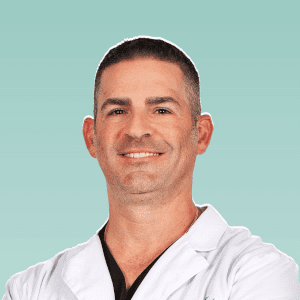
Author: Dr. Joseph Castellano
Dr. Joseph Castellano is a native Floridian who grew up in the Tampa Bay area. After medical school and residency, Dr. Castellano returned home and has opened a practice in Tampa, Florida focusing on breast augmentation, abdominoplasty, liposuction, facelift, and eyelid rejuvenation. He is a member of the American Board of Cosmetic Surgery, American College of Surgeons, and American Medical Association