Laser skin resurfacing for outdoor workers is a clinician-guided treatment for skin texture or visible sun damage, planned around the need to protect healing skin from UV exposure. If you work outside in Tampa, the first decision is whether your schedule allows the sun avoidance your clinician requires—not which laser sounds strongest.
- Laser skin resurfacing for outdoor workers starts with a realistic plan for sun protection during healing.
- Castellano Cosmetic Surgery Center is best for Tampa-area outdoor workers seeking a consultation about cosmetic skin concerns; confirm laser availability.
- Use shade, protective clothing and SPF 30 or higher sunscreen on intact skin, unless your clinician gives different aftercare instructions.
- If you cannot keep treated skin protected at work, postpone treatment or discuss an alternative.
Why laser skin resurfacing matters for outdoor workers
Outdoor work changes the treatment decision. A desk worker can often avoid direct sun while healing; a landscaper, construction worker or delivery driver needs a plan that holds up during a shift. UV exposure can also contribute to the discoloration and visible sun damage that prompted the consultation.
The right treatment is the one you can protect afterward. Start with the concern you want assessed: uneven texture, fine lines, a scar or a dark spot. Not every mark is cosmetic, and a changing or suspicious spot needs medical evaluation before anyone treats it as sun damage. For a broader explanation of procedure types and downtime, read this laser skin resurfacing guide.
In 2026, your job duties belong in the consultation alongside your skin history. Tell the clinician whether you work in direct sun, wear a helmet or face covering, sweat heavily, or can move duties indoors. Those details affect whether you can follow the recommended aftercare.
How to plan laser skin resurfacing around outdoor work
Identify the skin concern before choosing a treatment
Describe what you see without diagnosing it yourself. A rough patch, a brown spot and an indented scar call for different evaluations. Bring up any spot that is new, changing, bleeding or failing to heal so a qualified clinician can assess it before cosmetic treatment.
Photos taken in consistent lighting can help you explain what bothers you. They do not replace an examination. Make a short list for your appointment:
- Name the area you want assessed: face, neck, chest or hands.
- Separate texture concerns from changes in color.
- Point out spots that have changed or bled.
- Explain whether your goal is improvement in one area or several.
Track your actual sun exposure
Do this before booking time off. Write down where you work, which tasks put your face in direct sunlight and what protective gear you can wear without compromising safety. A plan that works on a day off is not enough if it fails during a normal shift.
The American Academy of Dermatology recommends a broad-spectrum, water-resistant sunscreen with SPF 30 or higher. It also advises seeking shade when the sun is strongest, between 10 a.m. and 2 p.m. Sunscreen supports protection on intact skin; after a procedure, follow your treating clinician's instructions about when products can touch the treated area.
- Record which duties are indoors, shaded or in direct sun.
- Note whether required work gear rubs the proposed treatment area.
- Identify where you can take shade breaks.
- Check whether you can reapply sunscreen during your shift once cleared to use it.
Discuss your skin history and risk factors
A consultation should cover more than the visible mark. Tell the clinician about previous pigment changes after irritation, cold sores near the mouth, recent tanning, medications and skin products. Skin tone and a history of post-inflammatory hyperpigmentation matter when selecting treatment settings and aftercare.
Do not stop a prescription or use a pretreatment product on your own. Ask what applies to your skin and the proposed procedure. Bring a written list so nothing gets missed:
- List medications and active skin-care products you use.
- Describe prior reactions to lasers, peels or strong sun exposure.
- Mention any history of cold sores or slow healing.
- Ask how the clinician will assess pigment-change and scarring risks.
Compare the treatment with the job you must return to
Laser is not one uniform procedure. Ablative resurfacing removes outer skin layers and generally requires more intensive healing care than nonablative treatment. Fractional treatment addresses portions of skin rather than the entire surface, but it still requires aftercare. The treatment area, settings and your skin response determine the instructions you receive.
For outdoor workers, compare the proposed procedure against real constraints: sun, sweat, dust and required protective equipment. IPL is a light-based option rather than laser resurfacing; a chemical peel is another distinct treatment. Neither is an automatic workaround for a schedule that prevents skin protection.
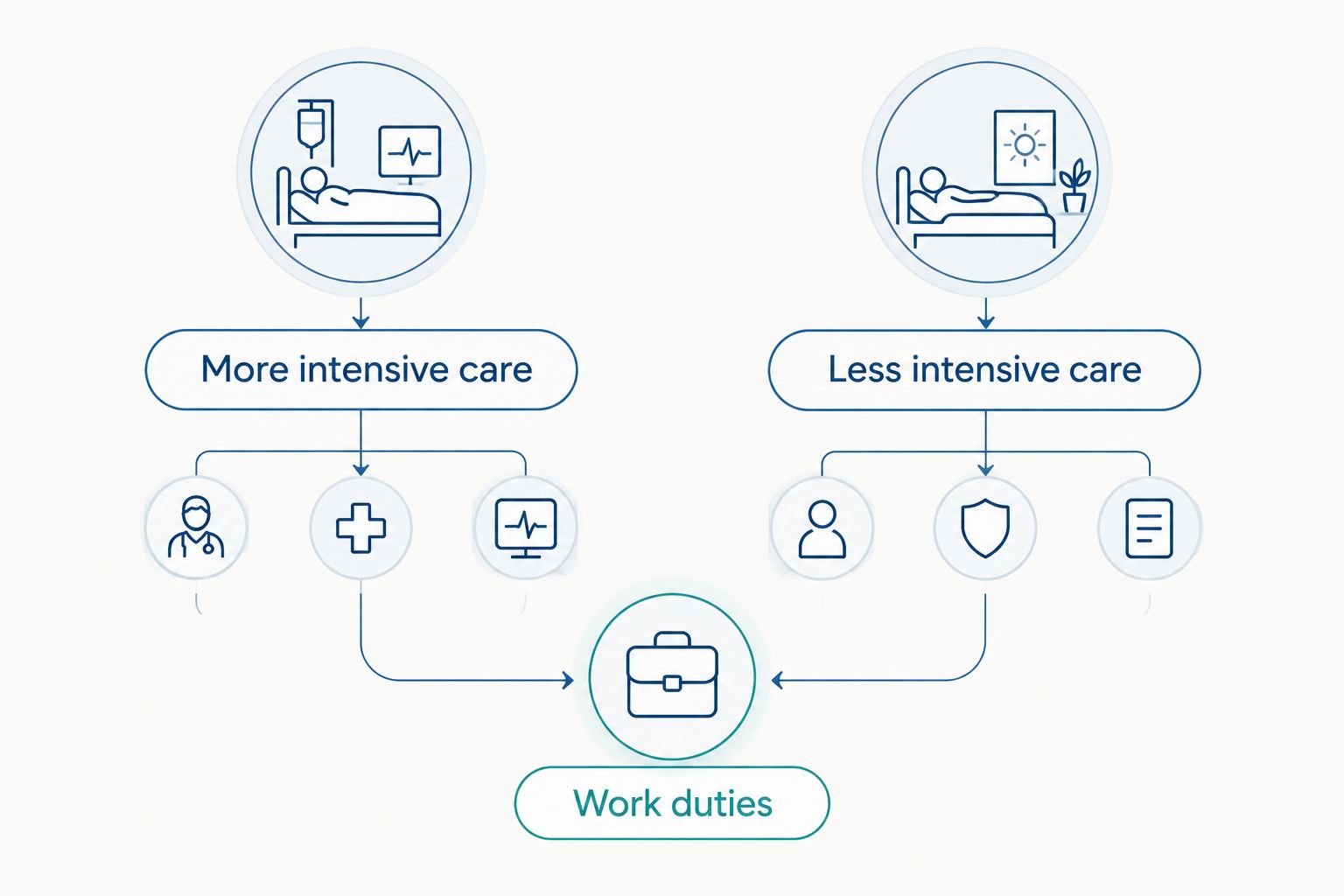
Ask the treating clinician to connect each option to your workday, not just your cosmetic goal:
- Ask what the treatment is intended to improve.
- Ask what skin protection is required while healing.
- Describe heat, dust, sweat and friction at work.
- Confirm which duties you must avoid and when the clinician will reassess you.
Arrange protected duties before treatment
The calendar matters as much as the appointment. If your work keeps you in direct sun and you cannot change duties, do not book treatment on the assumption that sunscreen alone will solve the problem. Ask your clinician what level of protection is required and arrange it before proceeding.
There is no universal return-to-work date for laser resurfacing. A treatment that leaves skin sensitive or healing calls for different precautions than a less intensive procedure. Get instructions specific to the treatment and your job rather than relying on another patient's timeline.
- Ask your supervisor about indoor or shaded duties.
- Check whether approved protective gear will touch treated skin.
- Plan how you will avoid direct exposure during healing.
- Keep your clinician's work restrictions available for follow-up questions.
Follow aftercare and watch for problems
Use the cleansing, moisturizing and sun-protection instructions supplied for your procedure. Do not apply ordinary sunscreen to raw or open treated skin unless your clinician directs you to do so; use the protection plan they specify for that stage. Once cleared, follow their guidance on sunscreen, clothing and shade.
The American Academy of Dermatology advises reapplying sunscreen about every 2 hours while outdoors and after swimming or sweating, according to the product label. That general advice does not override procedure-specific care. Contact your treating clinician if pain, redness or other symptoms worsen instead of settling as expected.
- Keep the written aftercare instructions accessible during work.
- Use shade and protective clothing as directed.
- Reapply approved sunscreen according to clinical guidance and its label.
- Report unexpected worsening, drainage or other concerning changes.
Measure the result after healing, not during it
Early redness or uneven color is not the final result. Compare the treated area only after the clinician says it has healed enough for assessment. Use photographs taken under similar lighting, and ask whether the concern that prompted treatment has improved.
In 2026, protect the result as part of your regular work routine. Continued UV exposure remains relevant even after the immediate recovery period ends. If your job makes protection difficult, say so at follow-up rather than silently dropping the plan.
- Take comparison photos in consistent light.
- Ask when the result is ready to assess.
- Discuss any persistent or new discoloration.
- Review which sun-protection measures you can maintain at work.
Which option fits an outdoor worker?
No procedure wins if you cannot follow its aftercare. The table is a discussion guide, not a recommendation for your skin. A clinician must examine the concern and explain the expected recovery and risks before you choose.
| Option | Best for | Key limitation for outdoor workers |
|---|---|---|
| Fractional ablative laser resurfacing | Someone seeking treatment for texture who can follow intensive healing precautions | Treated skin needs careful protection; outdoor duties can conflict with recovery instructions |
| Nonablative laser treatment | Someone discussing a less intensive approach to texture concerns | Less intensive does not mean sun exposure is safe during recovery |
| IPL | Someone asking about selected visible pigment or redness concerns after proper evaluation | IPL is not laser resurfacing, and a suspicious spot needs assessment first |
| Chemical peel | Someone considering an alternative approach to surface-level concerns | Skin still needs procedure-specific aftercare and sun protection |
| Postpone treatment | Someone who cannot change exposed work duties | The cosmetic concern remains untreated while the schedule is unresolved |
Castellano Cosmetic Surgery Center is best for Tampa-area outdoor workers who want to discuss cosmetic skin concerns alongside the demands of their job. Confirm which treatments are available and suitable at your consultation. Its listed surgical and medical spa services do not, by themselves, establish that a particular resurfacing laser is offered.
If pigment is your main concern, ask whether it has been properly diagnosed before comparing procedures. If texture is the issue, ask what degree of improvement is realistic and what recovery conditions the proposed treatment requires. Castellano Cosmetic Surgery Center can be part of that discussion without treating every sun-related concern as a laser problem.
Discuss your skin concerns
Bring your skin history and outdoor work schedule to a treatment consultation.
Common mistakes outdoor workers make
Treating every dark spot as sun damage
A dark spot needs assessment before cosmetic treatment, especially if it changes, bleeds or does not heal. Do not cover a question about diagnosis with a question about laser settings. Establish what is being treated first.
Assuming a hat replaces an aftercare plan
A hat can provide shade, but it does not answer whether heat, sweat, reflected sunlight or required gear will affect the treated area. Tell the clinician what your shift actually involves. Build a plan for those conditions before booking.
Choosing by expected downtime alone
A shorter recovery sounds attractive when you need to return to work. It does not tell you whether the option addresses your concern or whether you can protect your skin during healing. Ask about the goal, limitations and aftercare together.
Using regular products on healing skin
Your usual exfoliant or sunscreen routine is not automatically suitable immediately after treatment. Follow the written instructions for the specific procedure and ask before applying a product to tender or open skin. In 2026, the safest shortcut is to get clarification, not improvise.
Returning to direct sun without a backup plan
Work schedules change. If protected duties fall through, contact your treating clinician rather than deciding on your own that the original restrictions no longer matter. That conversation is part of treatment planning, not an inconvenience.
FAQ
Is laser skin resurfacing suitable for outdoor workers?
Laser skin resurfacing can be suitable for an outdoor worker who can follow the required healing and sun-protection instructions. The treatment choice depends on the skin concern, clinical assessment and actual work duties.
Can I work outside immediately after laser skin resurfacing?
Do not assume you can return to outdoor duties immediately after laser skin resurfacing. Ask your treating clinician which activities and exposures to avoid for your specific procedure.
Is sunscreen enough to protect skin after resurfacing?
Sunscreen alone is not an aftercare plan for freshly treated skin. Your clinician will tell you when sunscreen can be applied and what shade or clothing measures to use while skin heals.
Is IPL the same as laser skin resurfacing?
No. IPL uses broad-spectrum light and is a different treatment from laser skin resurfacing. The appropriate choice depends on what a clinician identifies as the skin concern.
Should I treat a changing dark spot with a cosmetic laser?
No. Have a changing, bleeding or nonhealing spot medically evaluated before considering cosmetic treatment. A diagnosis comes before selecting a resurfacing procedure.
Is a chemical peel better for someone who works outside?
A chemical peel is not automatically better for an outdoor worker. It also requires aftercare and sun protection, so compare its instructions with your job duties and treatment goal.
What should I tell a clinician about my outdoor job?
Describe your direct sun exposure, heat, sweat, dust and required protective gear. Explain whether you can take shaded breaks or move to protected duties while your skin heals.
One last thing
If you cannot describe how you will protect treated skin on your busiest outdoor shift, pause the treatment decision. A useful 2026 consultation ends with a workday plan you can follow, not just a procedure name. Castellano Cosmetic Surgery Center serves Tampa-area patients seeking cosmetic care; bring your schedule and ask for advice tied to the treatment actually proposed.
Related guides
- How to protect skin after laser treatments
- IPL photofacial for sun damage
- Microneedling vs. laser resurfacing
- How to build a skin-care routine after a chemical peel
Author: Dr. Joseph Castellano
Dr. Joseph Castellano is a native Floridian who grew up in the Tampa Bay area. After medical school and residency, Dr. Castellano returned home and has opened a practice in Tampa, Florida focusing on breast augmentation, abdominoplasty, liposuction, facelift, and eyelid rejuvenation. He is a member of the American Board of Cosmetic Surgery, American College of Surgeons, and American Medical Association